.png) 14 hours ago
8
14 hours ago
8
A British prince was arrested at 8am and was stripped of his title; ambassadors, politicians and numerous other high-profile men lost their prestigious jobs; millions of files relating to the sex offender Jeffrey Epstein were released and a US president remains under scrutiny. So much has happened since the death of Virginia Roberts Giuffre in April last year, and the posthumous publication of her memoir Nobody’s Girl six months later, detailing for the first time the full story of her abuse by Epstein and his associates. “This year has been extraordinary,” says Sky Roberts, Giuffre’s younger brother. “I just wish Virginia was here to see it.”
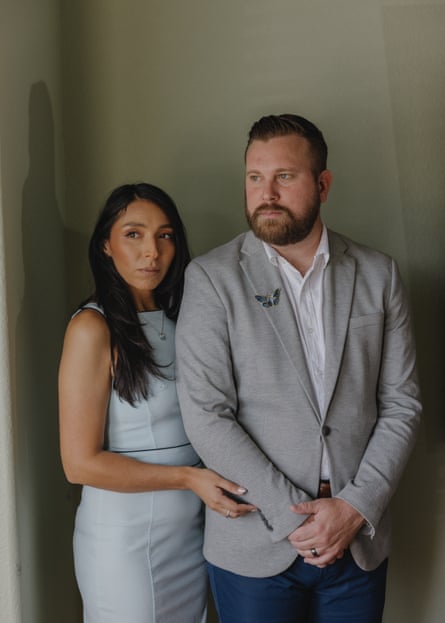
He is determined that there will be many more advances to come. Giuffre had become one of the most recognisable survivors of Epstein; in the midst of grief, Sky and his wife, Amanda, have become accidental advocates. “She paved the way, and we want to keep paving that road forward for other survivors out there,” says Sky.
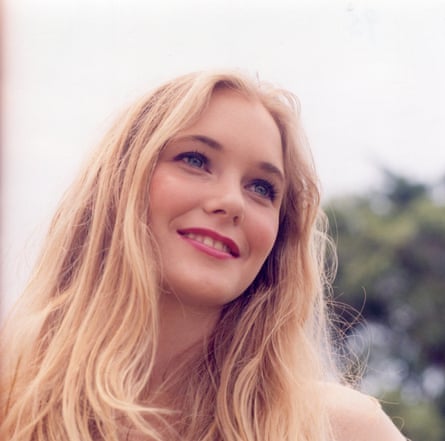
They’re speaking from their home in Colorado, in a room filled with photographs and mementoes, such as the butterfly motif that Giuffre adopted for her cause. They haven’t done interviews from this room before. “I see her all around me,” says Sky, who apologises for getting “teary-eyed sometimes, so just bear with me”. They have got two children, and have a background in retail management and property investing, not politics. “We got thrust into it, within months [after Giuffre’s death], we were in advocacy work,” says Sky. “A lot of it was driven by a sense of purpose. Virginia used to say, ‘How do you turn pain into purpose?’ And I couldn’t allow her story to be narrated by people that didn’t either know her or really understand who she was.”
They are about to relaunch Giuffre’s organisation Soar (Speak Out, Act, Reclaim), and are campaigning to get Virginia’s law passed in the US, which would remove the federal statute of limitations in sexual abuse cases, as well as maintain the pressure to release the rest of the Epstein documents and keep him and his associates in the public consciousness. All this against a government – and a president named numerous times in the files – that appears to be doing everything it can to make the whole thing go away. “We always had the expectation to support Virginia when she was ready to move forward with her nonprofit,” says Amanda. “We didn’t expect to do it without her. It became this idea of we couldn’t let her story end there.” Doing it without Giuffre, who died by suicide, says Sky, “it’s a giant hole in your stomach and in your heart”.
In public consciousness, Giuffre is both the smiling girl in that infamous photograph, the then-Prince Andrew’s arm around her waist, and the formidable woman speaking up, often outside court houses, on behalf of survivors of sex trafficking. Her memoir revealed her to be someone resilient, who overcame unimaginable abuse going back to childhood. Her last months revealed her to be someone complex, who still struggled, and whose life had, once again, collapsed. At the time of her death at the age of 41, she was separated from her husband and had not been allowed to see her three children. Sky and Amanda don’t have contact with them, though Amanda says she hopes they can be a part of Giuffre’s work and legacy “when they’re ready”. There is an ongoing battle over her estate.
“It’s complicated,” says Sky, “and this is why you can never fit a survivor’s story into a neat box, it doesn’t exist that way.” When Giuffre told him she would be writing a book about her life, she warned it would be hard to read, because part of it is his story, too. “I remember Virginia saying to me, ‘If I’m going to tell my story, I have to tell all of it.’ That’s one of the hardest parts, because you grow up hoping or looking at your parents as heroes, and it was like this … ” He pauses, trying to find the words and failing, because there are none. “It was this painfully tragic sort of feeling.”
Several years ago, she had told Sky and their older brother, Danny, that their father had abused her – both had young daughters, and she couldn’t bear the thought of them not being armed with the information. Reading a fuller extent in her memoir, alongside all the other abuse she suffered, “I just wish that I could have told her … ” Sky breaks down. “I wish I could have told her how proud I was, because that takes so much courage, and I know it was hard for her. It’s necessary to understand how all the other things that play into it, because [our father] was the first person to abuse Virginia. She was so brave, because she said, ‘If I don’t tell my whole story, then I’m not showing the weaving of how this actually works’, and how you get groomed from a very young age all the way up until, really, the ending of her life.”
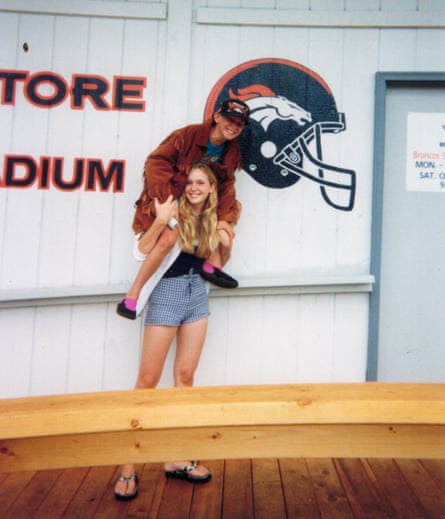
The family lived on a modest farm in Loxahatchee, Florida. Virginia was the middle of three; Danny, from her mother’s previous marriage; and Sky, born five years after her. “I was the legit annoying little brother, but she was just a one-of-a-kind person from a very young age,” Sky says. “She was really the one that always looked out for me; Virginia always had that motherly instinct. She was so fun to be around. She was just a joy. She could make you laugh in a heartbeat, but the reason I think she was such a strong advocate as well is because she was always a protector. It’s clear why, now, when you read Nobody’s Girl. You understand what she went through. I always remember her basically shielding me from any evil that could potentially touch me.”
Giuffre writes that her father started sexually abusing her from the age of around seven. She alleged that her father had threatened to kill Sky if she told anyone; years later, Epstein would do exactly the same, throwing down a photograph taken of her younger brother on his way to school.
Sky doesn’t have a relationship with his father, who has denied all the allegations, writing to Wallace to say: “Just to straighten this out, I never abused my daughter.” Sky is firm: “I always say I wholeheartedly believe my sister. Virginia has been proven to be a truth-teller time and time again.” It sickened him, Sky says, when their father came forward in the media to talk about Giuffre after her death and suggest she had not taken her own life. “That was another huge motivator for me,” he says, of the decision to step up and speak for his sister.
As a child, Giuffre had been a keen reader and a girl who loved climbing trees and exploring the Florida wilderness around their home; she loved animals and had wanted to be a vet. But by her early teens, she was truanting from school and emotionally unstable. The other horrors Giuffre was subjected to, all before she was 16, are almost too much to list – being raped by two boys while unconscious in the back of a car, followed by time at a treatment centre for teenagers that was later shut down for the mistreatment of the young people who were supposed to be in its care. When she ran away, she was picked up by a man who raped her at gunpoint; then, hours later, traumatised and bloodied by a kerbside, was picked up by another man, Ron Eppinger.
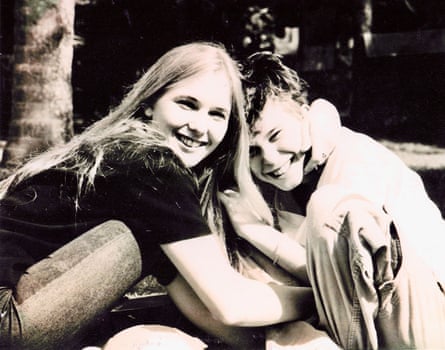
She was 15 and abused by Eppinger – who would later plead guilty to sex trafficking – for around six months. When she was back with her parents in Florida, her father, a maintenance worker at Donald Trump’s Mar-a-Lago resort, got her a job there. That was where she met Ghislaine Maxwell – in Giuffre’s telling, Maxwell spies her from her limo like a shark stalking its prey – who introduced her to Epstein.
Amy Wallace, the journalist who co-wrote Giuffre’s book says, “You had to understand what had happened to her at seven, eight and onwards to understand why, when she meets Epstein at the age of 16, she doesn’t just run for the hills – she ends up staying in their orbit for more than two years.” Like Sky and Amanda, the ghostwriter has found herself an advocate for Giuffre. We speak while she is in the UK to discuss the paperback release of the book. It angers her when people suggest that Giuffre stayed with Epstein for the lifestyle – and, later, supposedly saw a financial opportunity when she took settlements – when in reality she had been a vulnerable and desperate child, repeatedly damaged by the adults around her. “When you’re seven and you’re given the message from somebody very close to you that your worth on this planet is to serve at the sexual pleasure of them, that erodes your self-worth, and it makes you think that’s the way the world works.” Wallace pauses briefly. “Which in her life it really did.”
Sky was about 11 when his sister became involved with Epstein and Maxwell – too young to be anything other than impressed that she was travelling, and meeting celebrities. “I remember her telling me certain people that she had met. I look at those people very different now.” He was also too young to know she was suffering, and, anyway, he says, “Virginia had a way of being able to put the veil up if she needed to.”
When Giuffre started speaking out – the birth of her third child, a daughter, had compelled her, as had Epstein’s lenient plea deal in 2008 – she was vilified online and in parts of the media; when she filed a civil lawsuit against the then-Prince Andrew in 2021, settling for a reported £12m the following year (made without admitting liability), she was portrayed as a liar and a money-grabber. “When you come forward, and you’re denied believing from authorities and public, and you’re scrutinised, it is a reinjury,” says Amanda. “A lot of the time she had to just keep pushing through that, telling her truth and hoping the truth would come to surface.” Giuffre would turn off social media and the news, Amanda says, “compartmentalise herself and say, ‘Right now I’m just going to put this away, lock it up, and I’m going to be a mom, and I’m going to laugh, and I’m going to spend hours on the phone talking, and not talking about Epstein.’”
Sky smiles and says, “This is where Virginia’s character came into play, because she was always the one that would say, ‘If you tell me I can’t do it, watch me.’ Virginia was hellbent, and it doesn’t mean that it didn’t affect her. She was a survivor warrior, and she felt compelled to tell the story, because so many others couldn’t, and she had that protector mentality of ‘what’s right is right, and what’s wrong is wrong’. When she was in the trenches, she was full force. I wish she was here to see how vindicated she is from all of the years of work she spent.”
When the Guardian published extracts from Giuffre’s memoir in October, it added to mounting pressure on Prince Andrew, who gave up his titles days before the book was published. (King Charles officially stripped him of his HRH style and his prince title the following month.) Giuffre didn’t live to see the global impact of the release – still partial at this stage, and heavily redacted – of the Epstein files, the outpouring of support from readers, and the disgrace of Prince Andrew, among many other ramifications. That last one, especially, “was a victory which Virginia deserved to be here for”, says Amanda. “It was such a moment of vindication for her.” Andrew Mountbatten-Windsor, as he is now, has always denied meeting Giuffre, and has raised the possibility the photograph of them together was faked, but Maxwell’s emails to Epstein appear to confirm they did meet. In February, Mountbatten-Windsor was arrested on suspicion of misconduct in public office, with allegations he had shared confidential information with Epstein in his role as trade envoy. He was released and has not been charged, but Thames Valley police also made it clear they were looking, separately, at claims a woman (not Giuffre) had been taken to Windsor for “sexual purposes”.
Thames Valley police are reportedly planning to travel to the US to speak to Sky and Amanda, which the couple won’t comment on, but Sky says: “We very much support the Thames Valley police. I think they’re doing a fantastic job, and we need to give them a little bit of grace right now – they’re kind of building that plane while they’re flying it, because [investigating a senior royal has] never been done before.” Or it has, he says, allowing himself a smile, but that was nearly 400 years ago and it didn’t turn out well for Charles I.
They have spoken previously about their disappointment that the king didn’t meet them and other survivors on his visit to the US earlier this year (there is a possibility they will come to the UK this year).
When Mountbatten-Windsor was arrested, his brother King Charles said: “Their majesties wish to make clear that their thoughts and utmost sympathies have been and will remain with the victims and survivors of any and all forms of abuse.” Should Britain’s royal family have acted on Mountbatten-Windsor sooner? “That’s the difficult part,” says Sky. “How long have they known about these allegations? Was there any sort of cover-up? I don’t know, but I do know this has been going on for a very long time. Epstein was convicted in 2008, and these men and people in power continued to be involved in his world. It’s important to keep asking those questions.”
So far, as Wallace points out in her new epilogue to the book, not a single person accused of abuse has been arrested (Maxwell is serving 20 years in prison for sex trafficking; Epstein died by suicide in 2019 awaiting trial). Preparing to write the epilogue, Wallace typed out everything that had happened since Giuffre’s death; the list ran to seven pages. “So much has happened, not all of it is [because of] Virginia’s book,” says Wallace. “It’s partly because of really brave and relentless advocacy on behalf of the other survivor sisters and others. But it’s also because I think people really care about this issue.”

Less than a month after the book came out, in the US a near unanimous vote passed the Epstein Files Transparency Act, which led to the publication of documents. “They realise their constituents don’t like the idea of wealthy, privileged people abusing less privileged, less powerful people, many of them underage, and getting away with it. Which is what, in the United States, they’re still doing,” says Wallace. The day before we speak, the US Department of Justice was still refusing to release unredacted documents.
Wallace says it is “brazen, this administration’s refusal to do what’s right. It’s shameful.” She, Sky and Amanda want to see the rest of the files released, with the names of the victims redacted and the potential perpetrators named. As it stands, it goes against what was agreed in the act, says Wallace. Todd Blanche, the acting attorney general, has said the country should move on from Epstein. “They want it to be over. Who that ‘they’ is, and who’s the one really saying that, is it Trump himself?” says Wallace. “I have no knowledge of that, but Blanche used to be Trump’s personal lawyer. Some people even speculate that they started a war in Iran to try to change the subject, and, guess what, they haven’t succeeded, because people across the ideological spectrum care about this issue, and they keep on caring about it.”
Sometimes, says Sky, “you feel you’re pushing a boulder up a giant mountain. Our Department of Justice is supposed to bring justice for the American people, and in this specific case for people around the world, [but] they are prohibiting different entities from being able to get the files from them – different departments in the UK, different state legislations, like New Mexico and in New York.” It feels, he says, as if they are “actively shielding and covering up for the rich and the powerful. I would challenge the people of the UK and the United States and around the world not to look away. We know that crimes were committed in the UK. I think parliament should open up a public inquiry, so that if the United States isn’t willing to keep this moving forward, then at least the UK can keep bringing a sense of justice for survivors. We have to keep the pressure on, because this is the moment where we set a precedent across the world that money and power do not buy you a different set of laws any more.”
The wealth and glamour around Epstein could be sensationalist. Giuffre’s book helped to humanise his victims, says Sky. It’s why he and Amanda always take copies of it when they speak with lawmakers. The feeling is shifting, he says. A meeting with James Comer, the chair of the House oversight committee that is reviewing the federal investigation of Epstein, went well, says Sky. “We sat in that room with him, with other survivors, and really reached him on a level we weren’t expecting. I think he was so much more open than he had ever been.”
Throughout the four years they worked together, whenever Giuffre called, Wallace made sure to answer the phone. “There was a loneliness to this experience for her.” It was important, says Wallace, “that she could feel like she trusted me, not just with her secrets, but emotionally trusted me, that I cared about her, and very quickly I did. She’s a very easy person to love, very generous, very smart, very selfless in terms of her motivations for doing all of this.” It would have been easier to keep her head down, says Wallace. “And she was determined to be clear, not just about who had hurt her and what it was like to be a young person in that web, but also to tell other victims of sexual exploitation, ‘You’re not alone. I struggle too, I continue to struggle.’”
Wallace and Giuffre became close, and she made two trips to Giuffre’s home in Australia, spending around a month there in total. Did she seem haunted? “When she was doing things with her kids, she didn’t,” says Wallace, “but she talked a lot about this voice within her that would say, ‘The world would be a better place without you in it’, and that’s a voice that comes from being made to feel worthless from a very young age. We just kept trying to get her help and get her treatment.”
Giuffre insisted that a suicide attempt she had made in 2022 be mentioned in the book. “I remember her saying, ‘If I make my life look too rosy and, like, yes, I was abused, but then I got married, had kids, and I won a few settlements, so now I’m not poor, and now my life’s great … I would create more shame in other survivors. And that’s not the truth. I struggle every day.’ She really understood, because of what she’d gone through, how she needed to describe herself honestly in order to be really of service to other victims.”
She was open, to a point. Giuffre had told Wallace that her husband, Robert, had assaulted her in 2015 but explained it away – they were under pressure, they were being hounded by the paparazzi. “Virginia asked me not to write it in because of their kids, and because she said, at the time, ‘We’ve really worked hard to get past it.’” When Wallace went to stay with the family in October 2024 to finalise the book, she says she didn’t see any signs anything was wrong. But “in January, she called me, so upset, and she said it [a physical assault] happened again. I stayed on the phone with her for a long time, made sure she was safe, offered to call her older brother and her mom, which I did.”
Wallace told her they didn’t have to publish the book at that point, and that Giuffre needed to focus on her health and family. In March, Giuffre was hospitalised after a road accident. She died the following month. Wallace says journalists in Australia, where Giuffre had lived since the mid-00s, are looking into her last months, and whether she was failed. Her husband had made allegations against her and taken a restraining order against her that prevented her seeing their children; he claimed she had violated the order (which Giuffre denied).
“Being separated from her kids was just … ” Wallace pauses. “She couldn’t bear that. All she wanted to talk about in the weeks before she died was, ‘Can you find out how the kids are?’ It was heartbreaking. I think one of the ways people try to heal from their own pain or their own terrible childhoods is by making a new family of their own that hopefully is healthier and better. So it wasn’t just that she missed her kids, it was that they were an essential part of her being OK, and she’d been cut off from them.”
That her husband was portrayed as almost Giuffre’s saviour in her memoir rankled with Sky and his family. In April last year, weeks before her death, Giuffre made a statement to People magazine saying she had experienced “domestic violence in my marriage”. “Those are the silent battles in survivors’ back yards,” says Sky. “I think that was one of the hardest parts for us, that we knew that there was another battle.” Giuffre’s siblings didn’t want her book to be published as it was, and Sky says there was “a lengthy back and forth” with the publishers. Eventually, the two parties agreed on a preface, written by Wallace, acknowledging the alleged domestic abuse.
Giuffre’s family asked the Western Australia police commissioner to open an investigation into her claims of domestic abuse, and last month the police agreed to a review. Sky is sure his sister was failed by the system at every turn, throughout her life. He had been with her in Australia since her accident, overlapping briefly with their older brother, who had flown out a couple of weeks before.
“Virginia was still herself all the way to the last day,” says Sky. He was the person who found her, he tells me through tears – for all the conspiracy theories around, he wants it to be known he’s convinced she took her own life. “I think a survivor’s journey is complicated, and why she made that decision I will never fully understand,” he says when he calms himself. “It’s also why we fight so hard, because there doesn’t need to be more Virginias out there who have the systems work against them for so long.”
When Giuffre died, Wallace was devastated, but not entirely surprised. “I knew that this lived in her, but I was still shocked and heartbroken. She’d always been so resilient, she’d always bounced back. I remain sad. I wish she were here for a million reasons. She should be getting the emails I’m getting, that Sky and Amanda are getting, from readers. She should be watching the worldwide response to her book, and what it set in motion.”
The main reason Giuffre wanted to write her memoir was to help other survivors of sexual abuse. Wallace had told Giuffre that writing it would also set her free. She could lay out the awful details, and refer anyone to her book – she wouldn’t have to keep explaining herself. She could devote herself to advocacy work, her children, her animals. “Part of the tragedy for me is that she almost got to that finish line,” says Wallace. “And then she just couldn’t keep going.” This new life, of advocacy work and politics, and speaking about his sister’s trauma, isn’t what they expected, says Sky, but he says he and Amanda are inspired by his sister’s example. “Without her in this, it’s losing the ultimate warrior in this fight,” he says. “There’s this pain that you’re always going to have, but you use that to power you forward as well.”
Nobody’s Girl: A Memoir of Surviving Abuse and Fighting for Justice by Virginia Roberts Giuffre is published in paperback by Penguin (£10.99), in Australia by Penguin Random House at $26.99 and in the US by Alfred A Knopf at $37.00. To support the Guardian, order your copy at guardianbookshop.com. Delivery charges may apply