.png) 3 months ago
115
3 months ago
115
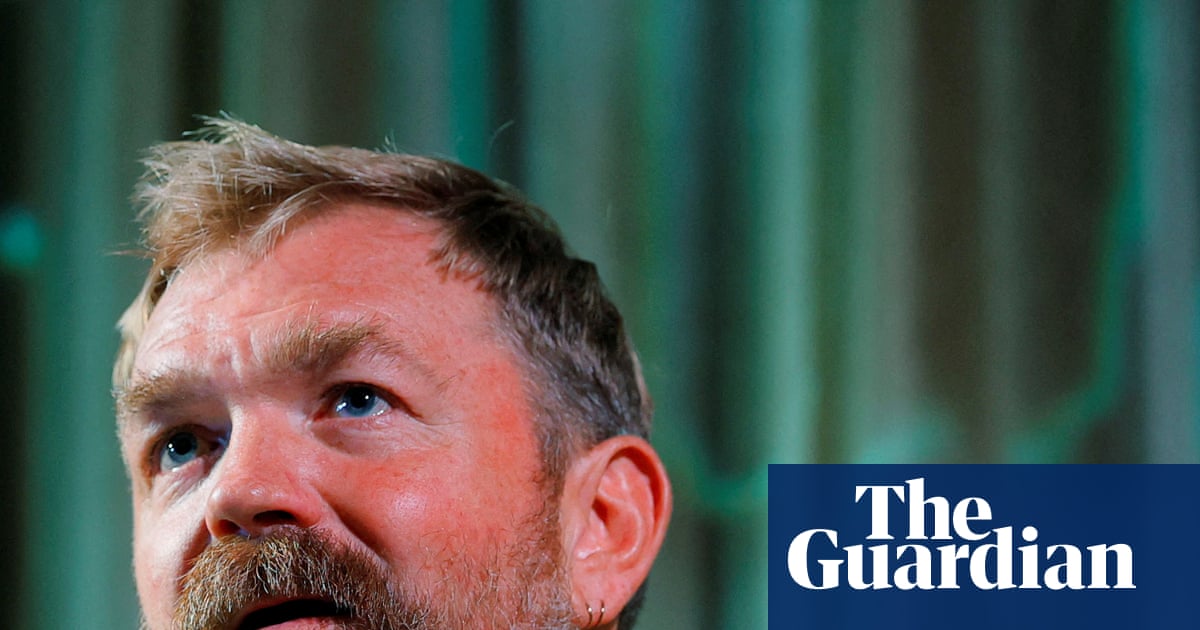
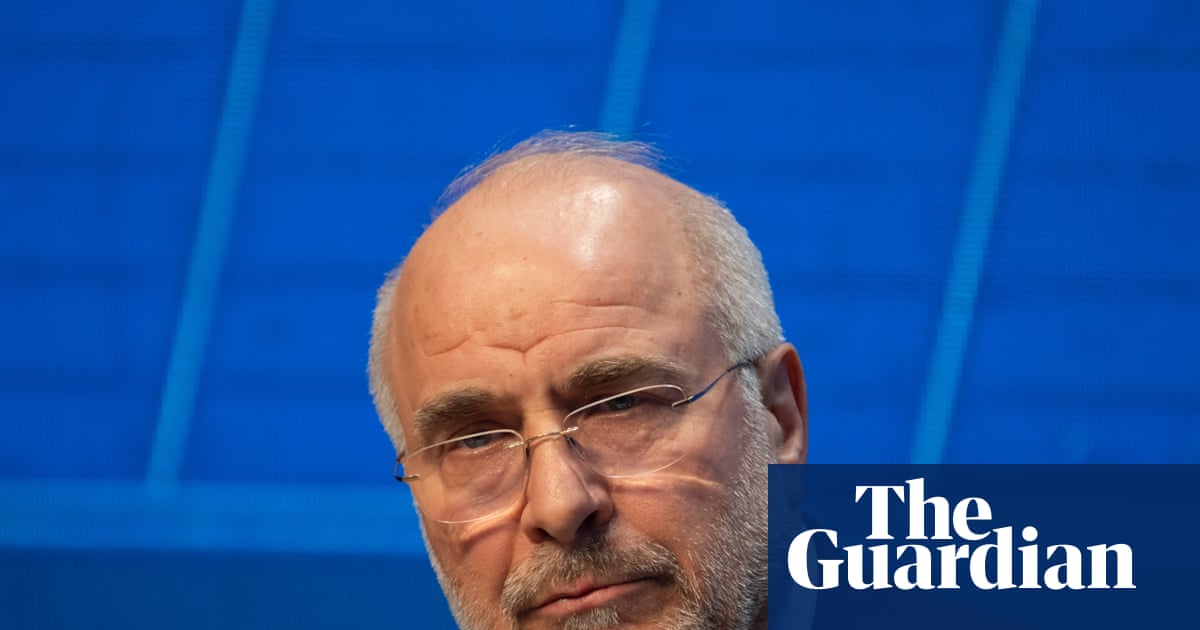
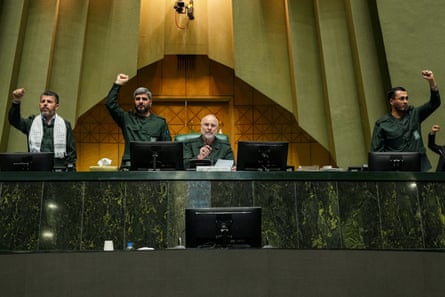
Just as in 1967 when a rank outsider won the Grand National due to a massive pile-up of other horses at one of the final fences, Mohammad Bagher Ghalibaf, the speaker of Iran’s parliament and Donald Trump’s putative interlocutor, appears to have come to the front as the field around him rapidly thinned.
In the pantheon of Iran’s leaders, ruthlessly reduced by targeted assassinations, Ghalibaf stands out as a survivor, but if the US president hopes he has finally located the Delcy Rodríguez of Iran – a pragmatic leader from within the regime willing to do business with America – he may need to think again.
Ghalibaf lacks the sophistication of Ali Larijani, the previous secretary of the supreme national security council, who at times fell out with the previous supreme leader but had a range of international contacts. Ghalibaf’s image is instead that of a strongman – possibly the one characteristic in any human that most appeals to Trump.
But trying to appoint Ghalibaf from Washington reveals either a misunderstanding of the Islamic Republic’s multilayered political system or a determination to upend it: power in Iran historically lies with the supreme leader, and Mojtaba Khamenei has been selected to that role by the Assembly of Experts.
While it is true that Khamenei has not been seen since his election and is believed to be seriously injured, Iran insists he is the functioning decision-maker.
Even if Khamenei were to die, Ghalibaf has few pretensions as a cleric and could not be a credible candidate to succeed Khamenei without diluting the religious role of the supreme leader. Similarly the president, Masoud Pezeshkian, who was elected two years ago and has two more years of his term to run.
The vacancy that existed for the post of secretary of the supreme national security council after Larijani’s death has been filled by another Islamic Revolutionary Guard Corps (IRGC) hardliner, Mohammad Bagher Zolghadr, so in the short term Ghalibaf can become not Iran’s formal leader, but instead part of what is increasingly resembling a security state leadership – if that is what Trump wants.
Ghalibaf was born in 1961 in Mashad, Khorasan, and his roots lie firmly in the IRGC. During the Iran-Iraq war, he commanded the IRGC’s 5th Nasr division, a unit involved in some of the most bloody battles. He became a protege of Ali Khamenei, who became supreme leader in 1989, and was named head of IRGC Aerospace from 1997 and then head of police from 2000. In the IRGC he ran the organisation’s construction arm, so, as Trump likes to say, he knows the art of the property deal.
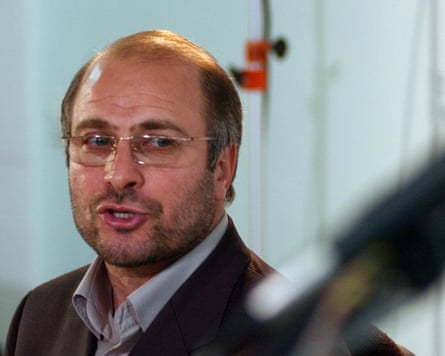
Ghalibaf cut his political spurs as mayor of Tehran between 2005 and 2017, a period in office when the first of many accusations of corruption started to surface. His supporters say Tehran’s development, including the expansion of the metro, was down to his far-sightedness. He was even the subject of a flattering 2008 profile in the New York Times, which described him as an “authoritarian moderniser” when he spoke at the Davos economic forum about opening Iran to foreign investment.
But he was also a social conservative who in 2013 ordered that all female secretaries, typists or office managers in municipal offices should be replaced with men.
Repression of dissent has been one of the hallmarks of his career. During student protests in 1999, Ghalibaf was one of the 24 IRGC commanders who signed a letter to the reformist president Mohammad Khatami warning that if demonstrations were allowed to continue, they would take matters into their own hands.
In an audio recording later released on social media, he acknowledged that he and the IRGC Qods Force commander Gen Qassem Suleimani – assassinated on Trump’s orders in 2020 – wielded clubs on motorcycles in the streets to suppress the student protest. “I was among those carrying out beatings on the street level and I am proud of that. I didn’t care I was a high-ranking commander,” Ghalibaf boasted.
Similarly, he showed no compunction in dealing violently with the ”women, life, freedom” protests in Tehran in 2022, saying the police should have enforced the hijab laws earlier. When protests over Iran’s economic crisis erupted at the beginning of this year, Ghalibaf saw “a quasi coup” and Islamic State-style “terrorism”.
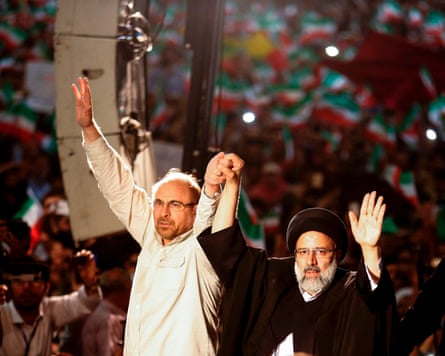
Ghalibaf first ran for president in 2005, with a campaign consciously modelled on the methods of Tony Blair, including focus group polling. He pitched himself as a populist adherent of globalisation, privatisation and smaller government who was willing, at least within limits, to build on the reformist agenda of the outgoing Khatami. He came fourth in the first round with 4m votes.
Later, Hassan Rouhani claimed that in 2005 Ghalibaf had struck a deal to free several major drug and fuel smugglers in exchange for their support. Ghalibaf ran again for the presidency in 2013 but came in a distant second to Rouhani.
Throughout his career, Ghalibaf has been dogged by accusations of corruption that have never come to court. When he made his most recent run for president in 2024, , his campaign was dogged by stories that his wife, daughter and son-in-law had gone on a lavish shopping trip to Istanbul in 2022. Photographs appeared with them laden with luggage, at a time when ordinary Iranians were suffering under sanctions and high inflation.
The family was said to have bought two apartments in Istanbul worth $1.6m. Ghalibaf said he was a victim of a political smears and claimed he had always opposed the shopping trip.
As speaker of parliament, he has broadly followed the mainstream, supporting the 2015 nuclear deal but then, when Trump pulled out, arguing that Iran’s future lay in alliances with Russia and China. His critics claim that Ghalibaf supporters backed the attack on the Saudi embassy in Tehran in 2016 that led to the breaking off of diplomatic relations between the two countries.
From Trump’s perspective, little of this matters if he feels, in negotiating with Ghalibaf, he is negotiating with Iran’s true power brokers. Ghalibaf does have lines to the commander-in-chief of the IRGC, Ahmad Vahidi, and the commander of the Khatam al-Anbiya central headquarters, Ali Abdollahi Aliabadi.
Soon after it became known that Washington thought he was reliable, Ghalibaf issued a tweet saying: “Our people demand the complete and humiliating punishment of the aggressors. All officials stand firmly behind their Leader and people until this goal is achieved. No negotiations with America have taken place. Fake news is intended to manipulate financial and oil markets and to escape the quagmire in which America and Israel are trapped.”
Trump’s anointment may at least send the message to Israel that Ghalibaf is not to be killed, but it also piles pressure on him to show he will not betray his country.