.png) 3 months ago
102
3 months ago
102
When Nike rolled out its collection of World Cup kits in late March, fans and pundits alike largely approved. The US men’s national team got arguably their most distinctive pair of shirts in decades, while other federations – France, England, Canada and Uruguay among them – earned strong reviews.
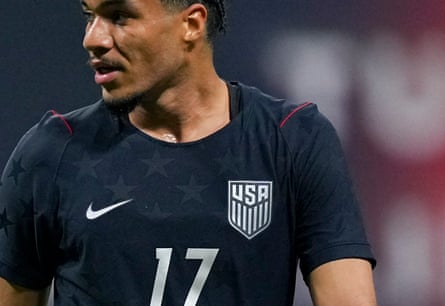
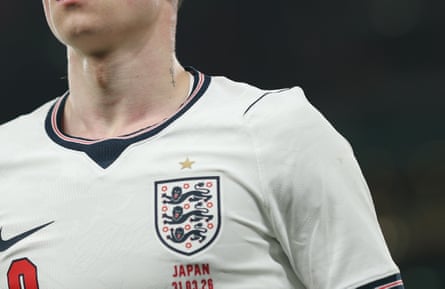
Over the last international break, when players took the field in the kits for the first time, many fans couldn’t help but become fixated on one singular detail of the new shirts: a somewhat unsightly bulge along the shoulder seam.
On some kits – like the US’s striped home kit – the bulge was barely noticeable. On others, like the elegant, understated shirt sported by French megastar Kylian Mbappé, it was borderline comical. Several Uruguay players sported maybe the most obvious seams of the bunch, making them look a bit like Shredder, the Teenage Mutant Ninja Turtles villain, in a friendly against England.

On social media and around the internet, fans reported similar issues with their own purchases. Some said they succeeded alleviating the issue by using a steamer, or washing the jerseys before wearing them. Others, like one Canadian fan on Reddit, were a lot angrier.
“The way the shoulders are sewn together just makes them bunch like this no matter what,” that fan wrote. “I think they might work if your shoulders are narrow – I have wider shoulders and there’s just no way to not make this shoulder line not bunch. This is a stupid, STUPID design.”
For fans that paid anywhere from $100 to $200 on one of these shirts, this is a significant problem. So too for the federations and athletes who want to look their best at the world’s most popular sporting event. Some wondered if anyone at Nike was taking note. They were.
In a statement to the Guardian, Nike acknowledged the issue with shoulders, and said they’re looking into what can be done about it – if anything.
“During the recent international break, we observed a minor issue with our Nike national team kits, most noticeable around the shoulder seam,” the company said via a spokesperson. “Performance is unaffected, but the overall aesthetic is not where it needs to be.”
Indeed, it’s an uncharacteristic flub from the sportswear giant, who touted the design and technology of the kits upon their release. Outdoor matches at this summer’s World Cup, played in the US, Canada and Mexico, may be among the hottest ever played in tournament history, an issue ostensibly addressed through the Aero-FIT design that serves as the framework for all of its authentic World Cup kits.
“[Aero-FIT] leverages computational design and a highly specialized, stitch-specific knitting process to help athletes stay cool,” the company’ marketing material reads.
A source familiar with that design process told the Guardian this week that Nike’s “computational design” is driven by performance data, and incorporates elements of AI to work alongside the company’s designers as they craft a product.
A source familiar with Nike’s rollout said on Tuesday that the company is now in conversation with partner federations and vendors as they weigh any next steps. It remains to be seen if the kits will be redesigned in some way, and what – if any – recourse will be provided to fans who are unsatisfied with the fit of the shirt. In either case, fixing the issues would constitute a massive logistical lift, both because of the tight turnaround with the World Cup kicking off in just over two months, and because of the number of jerseys that have already been sold.
“We are a global team of best-in-class designers, creators and dreamers who spend every day thinking about how to innovate, challenge ourselves, and take risks that push the beautiful game,” the company said in its statement to the Guardian. “We always hold ourselves and our products to the highest standards and this fell short. We’re working quickly to make this right for players and fans, because every kit should reflect the care, precision and pride that the game deserves.”
Nike has been making soccer kits since 1979, when they outfitted the Portland Timbers of the now defunct North American Soccer League. They entered the European market in 1983 when they partnered with Sunderland and rolled out their first national team shirt in 1994: a Nigeria strip that was used only once, in a friendly against England. By 1995, they’d expanded that operation to include many other national teams including the United States, who have used Nike ever since, and will remain with them until at least 2033, when their current long-term agreement ends.
England have worn Nike kits since 2013, and the current deal with the FA runs until 2030.