.png) 16 hours ago
9
16 hours ago
9
Kevin Keegan, the former England and Newcastle manager who was twice named European Footballer of the Year, has died aged 75. As a player, Keegan illuminated countless matches and in the 1970s proved a stalwart member of Liverpool’s serial domestic and European trophy-winning team.
Keegan’s family announced in January that he had cancer and, seven weeks ago, he himself revealed that it was stage four, the most advanced form of the disease. “A double Ballon d’Or winner, Kevin was a much loved husband, father and grandfather,” read a statement. “The family would like to thank Kevin’s incredible medical team for all their support. This is a hugely difficult time and they are requesting space and privacy.”
Alan Shearer, who played under Keegan with both Newcastle and England, paid his own tribute wrote on social media. “My hero. My manager. My friend,” wrote the former striker. “Sleep easy Boss”. Newcastle released a heartfelt statement describing Keegan as “one of the most iconic, influential and deeply loved figures in our club’s history.” As it explained: “Kevin was more than a legendary football and manager. He was the beating heart of Newcastle United for generations of supporters.”
By late Monday afternoon, floral tributes were piling up outside St James’ Park as Newcastle fans paid their respects to an enduring hero. Liverpool, meanwhile, said Keegan’s “indomitable spirit and remarkable contribution will be forever etched in our history and his legacy will live on.”
Keegan started his career at Scunthorpe before being signed for Liverpool by Bill Shankly for £33,000 in 1971. It did not take long for the son of a South Yorkshire miner to become “King Kev”, with his invariably imperious attacking performances helping Shankly’s side win three First Division titles, the FA Cup, the Uefa Cup (twice) and the 1977 European Cup.
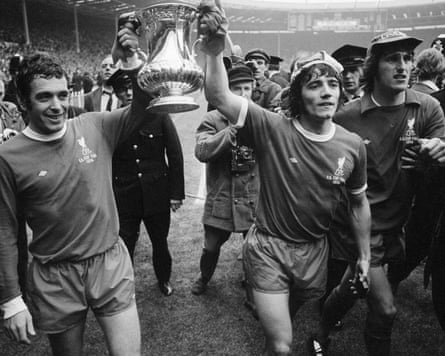
By his own admission not a natural talent, Keegan turned himself into one of the world’s best players. “Mighty Mouse” was relentlessly combative, never ducked a challenge, and remained refreshingly humble even as he became a firm favourite among the Kop “I learnt so much from Shanks,” Keegan said. “He used to say, ‘If I was a road sweeper my street would be the cleanest in the borough. I took that to heart.”
Keegan left Liverpool for Hamburg in 1977, where he became the only British player to twice win the Ballon d’Or. Upon returning from Germany in 1980 he enjoyed further playing stints with Southampton and Newcastle before retiring in 1984. By then he had also won 63 England caps, scoring 21 goals in the course of an international career that involved playing at the 1982 World Cup.
Keegan was never one to hold back. He was memorably sent off for scrapping with Leeds’ Billy Bremner in the 1974 Charity Shield and harboured a certain volatility allied to a pugnacious intolerance of football’s machinations, real or perceived. “I don’t like people to deceive me and tell me lies,” he told the Guardian in 2018.
Although a private man, Keegan also embraced fame. He was one of the English game’s first players to wear personalised branded football boots, recorded a hit single, ‘Head Over Heels in Love’, and became an enduring star of the BBC’s Superstars. He was also the public face of ‘70s aftershave Brut 33 and became close friends with George Best. “I wanted so much to have his ability,” Keegan confessed.“His skill was unbelievable. I played against [Johan] Cruyff, [Franz] Beckenbauer, [Diego] Maradona but I still say Besty was the best.”
Having hung up his boots at the age of 33, Keegan moved to Spain where his two daughters grew up, initially unaware he had been a footballer. “It was the best decision I made in my life,” he told the Guardian in 2011. “I was at the highest level and the only way was down. I call it the glass mountain - you can’t climb a glass mountain.”
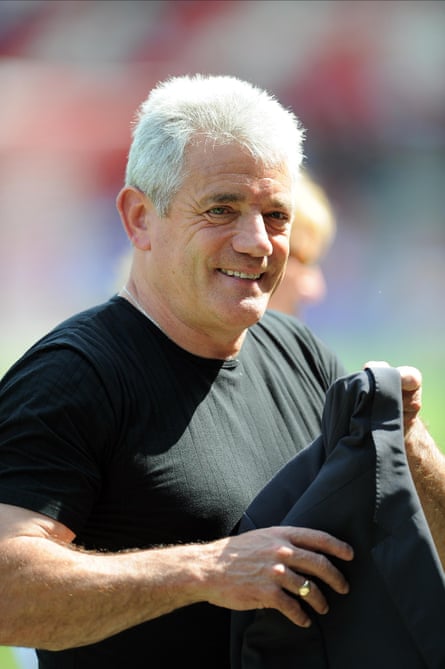
In 1992 Keegan decided to venture into management at Newcastle, guiding them into the Premier League and to within touching distance of the 1995-96 title, only to miss out to Alex Ferguson’s Manchester United. His finger-jabbing “I will love it” rant from that season has become part of the English game’s lore.
After leaving St James’ Park in January 1997 Keegan briefly took charge of Fulham before becoming England manager in 1999. That 20-month, 18-game tenure would end in despair when, following a disappointing Euro 2000 campaign, Keegan resigned following a defeat by Germany at Wembley. The Football Association has announced it will pay tribute to Keegan, before England’s Nations League game with Spain at Wembley in September.
A happier spell at Manchester City – who on Monday credited Keegan with establishing them as a Premier League club – followed before an emotional return to Newcastle in 2008. That swansong ended within eight months, however, amid acute tensions with the club’s then-owner Mike Ashley and his board. In 2009 a tribunal awarded Keegan £2m damages for constructive dismissal.
Keegan, who was made an OBE in 1982 for services to football, made a fleeting return to public life in June. During an event on Tyneside he talked about his desire to return to St James’ Park to say “goodbye” and joked that the club would need to “wait until I die” to erect a statue of him. He was optimistic at the time that gruelling treatment was keeping his cancer at bay.
“Kevin’s impact will not be measured by appearances or results,” read Newcastle’s statement. “It will live on in the memories he created with club and country, the dreams he inspired wherever he went and the generations of supporters around the world who fell in love with football because of him.”