.png) 11 hours ago
11
11 hours ago
11
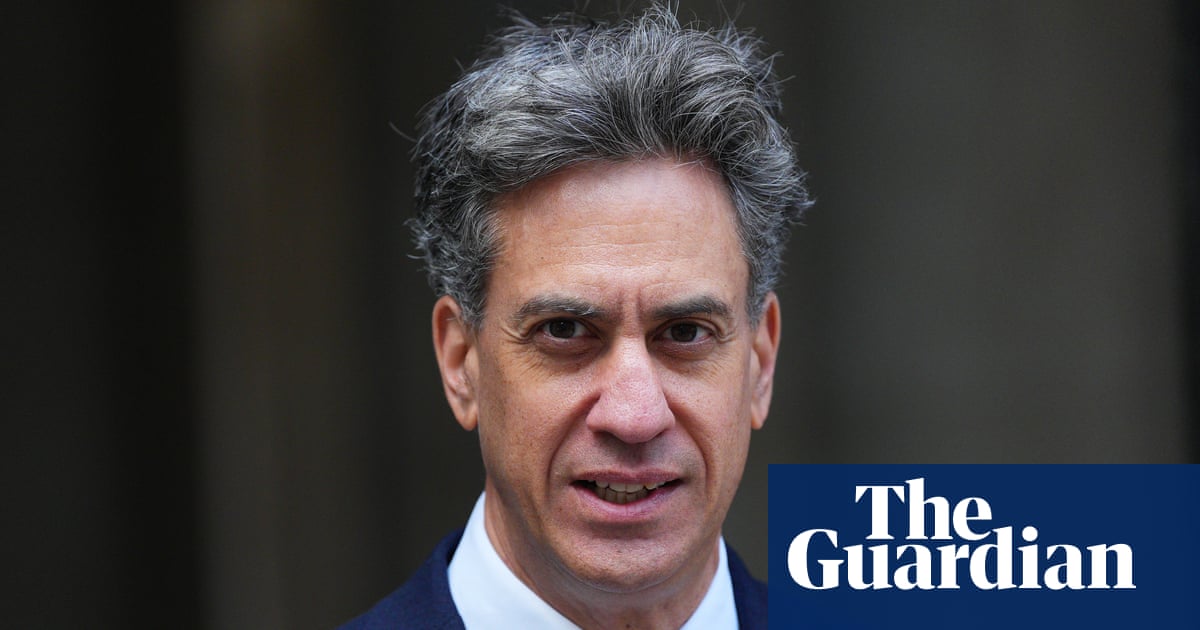
Andy Burnham has said his arrival in power will “bring back hope” to Britain as he launched his premiership with the surprise appointment of John Healey as chancellor and a promise to repair the long-term damage caused to communities during the Thatcher era.
The new UK prime minister acknowledged people were “fed up” with politics as he addressed the country after taking over from Keir Starmer in Downing Street, saying the government needed to “do better” to deliver real change.
In his speech outside No 10, he said the government would announce “some breathing space” on Tuesday for people regarding the cost of living, with plans to cut energy bills and bus fares expected as part of a fully funded package.
Burnham later told reporters that he would look at “any flexibility” within the government’s existing fiscal rules to help borrow billions more to invest in infrastructure – but would take a “very prudent” approach to the economy.
UK 10-year gilt prices dropped after his comments, with the markets already on the edge over the risks of higher borrowing and increased debt. But they had closed by the time that Healey, 66, regarded as a safe pair of hands, was announced.
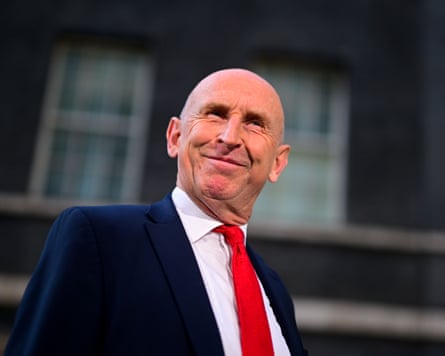
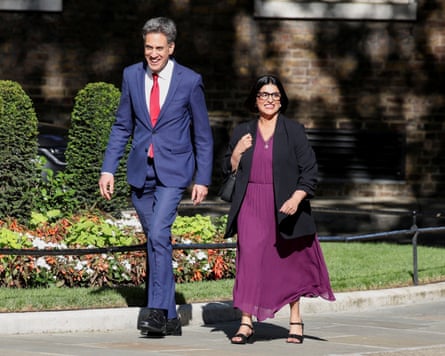
The former defence secretary, whose resignation pushed Starmer to the brink, emerged as the compromise candidate after Ed Miliband and Shabana Mahmood were tipped for the role. Miliband takes over as foreign secretary while Mahmood remains at the Home Office.
In his first world leader call, Burnham spoke to Donald Trump – who had previously suggested he was just mayor of “some town” – inviting him to Manchester for next year’s G20 summit.
Trump later wrote on social media that the two leaders “had a very good conversation”, discussing Iran, the US-UK military alliance and trade. Trump said he and Burnham plan to meet “in the not too distant future”.
Burnham also called Ukraine’s Volodymyr Zelenskyy and European Union chief Ursula von der Leyen.
Burnham’s arrival in Downing Street as the UK’s sixth prime minister in a decade, after Labour MPs brutally toppled Starmer from office, gives his party an opportunity for a second hearing with the public, but could also unleash yet more instability.
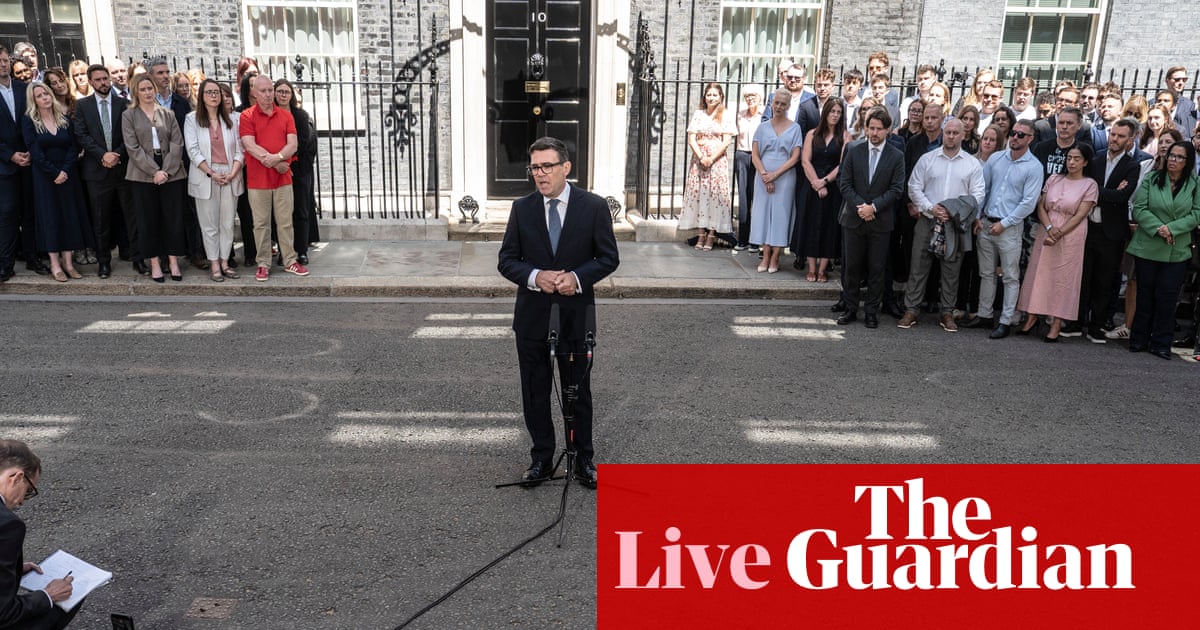
Speaking without notes, and watched by his wife, Marie-France van Heel, he said: “I am acutely conscious that I am the sixth person in the last 10 years to walk up this street, the seventh prime minister since 2016, making this a moment for reflection and new resolution.
“It requires my generation of politicians to raise our game and rise to the new challenge. Britain needs to show the world that we can regain our stability once again, and that is our challenge to make politics work, to make it work better.
“I know people at home are fed up with politics. I hear you, and I want to be honest with you. We have not been good enough, and we need to be better. We will be.”
He told the assembled crowd: “Let’s build a new national sense of unity, of common purpose, and positivity. Let us make this the moment when Britain starts to believe again, the moment we bring back hope.”
After sacking a tranche of Starmer loyalists, including chancellor Rachel Reeves – who was understood to have turned down another job to return to the backbenches – and deputy prime minister David Lammy, Burnham spent Monday evening making his cabinet appointments.
In another senior appointment, Louise Haigh, Burnham’s right-hand woman, was made first secretary of state and chancellor of the duchy of Lancaster, running a beefed-up Cabinet Office that will be the “political engine room” driving his agenda.
Yvette Cooper will move from the Foreign Office to the Department of Health, where she will oversee Burnham’s plans to transform the broken social care system, while Pat McFadden stays at the Department for Work and Pensions.
Angela Rayner, the former deputy prime minister who resigned after a row over stamp duty, was reappointed to her previous role as housing secretary.
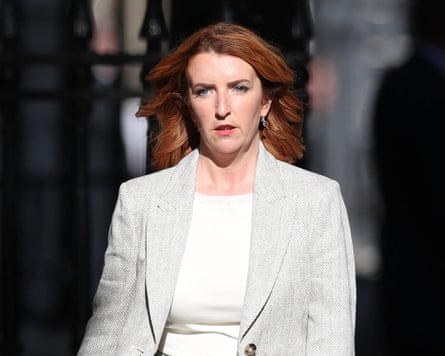
Burnham, who took over from Starmer as the leader of the Labour party on Friday, has put transforming the UK’s economic system at the heart of his plans, despite limited room for manoeuvre before the next election given his commitment to the fiscal rules.
after newsletter promotion
“We will make this moment a circuit breaker for Britain, bringing forward the biggest changes in the last 40 years. A new political model and a new economic model,” he told the crowd gathered in the Downing Street sunshine.
“In the 1980s, Britain took some wrong turns. Political power was centralised, economic power privatised, large parts of the country deindustrialised and they still haven’t recovered.
“Many feel as though they’re still in decline, and they don’t have the ability to turn things around. And that’s why we will change politics to make it more collaborative, more about problem-solving than point-scoring. And we will take power out of here and carry it into every postcode in the land so that they can do more.”
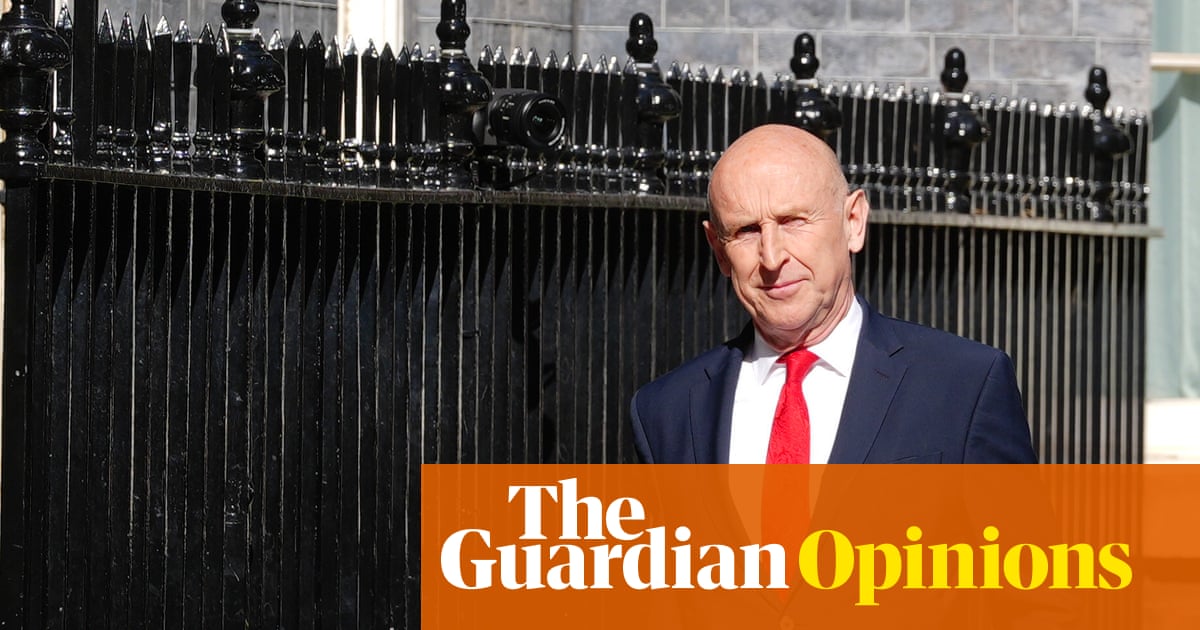
In appointing Healey, a former Treasury minister under Gordon Brown, Burnham has put an experienced figure in charge of delivering on his vision for the UK economy, combining fiscal responsibility with a focus on reindustrialisation, devolution, the cost of living and growth.
The new chancellor will now also be responsible for finding the money to raise military spending to 3% by 2030, and is expected to look closely at defence bonds, which he had argued for when at the Ministry of Defence but were rejected by the Treasury as they meant more borrowing.
After his speech, Burnham told reporters he was planning to announce a fully funded cost of living support package including support for energy bills and bus fares this year, which could eventually include more radical plans such as freezing private sector rents.
“We just want to do some things that people will feel, and feel quite quickly. It won’t solve everything, it won’t take all of the pressure off, but it just shows the direction of travel and that we’re serious about helping them out,” he said.
He also made comments about borrowing more, within the fiscal rules, which he had mooted on the Makerfield campaign trail, but which nevertheless unsettled the markets when made from No 10.
“I’ve said we’ll stick to the fiscal rules and by that I mean the existing fiscal rules and use, obviously, any flexibility within them,” he said. “So none of this is about taking risks with the economy. I’ve never done that in any role that I’ve had. I’ve always taken a very prudent approach.”
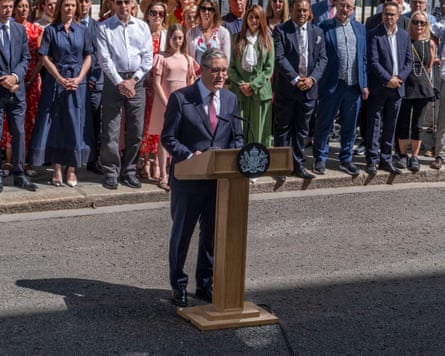
In his speech, Burnham announced his first instruction in power would be to end rough sleeping, after a visit to homeless people in central London on Monday. He made a similar pledge when he became Greater Manchester mayor but oversaw four years of rising street homelessness.
He also suggested he could cut income tax for lower earners in a future budget, potentially raising the tax-free personal allowance, which has been frozen for the last five years. But he refused to rule out bringing back the 50p top rate of tax to pay for it.
Speaking before leaving No 10 for the final time, Starmer told the assembled crowd that “my work is done” of turning round the Labour party, but gave Burnham a final warning about foreign affairs. “We face a world now where our enemies will stop at nothing to divide us,” he said.
The outgoing prime minister, who left handwritten notes for all Downing Street staff, added: “I go with good grace, I go with a smile and I go proud of everything that we have achieved.”