.png) 3 months ago
72
3 months ago
72
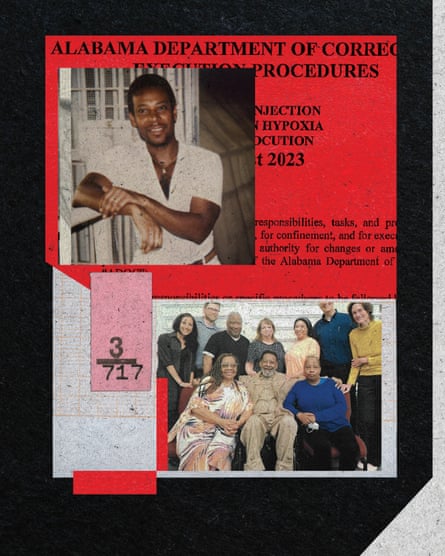
With all of his appeals exhausted, Charles “Sonny” Burton had already chosen the last meal he would have before being put to death by nitrogen gas at Alabama’s Holman correctional facility: barbecue chicken, banana cake with ice cream, and sweet tea – all things he hadn’t been able to enjoy in years with his diabetes.
The writing seemed to be on the wall. His fate was in the hands of Kay Ivey, Alabama’s governor and a staunch supporter of capital punishment who has presided over more than 25 executions – more than any other Alabama governor since the death penalty was reinstated in 1976. Her office had been repeating the same line for weeks: “Governor Ivey has no plans to grant clemency.” But on the morning of 10 March, just two days before Sonny was to be put to death, Ivey commuted his sentence to life without parole.
No new court ruling or legal evidence had come out, but the governor was forced to respond to an unusually diverse coalition: faith leaders, jurors, the victim’s own daughter, a former death row sergeant, Republican politicians, conservative advocacy groups and tens of thousands of ordinary citizens. Together, they made the case that executing a 75-year-old man who didn’t pull the trigger – while the man who did died in prison with a life sentence – was simply wrong.
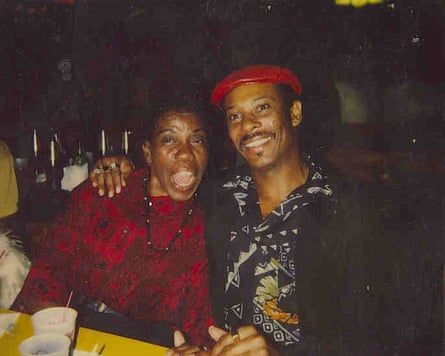
Imam Aswan Abdul-Addarr, who serves as a spiritual adviser to Sonny Burton and nearly two dozen Sunni Muslims on Alabama’s death row, said the effort succeeded because it was quickly able to transcend politics. “Most of humanity hates injustice,” said Abdul-Addarr. “You don’t want to see someone innocent punished for the bad acts or crimes or sins of someone else. It just goes against nature.”
Burton had been on death row since 1992 for the killing of Doug Battle during a robbery at a Talladega AutoZone. Derrick DeBruce, the man who fired the weapon, had his sentence reduced to life without parole in 2014 after winning a federal appeal. That meant that of the six people who took part in the robbery, Burton alone was facing execution.
Rather than challenging capital punishment head-on, Burton’s attorney, Matt Schulz, and other advocates argued that even supporters of the death penalty should demand it be applied consistently – an idea that showed up in Ivey’s letter to the Alabama department of corrections calling off the execution.
In response to questions about whether the public campaign influenced the governor’s decision, Gina Maiola, the governor’s communications director, pointed to the statement Ivey released announcing the commutation.
“I firmly believe that the death penalty is just punishment for society’s most heinous offenders, as shown by the 25 executions I have presided over as governor,” Ivey wrote. “In order to ensure the continued viability of the death penalty, however, I also believe that a government’s most consequential action must be administered fairly and proportionately.”
Demetrius Minor, executive director of Conservatives Concerned About the Death Penalty, said the way strange bedfellows rallied around Burton’s case shows the power of meeting people where they’re at. In his appeals to Republicans, Minor likes to draw on a general skepticism of government among conservatives.
“If we can’t trust the government to properly oversee airline transportation, to deliver our mail on time, to truthfully tell us what’s in the Epstein files,” he said. “Why would we trust the government with our life?”
Schulz began advocating for Burton in 2008, when his case file was among the first put on his desk at the federal public defender’s office in Montgomery. By the time the clemency petition was filed in 2025, every avenue through the courts had closed. That meant he would have to do something lawyers representing convicted murderers rarely like to do: take his case to the court of public opinion.
“Even by the state’s own version of events, I have a client who did not kill anyone, did not even see the shooting take place,” Schulz said. “And the state ended up resentencing the shooter to life without parole.”
Schulz brought some of Minor’s arguments about government distrust to media outlets that capital defense attorneys rarely turn to: he went on a local conservative talk radio show. “People said, ‘You’re crazy to go on there,’” he recalled. “I said, ‘I think I’m crazy not to.’ The facts are so in our favor that either he’s going to end up agreeing with me, or he’s going to look more unreasonable. But I’m still getting it talked about.”
The host, Joey Clark, came around during the broadcast and later published a piece on a conservative news website saying that if he were governor, he would have granted the commutation.
“I knew at that point we were getting voices out there that maybe the governor or her staff would hear and think: ‘Wait a minute, this case really is different,’” Schulz said.
Schulz’s clemency petition cited precedents from Texas, Oklahoma and Arkansas – states where Republican governors who supported the death penalty had refused to execute inmates who played a lesser role in a killing than a co-defendant who got a lighter sentence.
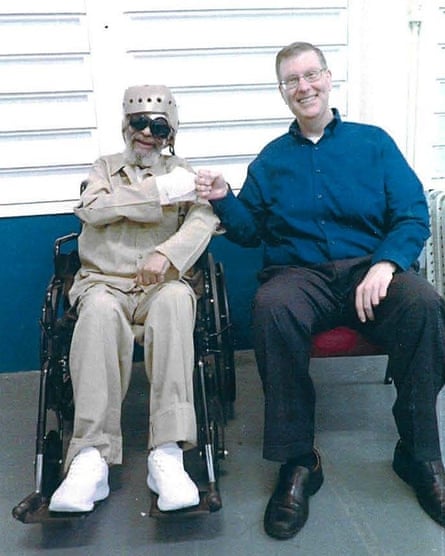
Burton’s advocates concluded the best spokespeople would be those whom the governor couldn’t easily dismiss as ardent opponents of the death penalty. Tori Battle, whose father, Doug, was killed in the robbery, published a letter to Ivey asking her to explain why the execution was necessary. They also got six of the eight surviving members of the original 1992 jury to sign declarations opposing the execution.
William James, who spent more than two decades as a sergeant on death row at Holman correctional facility and was present for 37 executions, also spoke out. While he didn’t object to capital punishment, Burton’s case gave him pause.
“What really got me was the condition he’s in now,” said James, who knew Burton from his time at Holman. “He’s 75 years old. He’s in a wheelchair and he has to wear a helmet to keep from knocking his brains out from falls.”
Burton’s advocates asked James to think back to his time working on death row. “One of the attorneys said to me: ‘Just picture somebody having to pick him up out of his wheelchair and lay him on the gurney.’ I didn’t like that picture.”
At the same time, Minor went about finding high-profile conservatives who had relationships with the governor. Eventually, state legislators from both parties, along with Alice Marie Johnson, Trump’s hand-picked “pardon czar”, reached out to Ivey before the commutation was announced.
For Shane Isner, pastor of First Christian church in Montgomery, the lesson in Burton’s case was clear: “The governor is not just someone to be screamed at, but is an actor who has values and incentives that we need to craft our messages to.”
Not all of Burton’s advocates walked away feeling entirely victorious. Jeff Hood, a spiritual adviser who has been present at 11 executions since states opened their chambers to outside clergy, said the outcome in Burton’s case illustrated just how high the bar remains for death row inmates seeking relief.
“In terms of clemency cases, it doesn’t get much better than this,” Hood said. “The narrative was practically perfect. So this feels like an anomaly. It’s hard for me to walk away from this and say: ‘This is progress.’”
Schulz agreed that there are limitations in the strategy they used in Burton’s case. “If I have to walk into a conservative radio show and be talking about how some guy raped and murdered and slit somebody’s throat and all these horrible facts, everything else is going to get lost in the quagmire,” he said.
Still, he offered a lesson for other death row attorneys: “If it is a case that you can reasonably engage with folks who would not normally agree with you, give it some consideration.”
Britton O’Shields, lead attorney at Council on American-Islamic Relations of Alabama, said the generally positive response to Ivey’s decision suggested it might shape how future cases unfold. “It was a good reminder that being decent is politically viable in Alabama,” she said. “I like to believe that it may incentivize governors in the future.”
That idea will soon be tested. At the end of March, Alabama’s attorney general filed motions seeking execution dates for two more prisoners.