.png) 3 months ago
74
3 months ago
74
Conservationists have called for restrictions on pet flea treatments after research found songbird feathers widely contaminated with substances that can damage the birds’ brains and kill unborn chicks.
Almost every feather sample tested from five common species of UK garden birds contained either permethrin, imidacloprid or fipronil – all insecticides that are banned for agricultural use but still common in pet tick and flea treatments.
Fipronil and imidacloprid are known to impair breeding success in garden birds and to disrupt their neurological function, the researchers said, while permethrin has been found to slow the growth rates and repress the feather growth of wild bird chicks.
The findings come as dozens of veterinary professionals, wildlife charities and academics signed an open letter urging the government to address “systemic failures in the regulation of veterinary medicines”.
“Pet owners should feel confident that the products they use protect their pets,” they wrote in the letter to Emma Reynolds, the environment secretary.
Her department last week began an eight-week consultation on banning UK pet owners from buying the treatments for cats and dogs over the counter, in response to fears over their impact on songbirds, fish and other aquatic creatures.
More than 80% of UK cats and dogs are given at least one flea or tick treatment every year – many of them applied monthly as “spot-on treatments” that then wash off into wastewater, rivers or soil.
In the latest study, funded by the conservation charity Songbird Survival, researchers from the University of Sussex conducted chemical analyses on feathers collected by volunteers belonging to blackbirds, blue tits, chaffinches, dunnocks and goldfinches.
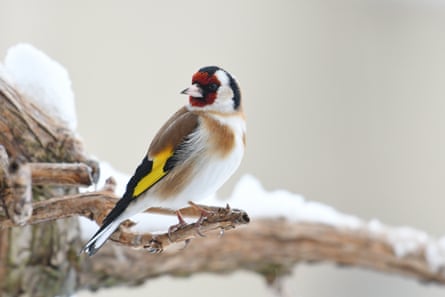
The analysis found pesticides in 100% of feather samples, including permethrin in 98%, imidacloprid in 88% and fipronil in 72%. Alarmingly, chlorpyrifos, banned in the UK owing to evidence that it harms children’s cognitive development, was found in 96% of samples.
“[Our study] shows that wild animals are chronically exposed to pesticides,” said Dr Cannelle Tassin de Montaigu, one of the study’s authors.
The impacts of pesticides on fledgling songbirds are yet to be explored fully, but Tassin de Montaigu said: “Given the neurotoxicity of fipronil and imidacloprid, even low-level, chronic exposure during early development could lead to irreversible physiological or behavioural impairment in chicks.”
The problem is not that we use flea and tick treatments at all, she said, but that we use them too frequently, often for prevention.
“We wouldn’t treat children for lice every single month. We treat when it’s necessary, but we don’t do this with pets. And that should change.”
Susan Morgan, the chief executive of Songbird Survival, called the researchers’ findings “deeply alarming” and said an effective first step would be to make flea treatments prescription-only.
“A label on a box isn’t enough. We need informed conversations between vets and pet owners to protect pets, homes and the environment,” said Morgan.
A Defra spokesperson said: “This government is committed to restoring nature and cleaning up our rivers. We are taking water pollution from flea and tick treatment extremely seriously and have recently launched a call for evidence to inform decisions about how to best address the issue, for example, by changing the way that it is sold.”