.png) 6 hours ago
5
6 hours ago
5
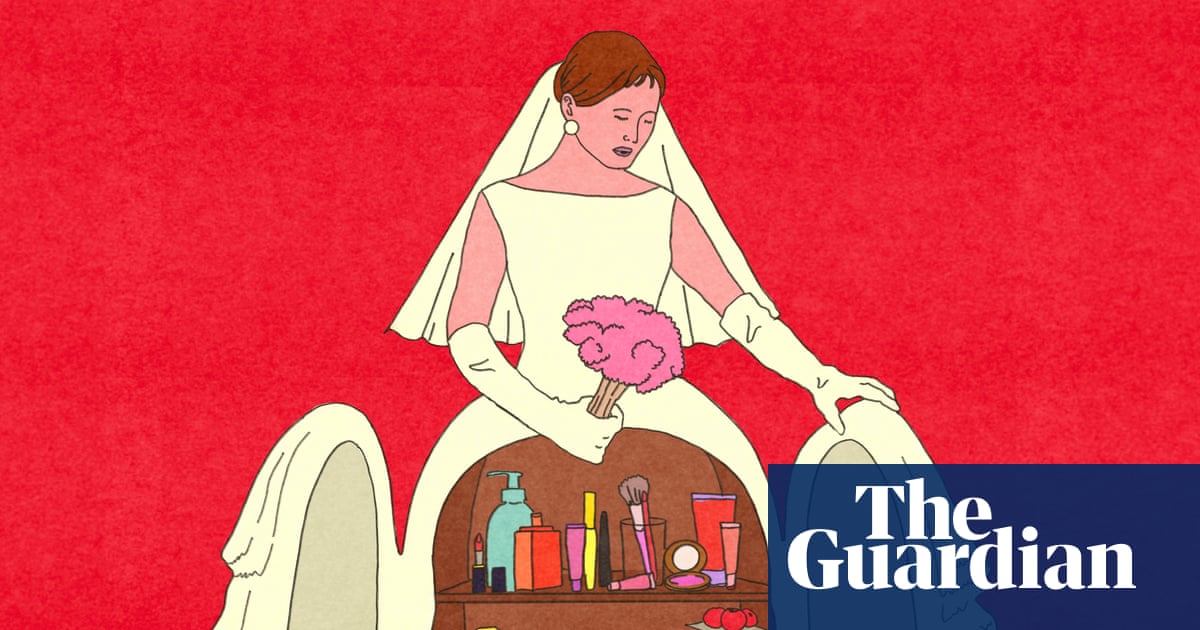
Picture a typical hangover: a morning spent curled under a comforter, chugging Gatorade and shame spiraling about what you might have said at the bar the night before.
Not so for the young people who are “romanticizing” their hangovers on TikTok and Instagram. Instead, they are flaunting their dark eye circles and raging headaches as the aftereffects of a good time, broadcasting their bad decisions to the world with a glowy sheen.
“Romanticizing my hangover bc I’m a young ho and that means I had a fun night,” one woman captioned a clip where she dances while brushing her teeth, clad in an oversize hoodie and sweatpants. “Like that’s lowkey a beautiful thing.”
“Feeling hungover but full of love and happiness,” another woman wrote over a video of her smiling through a sunny day-after walk. Yet another creator turned her crapulence into a flex: “I’m rotting in my nyc apartment and im hungover from running around nyc til the sun came up,” she wrote, punctuating the sentiment to the soundtrack of Frank Sinatra’s New York, New York.
You could read this budding trend as a cheeky rebuttal of body optimization culture, with its fixation on biohacking, restrictive dieting and Oura rings: so what if I overindulged last night? “People are sick of hearing about wellness culture,” said Mary Anne Porto, a senior editor at Punch, a drinks-themed digital media company. “I personally don’t think we should be romanticizing feeling gross, but it’s about not beating yourself up over having a good night. They’re saying it’s OK to have balance.”
Posting aspirational hangover content also feels transgressive in an era of hypercurated social media feeds, where one can scroll for hours watching picture-perfect influencers extolling the benefits of strength training or green juices.
“Alcohol and hangover [content] sort of taps into that ‘I’m colorfully destructive,’ devil-may-care type of thing,” said Dave Infante, who writes Fingers, an independent newsletter about American drinking culture. “That’s always been an attractive persona for young people.” He cited millennial figures such as Cat Marnell, a beauty writer and “reformed derelict” who released the addiction memoir How to Murder Your Life, and elder party stateswoman Chelsea Handler during her Are You There, Vodka? It’s Me, Chelsea days.
People in their 20s are poised to revive the archetype. “Romanticizing being hungover because that’s what Alix Earle would do,” one woman captioned a TikTok that has been liked more than 222,000 times. That would be a reference to the popular influencer who became famous documenting her hard-partying days as an undergraduate and titled her podcast Hot Mess with Alix Earle.
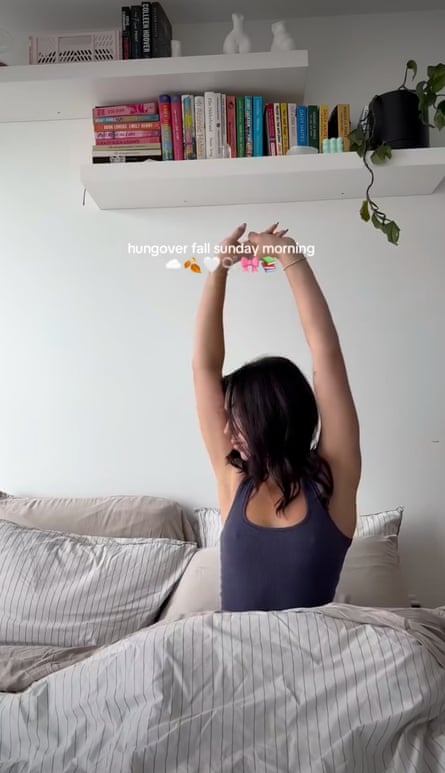
Last fall, Allana Blumberg, a 26-year-old content creator and pilates instructor, posted an Instagram reel that made her hangover routine look like a scene from a Pottery Barn catalogue: lighting candles, making herself a cappuccino, lazily reading her Kindle as dappled sunlight streamed through her apartment window. She looked almost cherubic.
Blumberg says romanticizing her hangovers keeps her from wallowing in bed. “Just because you go out with your girls and have a fun night doesn’t mean you have to continue to do things that aren’t so great for your body, like sleeping in late or ordering more greasy food,” she said. “[You can] trick yourself into thinking that your hangover isn’t real and feel like you’re in a romcom situation,” turning even the most uncomfortable moments into movie scene-worthy content.
Other young people are rebranding lost weekends into their own kind of wellness rituals. Their Tiktoks double as covert commercials, with users displaying products they claim help ease their hangover pain. A groggy woman flashes a shot of her recovery day almond milk, another takes her hangover as an excuse to walk to H Mart “to get some groceries & a sweet treat”. Drinks like Red Bull, Electrolit, iced coffee or Diet Coke are touted as essentials. Not that this is necessarily new – people have long sold somewhat dubious hangover remedies, from hair of the dog bloody marys to prairie oysters.
The fact that gen Z are getting hangovers at all might come as a surprise, since the cohort has been dubbed “generation sensible”, eschewing drinking culture and spending less time socializing in person. But Infante says this narrative does not reflect the full picture: Americans of all ages are sobering up, not just young people, and gen Z ranges in age from 14 to 29, meaning many are not yet old enough to legally barhop.
Additionally, it costs money to drink, and gen Z isn’t exactly flush with cash. A recent survey found that 75% of gen Z respondents are cutting back on social plans that often involve drinking, such as dining out and going to events – not because they don’t want to, but because they cannot afford it. Maybe that’s reason enough to romanticize a hangover; having one has become an achievement of sorts, a party favor to take home after a rare night out.
TikTok’s hangover chic has its limits. The videos are never too graphic – no one is vomiting – and they romanticize the average hangover, not a wild night of binging or seriously risky behavior. And crucially, most creators who romanticize their hangovers appear to be under 30, still young enough to bounce back quickly. “I used to joke when I was younger that a hangover is a mindset, because I used to not get hungover at all,” Blumberg said. “But it’s definitely starting to get worse.”