.png) 2 months ago
58
2 months ago
58
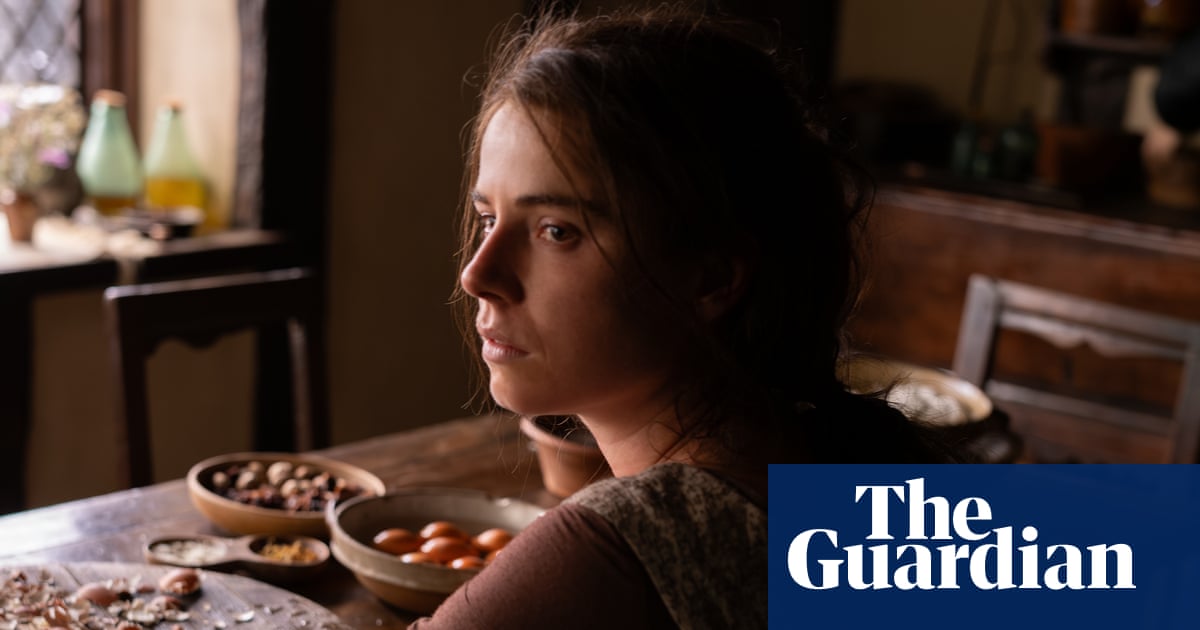
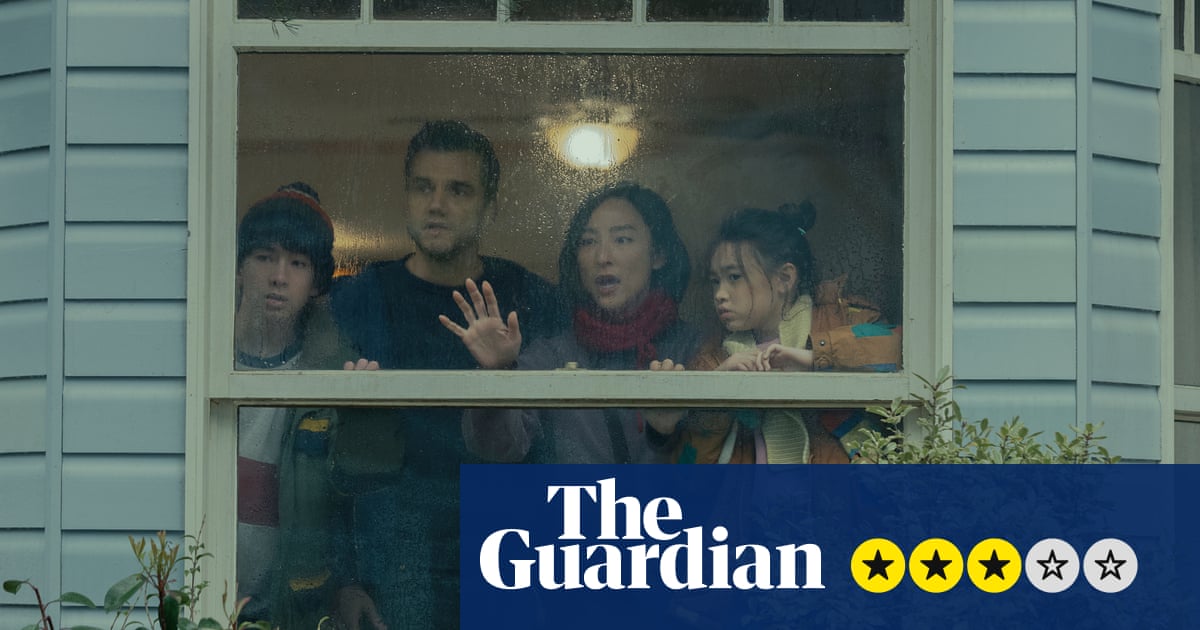
The scene is the convent garden of a closed order of nuns, the place is somewhere in the UK with a maelstrom of social problems – which, let’s be real, could be any of it. Keeley Hawes’s Anna, a nun, isn’t self-righteously cloistered; she makes regular forays into the real world to do good works at food banks. But she’s not of this world. She moves with such unobtrusive poise it takes a beat to work out what it reminds you of: obedience. Bride of Christ, remember? She wears her faith lightly: when she’s in the walled garden, it’s to grow cabbages not praise God’s creation, but she still radiates peace, and her vegetable patch radiates it right back at her.
In the 90s, Hawes slayed one period drama after another: Wives and Daughters, Our Mutual Friend. For Falling – the surprising project from writer-creator Jack Thorne, who made such a strong statement about the modern condition and its harsh edges with Adolescence that MPs were debating it in parliament – she channels something I haven’t seen since those days. Her range of gorgeous guileless expressions.
“That was the most difficult thing – to play as someone of my age [50], but with no experience of any of the life that someone of my age would have lived,” says Hawes. “She just went in at 18. And that has been her life. But I wasn’t aware I was pulling a face.”
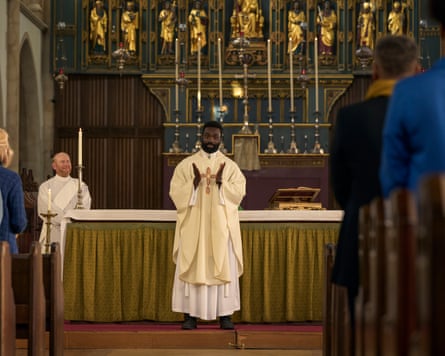
Into the convent steps Paapa Essiedu as David, a priest, younger, far more worldly. The character has his demons – as did Essiedu’s breakthrough roles in I May Destroy You in 2020, as Kwame, best friend to Michaela Coel’s Arabella, and crime family member Alex Dumani in Gangs of London. But while his David is an outlier priest – with a distinctly desperate boredom as he hears confessions – there’s a burning purity to him, as there is to Anna, which is novel. We’d be calling him the Hot Priest if that hadn’t already been trademarked by Andrew Scott in Fleabag.
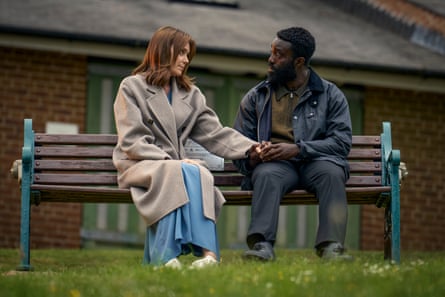
So it would be wrong to say the institutional realities of Catholicism have never been updated for TV, but it’s nevertheless deeply unfamiliar territory to see humanised people of the cloth. “Sometimes their cars break down,” says Essiedu. “Sometimes they need to go and buy socks.” Hawes and Essiedu are speaking to me from the same room over Zoom, and they have a trace of their screen chemistry, a kind of ardent bafflement: what planet are you from – and how do I live on it?
Anyway, David arrives at the nunnery with a social purpose: he wants to get a teenager out of an abusive home to stay there for a bit. He’s thrown off course, frustrated by the rules that keep the whole machine turning, and Anna makes him an omelette. Their hands touch, in the most accidental way, then all hell breaks lose.
“There’s something passionately and violently present within them that’s both drawing them together and pushing them apart,” Essiedu says, “which is really fruitful.”
Neither Hawes nor Essiedu were raised Catholic – she wasn’t religious at all and he went to an Anglican church when he was a kid, but “stopped going late teenage years, when you start to take your own personality in life”. Hawes spent some time with an ex-nun, researching the role.
“She is my sort of age, and had had the same experience of what they call jumping over the wall,” says Hawes. I don’t know if that’s self-explanatory – it’s a puckish, Beatrix Potter sort of phrase for an unbelievably hard decision: to leave the convent and rejoin a world that has probably changed beyond measure since you last saw it and decided it wasn’t for you.
Hawes refers to this ex-nun as “my nun”, a messenger from a different world in which everything is exactly the same but completely different, orientated round a different sun (the Lord, obvs). “It was a no-holds-barred conversation that I was able to have with her, asking all the funny little questions: how do nuns come by sanitary products? How do you find things out if you can’t use Google?”
Apparently, that wall-jumping – I guess you could call it divorcing Christ or mindfully uncoupling, but they probably wouldn’t like that – happens a bit among young nuns, then there’s a long period of stability before another spate in middle age. There’s a subtle but distinctive hint of perimenopause in Anna’s sudden sloughing off of her orders, the intensity of her desire.
“It’s never explicit that it’s a menopause moment,” says Hawes. “But I did talk with my nun about how difficult it is for women en masse in convents, just not knowing what’s happening, not having access to the sort of help we take for granted. It doesn’t get any less tricky with 200 other brides of Christ under the same roof.”
Essiedu had his own real-life hot priest for a mentor, “literally, he was so fit. I felt like I knew that type of person – fusty, respectably grey-haired, dull-voiced, the vicar that I remembered from chapel when I was a kid. This was a guy who was the same age as me [35], who had incredible style, who took his jack russell with him wherever he went, and who was just cool. Incredibly charismatic. Really up for talking about the contradictions he came up against, both in his faith and in his work.”
Anna’s work vanishes the minute she leaves the convent – forlorn, in a job centre, she says: “I could do a CV but it would just say ‘nun’. Employment history: ‘nun’” – but David’s is non-stop. He gets punched in the face, literally, metaphorically, constantly. He falls off the wagon, he gets back on again. He’s beset on many sides by the cold, unarguable hierarchies of the church. “Sometimes we can get so lost with this idea that religious leaders are fanatic people who just follow doctrine. They find their road map in scripture. But these are real people.”
Everyone in the drama other than David and Anna is fully, uncomplicatedly in the world – abusive husbands, good fiances, sisters, Sisters, congregants, AA meetings, parents, friends. It’s recognisable as society and yet you can’t completely place it in time. It’s not because the protagonists don’t have smartphones, nor because absolutely nobody watches the news. It’s more that the protagonists are in a quandary between the now and their eternal souls, so whether it’s 2010 or 2020 feels unknowable, unimportant. “I think it’s quite good that it sits in this slightly liminal, adjacent world,” Essiedu says.
If the inner turmoil of the nun and priest feel so unfamiliar, the sheer niceness of the surrounding cast, the wholesomeness of their exploits – churchgoers close-harmonising on a coach trip, David’s sister, Susan, who is deaf and says reading people’s facial expressions is her superpower – is a high-wire act, dramatically speaking. How do you animate good people, invest them with texture and complexity, supply them with events, keep them from being saccharine? Often in the early episodes it’s a bit dicey, on all those counts, but when it comes together it feels genuinely original, the drama as a whole slightly ethereal. Sophie Stone, who was the first deaf student ever to be admitted to Rada at the amazingly late date of 2005, gives a magnetic, grounded performance that contributes a lot to the overall achievement of the atmosphere: good but not wet.
I don’t want to mention Heated Rivalry, because really, again? And in almost every way, Falling is nothing like it – no hot sex, zero Canadians, absence of athleisure (again, this contributes to the timelessness. If it were today, someone, possibly most people, would be wearing a fleece). But there is something in the beat of the drama that makes it, like the hockey smash, feel more like romantic fiction than TV. Anna starts off with an ardent certainty, she’s felt a thing for a man, that’s it, that’s destiny: she has “a kind of naivety, like a teenager, she thinks this is how it works”, Hawes says. David is wide-eyed with horror that he’s turned a nun. “She puts him in a position where he’s almost playing catchup with his own feelings,” Essiedu says. Perhaps because both their consciences loom so large in the drama that guilt is almost a character in its own right, all their actions seem to be driving towards the question of what love actually is, whether it means enough to trump duty, whether duty means anything without it.
Is love one constant feeling, across different relationships, or is it like cancer: as soon as we understand it better, we’ll start giving each variety a different name? “It might not be a romance story at all,” Essiedu says, “but a love story – filial love, the love a priest has for their flock, the love within the sisterhood, the love one must show in order to forgive one’s mother before her last rites are read.” “And the love of God,” Hawes chips in. Oh yes, I forgot about God. “Well, if you’d just let me finish,” Essiedu says, “for the love of God!”
Falling starts on Channel 4 on 19 May at 9pm.