.png) 4 hours ago
3
4 hours ago
3
The British Grand Prix ending under the safety car and denying a potentially thrilling finale was a controversial but also complicated incident, raising issues from the sport’s past and questions over what it may yet address for the future.
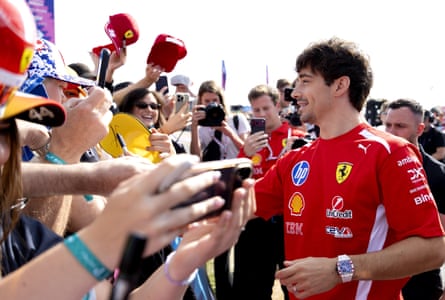
Silverstone victor Charles Leclerc of course said afterwards that he would rather have done it in more style than with taking the flag behind the safety car. The scenario does not happen often but whenever it does, almost no one finds it a satisfactory way to conclude a race.
On Sunday Max Verstappen’s late crash had prompted the safety car and the field continued round in its wake for the final four laps until the flag fell. The frustration for fans was exacerbated due to an FIA software issue which had stated that the safety car was to come in, setting up a final lap of racing to settle the result. With the crowd and the TV audience teed up for a one-lap shootout to the flag it was an error which only made it all the more painful as the field continued to circuit behind the safety car, with booing at Silverstone and, no doubt, at TVs across the world.
History looms here – all too recent and all too large. Five years ago another late race safety car at the Abu Dhabi season decider in 2021 was perhaps F1’s most controversial of finishes. There, the FIA race director, Michael Masi, failed to apply the rules correctly which the FIA concluded had been “human error” and which likely cost Lewis Hamilton his eighth title.
Masi was later dismissed. He had been attempting to ensure the race did not finish under the safety car. At Silverstone and indeed every race since that decision in Abu Dhabi, the rules have been applied to the letter.
On Sunday that meant the process of allowing lapped cars to unlap themselves had begun and as the regulations state, one lap had to be completed after the “unlapping procedure” before racing could resume. That was the lap that finished the race.
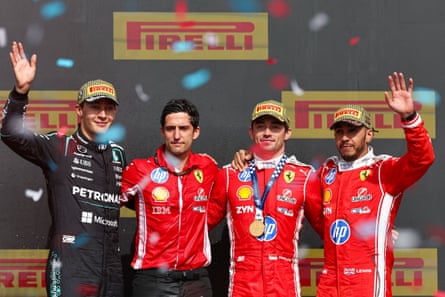
Mercedes’ George Russell benefited from the decision in that he held second rather than being challenged from behind by Hamilton on new rubber in a final lap shootout.
Russell’s Mercedes team principal, Toto Wolff, was also right in pointedly noting that had the same rules been followed in 2021 the outcome there would have been different.
“I would have preferred for this to happen in ’21, that was more important,” he said. “But it’s good that the regulations have been followed. Sometimes it doesn’t make for the most exciting finale. Generally from a spectacle standpoint, everybody would have loved to see Lewis on a soft [tyre] against us and maybe fighting with Leclerc.
“But this is a sport. The show follows sport and not the other way around. So it’s good that the FIA made that call.”
Wolff, as he generally does, makes a reasonable and rational case. Better that at least it’s fair and every one knows the playing field is level but the British GP also raises the question of how F1 may address the issue of races ending as damp squibs.
after newsletter promotion
The rule allowing lapped cars to resume their place on the lead lap under the safety car is time-consuming and once more coming under scrutiny.
They are given leave to unlap themselves to remove them from being out of position among runners who would otherwise have to negotiate them at a restart. But it takes an age to do so by having them go ahead at racing speed to then rejoin the back of the field. One alternative that has been posited is that in these circumstances they would simply be better dropping back behind the cars who remain on the lead lap which, late in a race, would allow a quicker resumption of racing.
Equally while no one enjoys a stop-start contest, another adaptation may be for a rule specific to the final stages of a race, calling for a red flag and a restart to ensure a proper finish, with all drivers then able to change their tyres, at least guaranteeing the fans a racing finale. Around which there are endless pros and cons; if they were considered artificially imposed scene resetters – F1’s hydration breaks – it would not sit well with many, the sport following the show.
Yet it is impossible to cast off the sense of anticlimax that was overwhelming at Silverstone. The crowd – a record-breaking sold-out attendance of 564,000 over the weekend, bettering the previous highest of 520,000 at the Australian GP in 1995 – had enjoyed a superb weekend of sport but were left underwhelmed at the end. Denied the denouement to an event many have long waited for and spent a fortune to attend.
None of these are simple solutions. They are complex and would require no little debate, but there was little satisfaction for fans, deflated and disappointed at the end of what should have been a gripping climax.