.png) 1 hour ago
5
1 hour ago
5
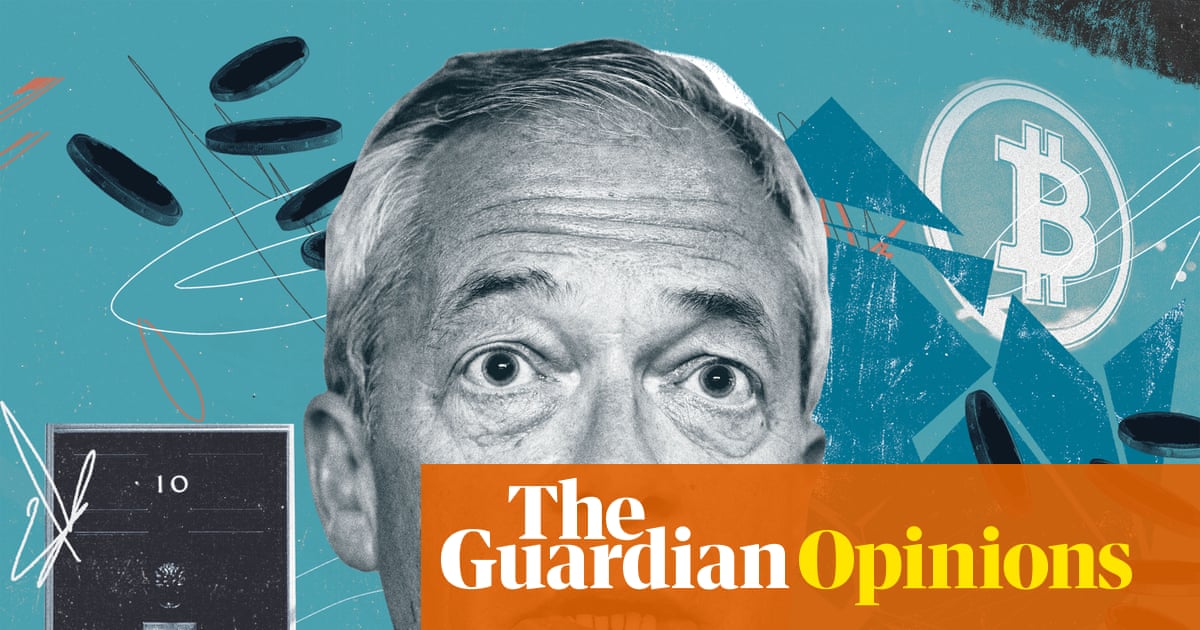
With his personal funding once again under media scrutiny, Nigel Farage, the leader of the rightwing Reform UK party, is adamant he is the victim of an “establishment plot” trying to stop him from reaching Downing Street.
This time, Farage is facing questions about support for his lifestyle from the convicted criminal George Cottrell, just months after it was revealed by the Guardian that he also took £5m from the cryptocurrency billionaire Christopher Harborne as a personal gift.
The accusation that shadowy actors and political opponents within the establishment are against him are being levelled not only by Farage, but by a range of his outriders – from former donor Arron Banks to Reform’s deputy leader, Richard Tice.
Andy Wigmore, an associate of Farage from his Brexit campaign days and now on the board of his anti-World Health Organization pressure group, claimed that the news was “[an] old story and irrelevant – Farage was not even elected, not in politics and guess what, the public don’t trust the media witch-hunt against Farage … same playbook against Farage as we witnessed against Trump, didn’t work with Trump won’t work with Farage.”
This conspiracy theory – that legitimate journalism investigating a senior politician’s finances is a “plot” or “witch-hunt” – does indeed appear to be straight out of the Donald Trump campaign playbook. Fans of the US president repeatedly made parallel claims in relation to attempts to impeach him during his first presidency.
But the political genesis of this phrase goes back even further than Trump, who has since become the master of whipping up popular feeling against “the establishment”.
Back in 2014, before Trump’s first ascent to power, Farage repeatedly claimed there was an “establishment plot” to undermine him after newspapers questioned his use of expenses and funding from the EU while he was a member of its parliament.
Time and again, when Farage’s political funding is put under the spotlight, his response has been to claim that dark forces are at work to prevent him getting to the top of politics – rather than acknowledging that his approach to declaring donations and interests has been cavalier at best.
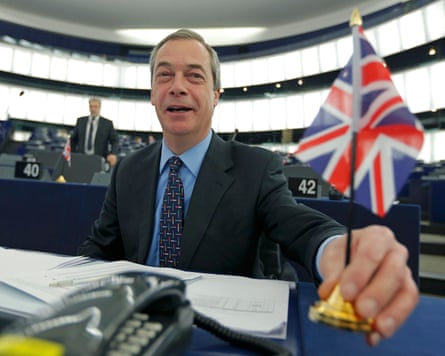
While an MEP, he had his pay docked for misspending European parliament funds in 2018, and then a committee investigated his failure to declare support from Banks. And in the last two years alone, he has apologised for 17 breaches of the MPs’ code of conduct after failing to declare £380,000 of income on time.
This time he even tried to argue that the journalists behind the investigation into his funding by Cottrell were “Labour stooges” – despite them working for the right-leaning Sunday Times and having previously published plenty of exposés about politicians on the left.
The alternative explanation is that Farage is reluctant to be open about the sources of his funding, after being bankrolled for years by successive wealthy benefactors from Banks during the Brexit era to Harborne and Cottrell more recently.
Now, he is facing a standards investigation over the £5m Harborne gift and potentially one over the Cottrell funding as well.
In relation to the Harborne and Cottrell money, Farage claims “no one cares” – particularly not Reform voters, who are simply fed up with the status quo.
However, some others in Reform are not so sure, with worries that their leader may be losing his ability to shrug off scandal in the same way that the populist former Conservative leader and prime minister Boris Johnson began to lose his lustre after the Partygate furore.
Regardless of whether rules have actually been breached, the impression that Farage is a man of the people who can sympathise with the cost of living struggles of millions is undermined by his willingness to let others pay his bills.
If he is found to have broken the rules again, the standards watchdog could ultimately suspend him from parliament, which may lead to a recall petition.
A byelection in his Clacton constituency would be the ultimate test of whether Reform voters are worried by Farage’s funding.
The question is whether Farage has the stamina for such a battle – and for what could be another three years of sustained questioning about his finances before the next general election.