.png) 2 months ago
44
2 months ago
44
“That’s how we found it. We swam to the island, we went on a hike barefoot to the top and we were just captivated. And over the course of many years, we developed the opportunity to help realise its potential.”
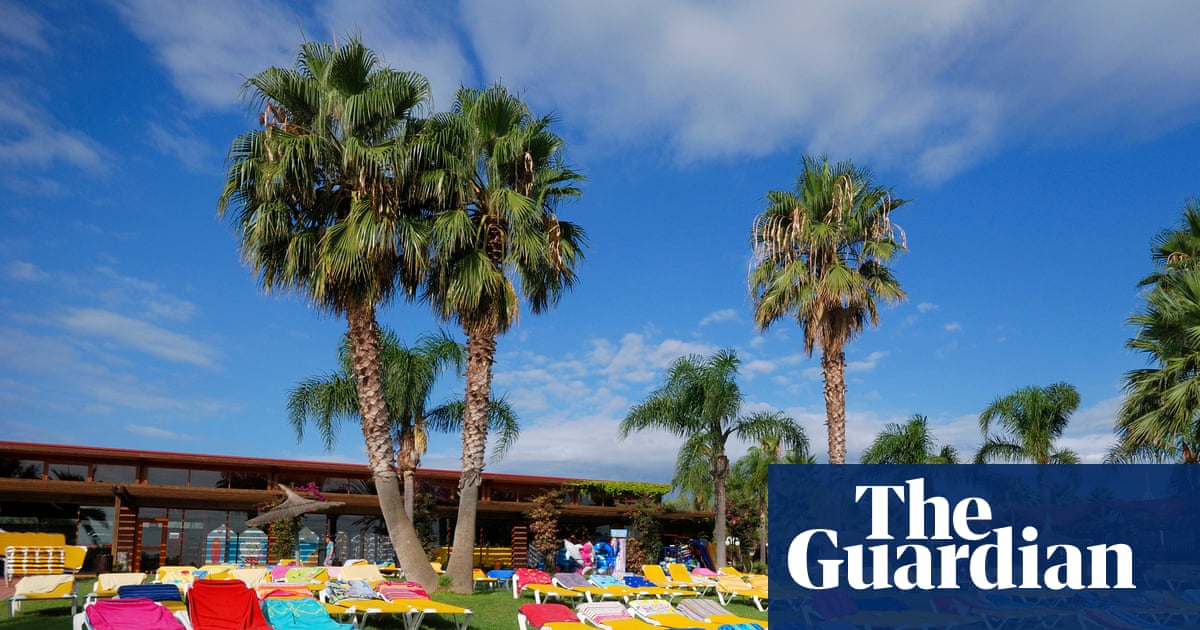
If the woman sharing her desire to improve a foreign island had disembarked from a smugglers’ boat, her dream would have been crushed in one of those migrant detention centres that the Albanian government has recently built with Italy. But the boat in question was a multimillion-dollar yacht, and the woman hiking barefoot to the top was Ivanka Trump. Realising the dream merely required summoning the country’s prime minister, Edi Rama, and volunteering her husband, Jared Kushner, and one of his companies to turn a protected wildlife zone into luxury real estate.
The Albanian government insists no deal has been finalised. But nor has it concealed the enthusiasm. Who could blame it? After decades of transition from communism to capitalism, and protracted EU accession negotiations, Albania has lost more than 1.2 million of its citizens to migration. It has low levels of manufacturing, an agricultural sector in dire need of modernisation, and a higher-education sector in crisis since the universities privatisation of the 1990s. With no industrial, financial or human capital to offer on the global market, the only thing left to sell is nature. Even tourism, recently on the rise, has required a concerted government campaign to improve the country’s image.
Sustainable development and environmental protection are easy to call for, but expensive and hard to deliver. Under competitive globalisation, real estate and luxury tourism generate growth faster, even if they increase inequality and deplete natural resources. The models on offer are those that richer countries tried 30 years ago and now regret.
Albanians know that real-estate speculation without state support means ordinary citizens will struggle to buy a flat or pay the rent. They know that luxury tourism means holidays in your own country become a privilege for the few. With no unions to speak of and a labour movement that only appears in communist-era footage of May Day parades, work conditions are so exploitative that only those from countries even more desperate are willing to take the jobs that arise. Albanians simply pack their things and move to other countries, met with abuse and xenophobia. They keep their heads low, knowing that it’s the price to pay for a future for their children.
In May 2025, the ruling Socialist party won elections for the fourth time. At roughly 44%, the turnout was a historic low, despite the extension of the vote to diaspora Albanians for the first time. There was no electoral manifesto, no principled debate with the opposition (whose leader, Sali Berisha, mostly appeared depicted as an owl on government social media). In a country where more than 90% of citizens support European integration, it was enough to paper billboards with photographs of European passports and hammer away with one date: accession by 2030.
This is the other side of European integration: criticism of the government becomes opposition to Europe itself. There is no choice between competing visions of society, only between different managers of the same inevitable trajectory. With politics reduced to technocratic rule, the only lens through which to read political conflict is “corruption”: as though postcommunist societies carried it in the blood, as though the problem were individual transgressions and not the rules themselves.
For many years Albanians accepted this with the same fatalism one accepts a natural disaster. Now, young people are pushing back. The current protests involve a recent law on strategic investments, which entrenches the oligarchic capture of the state. It escalated when heavy machinery moved into a protected coastal wetland and a viral video showed private security guards beating a protester while state police stood by.
A generation taught to think that the only questions are how fast to build infrastructure for tourism, how quickly to integrate into the EU, how efficiently to attract investment, now asks: does it have to be like this? Does democracy have to be the rule of a handful of the super rich?
It is an inspiring example of civic activism that I had not seen since the fall of communism, whose international visibility is no doubt helped by media attention on the Trump family. But why now? The opposition tried in vain for years to mobilise the public against, well, “corruption”. Fires have been lit in parliament and molotov cocktails hurled at government buildings. But, in the case of Kushner, the opposition is at one with the government. Perhaps this is what enabled thousands of young people to flood on to the streets: the certainty that disobedience won’t be captured. It is moving to see them sing, dance, clean the street after the protests and hand flowers to the police. Unlike the old opposition, they are not giving up on the state, but insisting that it belongs to them.
In recent years, the response to political disenfranchisement in postcommunist Europe has been the growth of xenophobic movements. Only the far right reaped the benefits of anti-system protests. The Albanian case proves that a different kind of mobilisation is possible. Far from regressive nationalism or nostalgia, the movement’s only rallying call, “Albania is not for sale”, reflects something the socialist government has forgotten: that self-respect is the precondition of being respected by others, and that a people willing to sell their soul for investment will find, in the end, that the soul was the only thing of value they had.
There is something admirable and fragile about a movement without leaders, without a programme, without the infrastructure to sustain it in the long term. Leaderless movements are harder to co-opt but easier to infiltrate and disperse. To be effective, they need to move from resistance to proposition, finding the political unity suppressed by rallying around a single cause.
Yet, for as long as democratic politics is captured by the wealthy few, politicians come and go, anticorruption trials satisfy the urge to punish, and civic activism gives the illusion of change. One by one, societies find themselves in the same paradoxes of capitalist development. The challenge is not just how to replace individuals but how to build a new system.
Still, for once, Albania doesn’t need to catch up with Europe – it can lead. A generation willing to mobilise for an alternative model of development, one that rejects oligarchic capture and connects environmental protection to democratic legitimacy, should not be feared but celebrated. Rather than becoming “like the rest of Europe”, as the old slogan used to go, Albania could teach the old continent a lesson in self-respect.
-
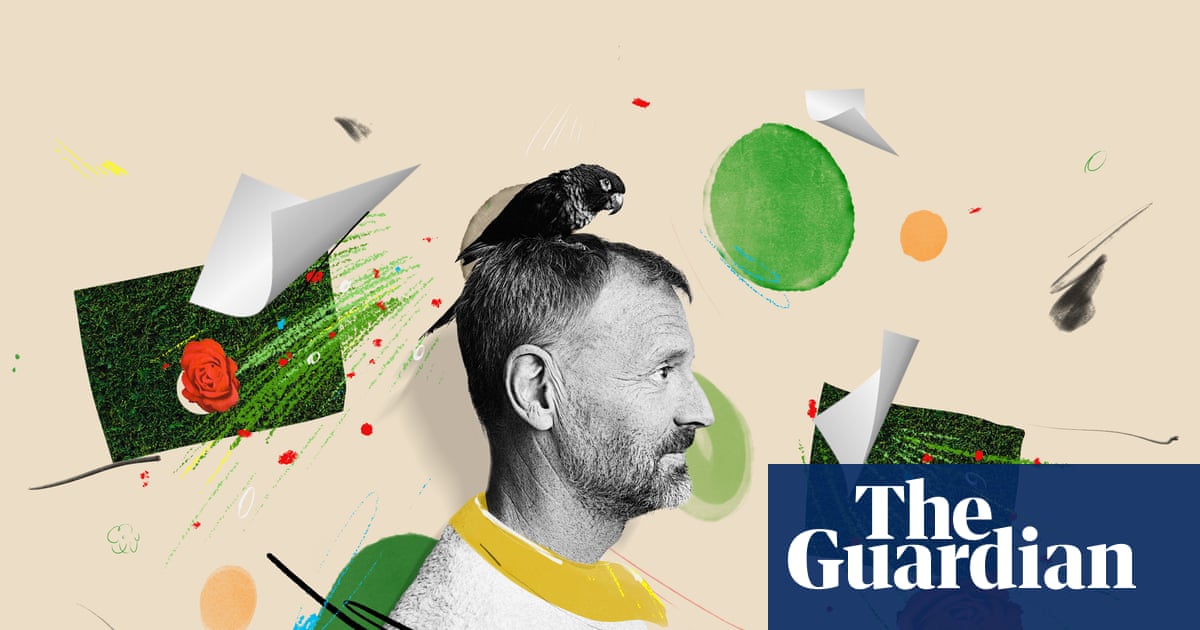
Lea Ypi is professor of political history and philosophy at the London School of Economics and author of Indignity: A Life Reimagined