.png) 1 hour ago
6
1 hour ago
6
The excavator stops suddenly. One of the workers reaches into the rubble and pulls something free. It isn’t twisted metal or broken concrete. It’s a child’s exercise book. The pages are still intact, covered in neat handwriting. On the front is a name: Mahya Salari. She was eight years old.
Five months after a missile tore through Shajareh Tayyebeh primary school in Minab, southern Iran, excavators are still clearing the site. Workers search for the remains of one young boy still believed to be buried beneath the debris.
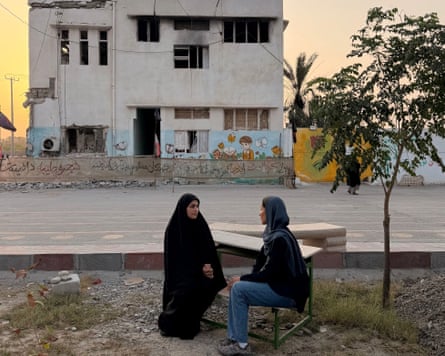
According to the Minab prosecutor’s office, 156 people, including 120 children, were killed here when a US-made Tomahawk missile struck on the first day of the war.
Across the city, portraits of the dead cover walls, shopfronts and roadside billboards, turning Minab into one of the defining symbols of civilian suffering.
When the US-Israeli attack on Iran began on 28 February, the US president, Donald Trump, had urged Iranians to “seize control of your destiny”. Instead, the conflict reshaped Iran in ways few expected. A journey the length of the country reveals the impact of the war on its people.
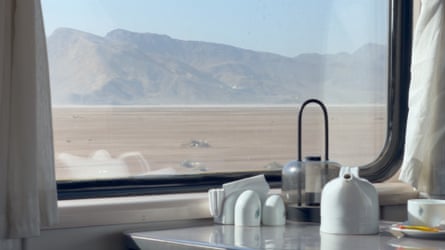
The overnight train from Tehran to Bandar Abbas runs almost 900 miles (1,448km), linking Iran’s political heart with its strategic southern coastline on the strait of Hormuz. It passes mountains, desert and the nuclear sites of Natanz and Fordow before reaching the Gulf.
On board are students, footballers, businessmen and families. People from every corner of Iran, each carrying their own version of what the war has meant.
As the year began, anti-government protests had spread across the country after years of crippling sanctions, economic hardship, soaring inflation and growing frustration with Iran’s leadership.
The demonstrations were met with a sweeping security crackdown in which rights groups documented tens of thousands killed and many more who disappeared, although the full toll remains disputed.
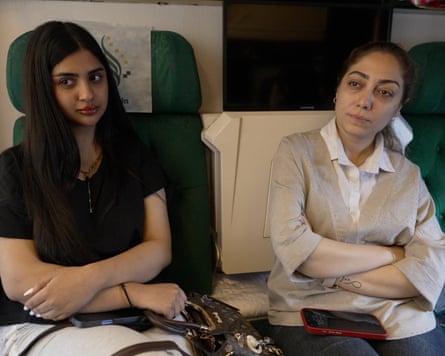
Then came the war. Azadeh, a lawyer, says the first days of the conflict were frightening. “It is in every Iranian’s nature to adapt,” she says. “We tried to continue living our lives, to keep our routines and remain hopeful.”
When asked what she thought about the protests and about the many who believed war could bring political change, she pauses before quietly declining to answer and turning her head away from the conversation.
Inside the sleeper carriage, conversations drift swiftly between family, work and everyday life but politics is different. Speaking openly about politics in Iran carries obvious risks.
Her travelling companion, Sepideh, a beautician, is more willing to talk. “I love Iran,” she says. “I love it so much. But when I see my youth slipping away and my dreams disappearing, I have no choice but to leave.”
Further down the train, two young footballers are travelling home after the domestic league resumed following a months-long suspension. Asked what they remember most about the war, Abdollah says: “They attacked a school that was full of children … They were seven, eight and nine years old. Our whole country was upset. The day of the funeral … everyone cried.”
At Bandar Abbas, a road then turns inland towards Minab, a two-hour journey. It is a city known for its date palms and its busy Thursday market. Today, the war dominates almost every street.
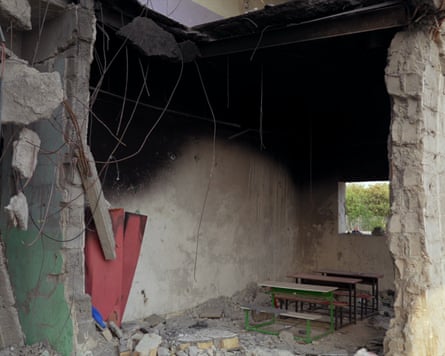
Portraits of children killed in the school attack hang from buildings and lamp-posts. At the edge of the city, Shajareh Tayyebeh primary school remains a shell. Concrete floors have collapsed on to one another. Twisted steel protrudes from shattered classrooms while excavators continue clearing the site. Among the rubble lies Mahya Salari’s exercise book.
Mahya had been at school with her younger brother Ali. Their mother arrived to collect them shortly before the strike. All three were killed.
Amaineh Nademi taught first grade here for six years. “You can’t call it a school any more,” she says. “There are only walls that smell of death, grief and blood.”
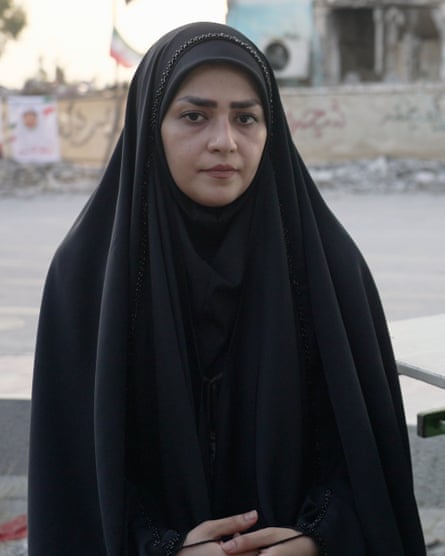
She remembers parents running barefoot towards the building. “I thought everyone had escaped. I didn’t know they were all under the rubble.”
The Pentagon has so far provided no answers on the bombing, which came during strikes on an adjacent military compound.
Red Crescent responder Reza Besharati says he still relives that morning. “Even now,” he says, “I remember everything.”
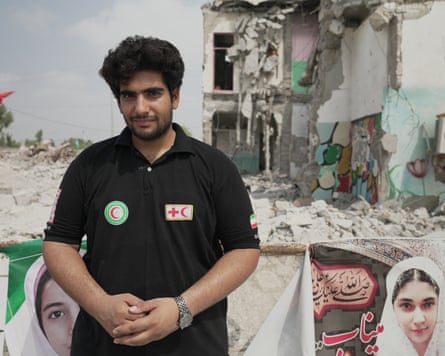
For some Iranians who once hoped outside pressure might weaken the government, Minab became a turning point.
“I accepted there being a war,” one former protester said. “But not at the price of innocent people being killed. War destroys everything. It makes no distinction between good people and bad.”
At Minab’s cemetery, children weave between rows of small graves while families shelter from the afternoon sun.
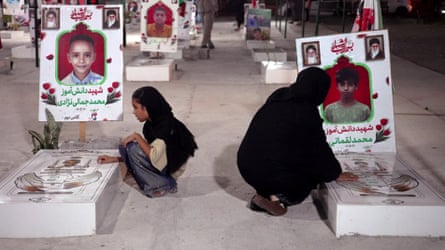
Masoumeh Mehran Shekhabadi comes here almost every day. Her nine-year-old daughter, Setayesh, was killed in the strike.
“When I arrived there was only the smell of smoke and children’s hair,” she says. “I saw a hand. I saw a foot. They had been torn to pieces.”
Bandar Abbas – west of Minab – is Iran’s largest commercial port and the gateway to the strait of Hormuz. While Minab shaped the Iranian government’s narrative of this war, Bandar Abbas is where it projects its power.
Around one-fifth of the world’s seaborne oil and gas passes through the strait of Hormuz – and control that Iran could exert over one of the world’s busiest maritime corridors proved to be its most powerful weapon.
The city is home to both Iran’s conventional navy and the naval arm of the Islamic Revolutionary Guard Corps, making it a key military target. At least 96 US strikes were recorded in and around the city between 28 February and 8 April.
Along the waterfront, fishers work around anchored cargo ships still waiting to pass through the strait. Months of disruption have left many unable to earn a living.
Back in Tehran, the mood is strikingly different. During a brief pause in the fighting, hundreds of thousands, and by official accounts millions, gather for the funeral of Iran’s supreme leader, Ali Khamenei, four months after his death.
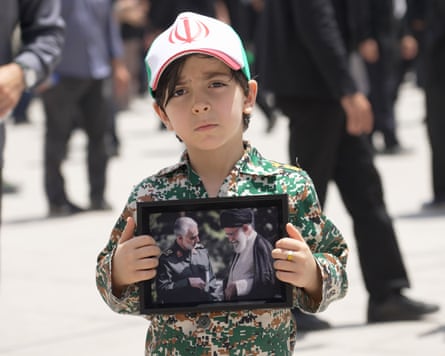
Portraits line the streets. Revolutionary songs echo through loudspeakers. Chants of “Death to America” and “Death to Israel” ripple through the crowds. The funeral is both a moment of mourning and a carefully choreographed display of political unity.
“I know many people who opposed the government,” says Soraya, attending her first political march. “Today they support it.” Whether that reflects wider public opinion is impossible to know. Days later, the ceasefire collapses.
Across Iran there is no single narrative of the war. Some believe it strengthened national unity. Others say it deepened repression without addressing the grievances that first drove people on to the streets.
From the ruins of a school in Minab to the shipping lanes of the strait of Hormuz and the crowds gathered in Tehran, the journey reveals a country transformed by war. As the conflict continues, so does the struggle to shape the legacy it will leave behind.
Nawal Al-Maghafi is a BBC senior international investigations correspondent. Her report for Global Eye from Iran is now available on BBC iPlayer.