.png) 1 month ago
56
1 month ago
56
From rowdy spit-and-sawdust joints to dimly lit high-end eateries, from chains equipped with tablets to family-run holes in the wall, Japan’s izakaya restaurant-bars are as varied as the cuisine they serve.
They are also a bellwether, reflecting strength and shifts in the wider economy. Now that economy is squeezing them harder than ever, pushing closures to record rates. The damage is spread unevenly: amid the struggles, some flourish, while a chain of unlikely alternatives expands.
Tokyo’s trendy Shimokitazawa district has long attracted young Japanese drawn by its narrow winding streets populated by stores peddling used clothing, records and quirky memorabilia, as well as small live music venues and eateries aplenty. In the last decade or so, the number of overseas visitors coming to the district has grown exponentially, with many dining there after a hard day’s shopping. But the izakaya of Shimokita (as the locals call it) tend towards the traditional end of the spectrum: places that do not go out of their way to attract customers, even when times are hard.
“There used to be people on the streets here into the early hours before the pandemic, but you don’t see that much now. Some got used to drinking at home, and the economy isn’t great,” says Shotaro Kawada, 33, who manages Kiraku, a cosy old-school Shimokitazawa izakaya. “We used to stay open until 2am but now close around midnight.”

Izakaya have faced crises before. In early 2003, in the aftermath of the dotcom bubble bursting, the number of bankruptcies amongst firms operating izakaya topped 20 for the first time, according to data from Tokyo Shoko Research. Much stricter drink-driving laws, making establishments jointly liable if they served a patron who then caused an accident, led to 39 going to the wall in the same period in 2007. Fifty more went under after the 2011 earthquake, tsunami and nuclear meltdown caused people to forgo socialising out of respect for the victims.
But in January to April of this year, an all-time high of 88 went out of business, an increase of more than 50% on the corresponding figure for 2025.
Food, drink and personnel costs are rising, with staff harder to find. Younger people in particular are drinking less alcohol, while quasi-compulsory boozy afterwork parties, once a backbone of Japanese corporate culture, are declining as attitudes and society change. Although multilingual touchscreen ordering is possible at most large chains, the language barrier at many independent izakaya prevents them cashing in on the tourist boom that last year brought more than 42 million visitors to Japan.
Kawada says he has noticed younger people drinking much less compared with three or four years ago, which, combined with sharp price rises for draught beer and sake, has made business tough.
Kiraku does have an English menu, but one of its mainstays puts off a lot of overseas visitors. “There are loads of foreign tourists around here these days but we don’t get many coming in. Part of it is because we serve horse meat and foreigners seem to find that a bit scary. I say foreigners, it’s westerners really – Asian people generally don’t mind,” says Kawada.

Foreign tourists are few and far between in the entertainment district that surrounds Omiya Station, Saitama, a transport hub and bullet train stop 30 minutes from central Tokyo. But the streets and eateries still bustle most weeknights.
Kotaro Nakatsuka, 28, is fully hands-on as manager of Erakokyu – which means gill-breathing, a fitting moniker for the seafood speciality izakaya that sits in a covered arcade full of restaurants. When he is not taking orders, serving or chatting affably with customers, he can be found preparing food in the open kitchen on its ground floor.
“With prices and staff costs rising, the owner, myself and the deputy manager decided a couple of years back to sit down and work out what we needed to do to make the place succeed,” says Nakatsuka.
Their strategy has included adjusting the menu according to daily price fluctuations for fresh seafood; speeding up customer turnover while ensuring a friendly atmosphere; and making all prices end in “00” to reduce the need for change at the till and for carrying bags of coins to the bank (while most payments are digital, large groups often still pay in cash).
“This is a taishu-izakaya [people’s tavern], which can be awkward for women to enter. We make sure that women are seated where they can be seen and make efforts to attract joshi-kai (ladies’ nights out) – even though we don’t make much money from them as they drink less,” says Nakatsuka.
“The truth is, if you have female customers, more guys come.”
The strategising has been effective. Erakokyu has taken on more staff and opened up its previously unused third floor.

The threat of the British pub
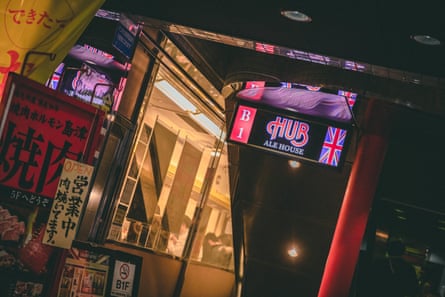
Sometimes mislabelled Japanese pubs, izakaya face competition from an unlikely quarter: a chain of British-style ale houses known as HUB – founded in 1980 by the president of a major supermarket chain who fell for the phenomenon while in the UK.
Though it took years for Japanese customers to grow accustomed to ordering and paying at the bar, HUB now boasts 110 pubs in a chain stretching from Hokkaido in the north to Kyushu in the south. The company listed on the Tokyo stock exchange in 2023.
The Omiya branch is less than 50 metres from Erakokyu.
Its style may be British, but Hub uses some very domestic marketing tactics to win fans. “We do advertising collaborations with anime and manga IP, as well as with YouTubers and VTubers [content creators who use virtual avatars], which reach customers that we usually can’t. Some of them become regulars,” says Hub spokesperson Takashi Ishizuka.
Big-screen sport – Premier League and J League football in particular – is a pillar of the HUB experience. The company ties up with J League clubs to make the local HUB an official supporters’ watering hole. Most of the games for the upcoming World Cup are early morning kickoffs in Japan, so the chain is not expecting it to be as big a draw as previous editions.
“We are benefiting from the inbound tourist boom,” adds Ishizuka. “We know this because our pubs are getting lots of inquiries from hotels on behalf of their western guests who want to watch their team’s game live.”
In April the company posted annual sales of 11.34bn yen (£53m/$71m) and forecast that would grow to 12bn yen in the current fiscal year.
Still, the chain is dwarfed by the approximately 17,000 izakaya spread across the archipelago. Japan is unlikely to replace raw fish and rice with fish and chips quite yet.