.png) 7 hours ago
6
7 hours ago
6
Andy Burnham has promised to bring “four decades of neoliberalism” to an end. The first serious test of that pledge was always going to be the cabinet he appointed. The red flags are impossible to ignore.
Ending neoliberalism would mean putting privatised services back into public hands, unleashing public investment and using the power of the state to reshape the economy. Yet Burnham’s support for the government’s suffocating fiscal rules – and his preference for the vaguer language of “public control” over public ownership – had already raised doubts about how far he was prepared to go.
Had he truly meant it, Ed Miliband would have been the obvious choice for chancellor. The former Labour leader has been on a political journey since concluding that his defeat in the 2015 general election was partly the consequence of insufficient radicalism. “I felt my analysis was big,” he later said, “but my response was not big enough, not bold enough.”
As energy secretary, Miliband was the one cabinet minister who combined dynamism with a genuine determination to challenge the status quo. His record included the establishment of the publicly owned Great British Energy, the return of energy-system planning to public hands and an interventionist industrial policy.
He would also have been prepared to confront Treasury resistance to transformative economic policies. This is, after all, a government bureaucracy with much to answer for in Britain’s long economic decline. Its record stretches back to the 1970s, when excessively pessimistic projections of the country’s borrowing requirements helped precipitate the notorious International Monetary Fund bailout and the avoidable public sector cuts that followed.
Yet Burnham seems to have folded in the face of a loud and very public campaign against Miliband’s appointment, centred on warnings of an impending backlash from the markets. Some of Burnham’s allies briefed against Miliband on the grounds of his support for net zero policies – an alarming position for a supposedly progressive party amid rolling heatwaves. It is therefore reassuring that Miatta Fahnbulleh has been appointed as his successor. A bright progressive economist, she at least represents continuity with Miliband’s approach.
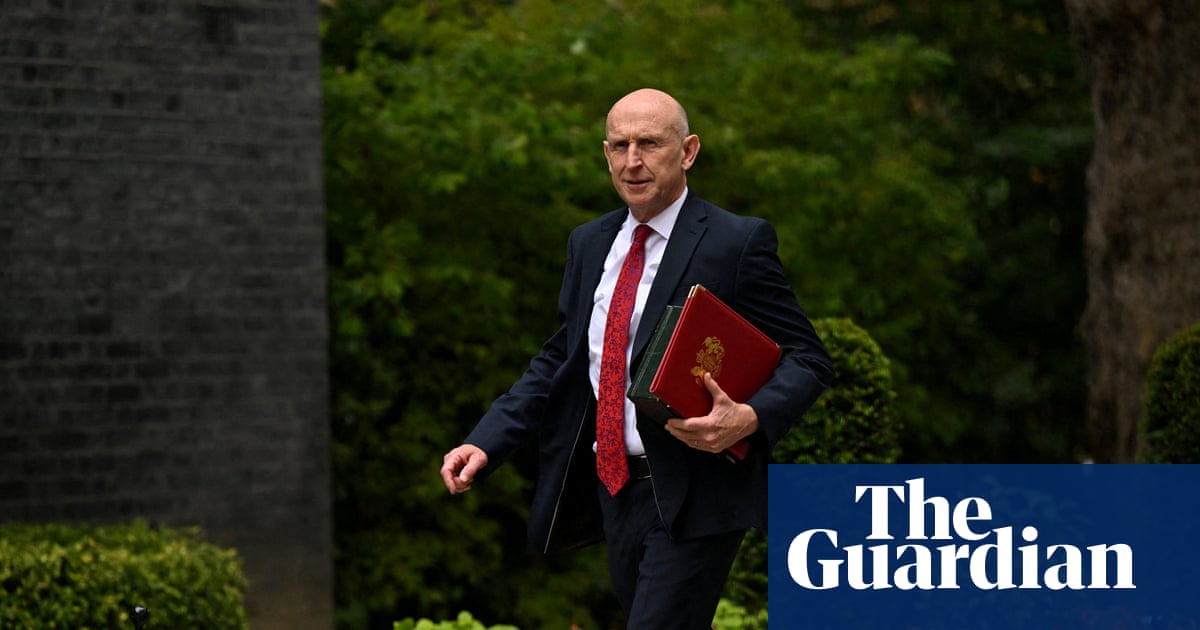
But instead, the former defence secretary John Healey has been appointed chancellor. There is one potential bright spot: the choice may bode well for Burnham’s promise of a mass council-housebuilding programme. Healey served as Labour’s shadow housing secretary under Jeremy Corbyn, when the party was committed to building 100,000 council homes a year. As defence secretary, he also oversaw the state’s repurchase of more than 36,000 military family homes. Angela Rayner’s appointment as secretary of state for housing, communities and local government offers further reassurance.
But there is no evidence that Healey is committed to the transformative economic programme required to end four decades of neoliberalism. He served as a minister in Gordon Brown’s Treasury when the government remained wedded to an economic model founded on financial deregulation and dependence on the City, falling corporation-tax rates, the private finance initiative and the continued restriction of trade-union power.
His resignation from Keir Starmer’s cabinet in support of still higher defence spending offers further cause for alarm. The Ministry of Defence (MoD) habitually demands funding for projects that end up billions of pounds over budget. The defence review was supposedly fully funded; it then transpired that an £18bn black hole remained. The department has repeatedly frittered away money. Billions were spent on aircraft carriers derided by the former chief of the defence staff David Richards as “unaffordable vulnerable metal cans”, while the Ajax armoured vehicles arrived eight years late after a catalogue of problems.
As one defence analyst puts it: “We already spend 30% more on defence than France for a smaller, less ready, less-capable military.” Britain’s defence market is unusually concentrated in the hands of a few companies: in 2024-25, the 10 largest suppliers received nearly 40% of all MoD spending, while almost half of contracts were awarded without competition. As defence secretary, Healey could have challenged the MoD over its inefficiency, overspending and dysfunctional procurement. Instead, he amplified its demands for yet more money.
That is likely to mean a renewed assault on welfare spending to fund additional weapons. With the veteran rightwinger Pat McFadden remaining at the Department for Work and Pensions, it is difficult to imagine otherwise.
The defence of Healey’s appointment is that No 10 will exercise an unusually tight grip over economic policy. Burnham has his own economic advisers, including the former Goldman Sachs chief economist Jim O’Neill, who favours applying greater flexibility to the fiscal rules that constrain Britain’s ability to invest. Leaving aside the question of whether a former investment banker is the ideal figure to help lead a rupture with neoliberalism, it remains unclear how coherent Burnham’s economic vision really is. Only Miliband’s appointment would have made his promise of fundamental change remotely plausible.
Miliband has instead been appointed foreign secretary. That is at least an improvement on Yvette Cooper, who has now been moved to health secretary. Miliband won the Labour leadership partly by repudiating the Iraq war and later instructed his MPs to vote in favour of recognising a Palestinian state. In 2012, he warned that an Israeli ground invasion of Gaza would be “a disaster”, and condemned Israel’s subsequent onslaught in 2014 as “wrong” and “unjustifiable”.
after newsletter promotion
Alas, Miliband toed the line under Starmer, and did not vote for a ceasefire in November 2023. His first statement as foreign secretary correctly describes Russia’s invasion as “illegal” but refers only to “conflict in the Middle East”. He speaks of “the terrible suffering of the people of Gaza” without naming who has inflicted it. He should note new polling that says 50% of Britons believe Israel has committed genocide – only 17% disagree – with mass public support for ending all arms sales and imposing sanctions.
Notably, Wes Streeting has been appointed defence secretary. The Blairite former health secretary released correspondence with Peter Mandelson in which he wrote that Israel was “committing war crimes before our eyes”. He must now be asked whether he stands by that judgment – and whether he will abide by the legal obligations that logically follow from it.
For progressive voters already angered by the failure of the Starmer project, the retention of Shabana Mahmood as home secretary will be another source of antagonism. Her plans for one of Europe’s harshest immigration and asylum regimes speak to the broader problem in British politics. Migrants and minorities have been scapegoated for injustices caused by a broken economic system.
Burnham’s cabinet is certainly an improvement on what came before. But on the choices that will decide whether his promised break with neoliberalism is real, he has flunked the first test.
-
Owen Jones is a Guardian columnist