.png) 4 hours ago
5
4 hours ago
5
The first person to stop on Glasgow’s streets does not recognise the Commonwealth Games mascot, Finnie the unicorn. “I genuinely didn’t realise that the unicorn was the mascot,” Karl, a 33-year-old Glaswegian native, says with a laugh. “I caught a glimpse of one of the posters from the bus and thought: ‘Are the bronies making a comeback?’”
It is a telling response. As the Commonwealth Games return to Scotland’s biggest city, the mood is markedly different from the last time Glasgow hosted the event in 2014, when anticipation built for months. This time, the Games have arrived with considerably less fanfare.
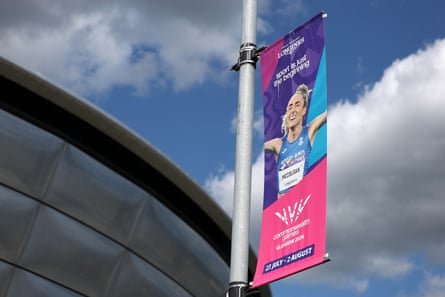
While there are signs that an international sporting event is imminent – lamppost banners, purple merchandise and the occasional volunteer – the loudest soundtrack comes from the relentless hum of construction machinery. George Square, the city’s principal plaza, remains one of several major building sites in central Glasgow. Work to transform its historic heart will not be completed until October, making the unfinished square an apt metaphor for a Commonwealth Games that was never meant to resemble the spectacle of 2014.
“I think the city’s missed a trick,” another passerby, Claudia, says. “If George Square had been finished in time, it could’ve been a proper meeting point for fans and visitors. Even if the Games are smaller, you still want something in the city centre that makes it feel like there’s a major event on. There is too much construction around the city.”
When the Australian state of Victoria withdrew from hosting in 2023 because of spiralling costs, the future of the Games looked uncertain. Glasgow stepped in with an entirely different proposition: a compact, low-cost event using almost exclusively existing venues and expertise built for 2014. The programme has been reduced from 17 sports to 10, with events including hockey, badminton, diving and triathlon absent, though the Games will feature the largest number of Para sport events in history, with 47 finals across six sports. About 500,000 tickets have been made available compared with the 1.2 million sold in 2014, and tickets have still not sold out two days out. The organising budget sits at £150m-£160m, a fraction of the estimated £550m spent 12 years ago.
Not everyone sees the quieter buildup as a problem. “People keep saying it’s not like 2014, but it was never meant to be,” says George, who was a volunteer 12 years ago. “Glasgow’s basically stepped in at the last minute and used the venues we’ve already got. Considering the circumstances, I think the organisers deserve a bit of credit.”
Karl, a volunteer this time around, says: “I don’t really get all the doom and gloom around it. It’s a smaller Games than 2014 and everybody knew that from the start. If a few thousand people come to Glasgow, the venues are busy and folk enjoy themselves, that’s a good outcome. It doesn’t have to be the biggest thing that’s ever happened to the city to be worth hosting.”
Organisers also reject the idea that a stripped-back Games should be viewed as a diminished one. George Black, chair of the Games, says: “Years ago, the Commonwealth Games was a genuine topic of conversation across sport, across governments and across headlines. Glasgow, and Scotland, took the brave decision to step up and show that these Games matter and that there is no other city than Glasgow that could step forward and make these Games a success.”
Rather than George Square, organisers are directing local supporters without tickets towards Kelvingrove Park, which will screen up to 12 hours of sport each day alongside music and family entertainment. Whether that recreates the festival atmosphere of 2014 remains to be seen but there are hints that Glasgow’s affection for the Games still runs deeper than the subdued buildup suggests, with the Scottish distance runner Eilish McColgan admitting she might not have considered returning from marathon training for any other Commonwealth Games. “It’s hard to turn down a Commonwealth Games. It’s in Glasgow. If it was anywhere else in the world I probably wouldn’t bother.”
Since 2014, Glasgow has welcomed Cop26, the inaugural Cycling World Championships and the World Indoor Athletics Championships. Has hosting major events become so routine in this city that another global sporting competition no longer feels extraordinary? “Once the competition begins, the city will do what it always does: just get on with it,” George says.