.png) 2 months ago
50
2 months ago
50
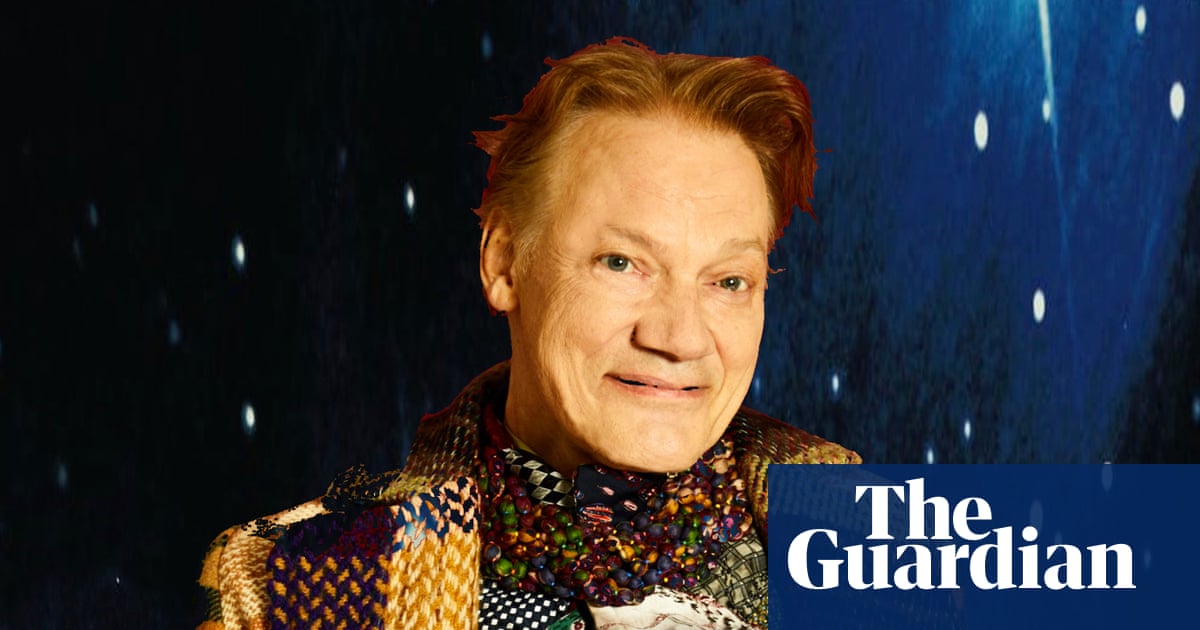
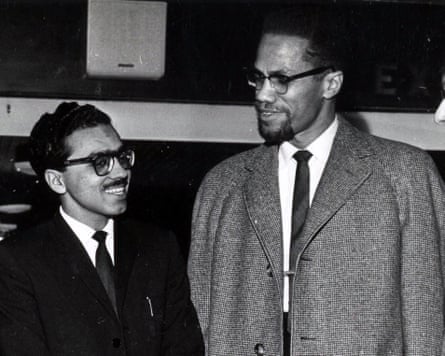
When Malcolm X arrived at Sheffield University in December 1964, it was a young Pakistani student activist, Ghayasuddin Siddiqui, who had arranged his passage. That detail tells you much about my father, who has died aged 86.
Ghayasuddin went on to co-found the Muslim Institute, one of Britain’s earliest Muslim organisations, and the Muslim Parliament of Great Britain, of which he became leader in 1996. Upon taking this role he threatened a campaign of civil disobedience unless the government passed legislation protecting British Muslims. The new Labour government of 1997 took on and implemented many of his demands – funding Muslim state schools and passing equalities legislation.
What distinguished Ghayasuddin from many contemporaries was the willingness to turn that same critical gaze inward. The Muslim Institute led campaigns against forced marriages, child abuse and religious extremism, producing reports such as the child protection in faith-based environments report (2006) and the “model Muslim marriage contract” (2009), granting equal rights to both partners.
Born near the city of Meerut, just east of Delhi, in pre-partition India, Ghayasuddin was the son of Muhammed Saeeduddin, a civil servant, and Batool Fatima. Partition in 1947 was a traumatic experience for the family, who resettled in Sukkur, now in the newly created Pakistan. He and his brother decided to take the surname Siddiqui.
After attending a local school, Ghayasuddin gained a degree and master’s in chemistry from Sindh University in Jamshoro in 1962. He taught chemistry in Karachi before securing a place at Sheffield University in the UK to do a PhD.
Arriving in 1964, he soon became assistant secretary of the Federation of Student Islamic Societies, and as such organised the visit of Malcolm X to Sheffield. Ghayasuddin would recall praying together at the student union before Malcolm’s lecture that evening.
He finished his PhD in 1970, the same year that he married Talat Anis, also a teacher, and the pair moved to Corby, Northamptonshire, to teach at local schools. In 1973 he co-founded the Muslim Institute with Kalim Siddiqui (no relation), and in 1978 the family moved to Chesham, Buckinghamshire, for my father to join the institute, based in London, as a full-time staff member.
In 1992 he and Kalim also co-founded the Muslim Parliament of Great Britain. Following the death of Kalim in 1996, Ghayasuddin became director of the institute and leader of the Muslim parliament. He helped to establish the Halal Food Authority in 1994, and British Muslims for a Secular Democracy in 2006.
Ghayasuddin was also vocal on the world stage. In 1999 he publicly supported British Muslims detained on terrorist charges in Yemen, arguing against a presumption of their guilt. He campaigned against the genocide in Bosnia, the war in Chechnya, and, as a founding member of the Stop the War Coalition in 2001, spoke out against Britain’s involvement in Afghanistan and Iraq. He believed, then as always, that Muslim and non-Muslim voices were stronger together.
In 2009, he relaunched the Muslim Institute as a fellowship society promoting thought, debate and community empowerment. My father never fully retired, but passed the baton of leadership on in 2010.
He is survived by Talat, their children, Faiza, Uzma, Salman and me, and 11 grandchildren.