.png) 4 hours ago
6
4 hours ago
6
One of Gaza’s most prominent doctors is almost unrecognisable because of severe injuries inflicted in Israeli detention, his lawyer said, and faces “tangible danger to his life” after being held for 18 months without charge or trial.
Hussam Abu Safiya met his lawyer on 2 July, after a transfer to Israel’s notorious underground Rakefet prison in late June. He had difficulty breathing and speaking continuously, was so weak he struggled to sit upright, and repeatedly seemed on the verge of losing consciousness, said his lawyer, Nasser Odeh.
Abu Safiya, who was the director of the Kamal Adwan hospital in northern Gaza until he was seized by Israeli forces, said he feared for his life.
“They brought me here to kill me. I don’t see myself surviving. This is the end,” Odeh quoted him as saying, in a joint statement with Physicians for Human Rights Israel (PHRI), who along with other organisations are calling for his release.
His detention is part of a broader pattern of Israeli attacks on healthcare across occupied Palestine, said Milena Ansari, PHRI’s director for the area.
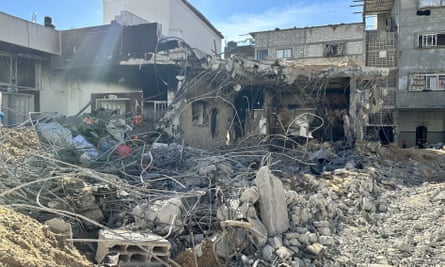
On Sunday a four-month-old Palestinian baby, Ahmad Maarouf Zaid, died after Israeli forces blocked his family from crossing a checkpoint to reach a waiting ambulance, his family told the Guardian.
They drove the severely ill baby on unpaved and mountainous back roads to Ramallah themselves, which delayed treatment by over an hour.
“The reports of a newborn dying after delays at a West Bank checkpoint, the arrest of a physician providing medical care, and the deepening humanitarian crisis in Gaza should not be understood as isolated incidents,” Ansari said. “They reflect a broader pattern in which the conditions necessary to realise Palestinians’ right to health are being systematically undermined.”
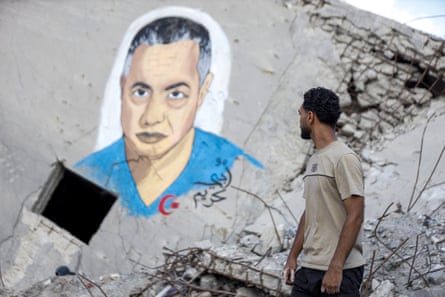
Abu Safiya had become the face of health workers struggling to treat patients throughout the war in Gaza before his detention. He is being held indefinitely, along with thousands of other Palestinian civilians, in prisons that Israeli rights groups say have become torture camps.
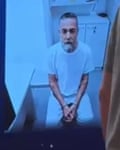
In late May he was transferred from Ketziot prison to the Ganot prison complex and put in solitary confinement without explanation, Odeh said.
Abu Safiya described an attack there by guards using hammers and batons, shortly after appearing via video link at a supreme court appeal hearing challenging his detention. He was then moved to the Rakefet facility on 24 June, where Odeh noted a severe and dangerous deterioration in his condition.
“I have visited Dr Abu Safiya several times since his detention, but the individual I encountered during this latest visit was not the same person I had previously met,” Odeh said on Sunday, calling for an immediate independent medical examination. ‘‘His physical and psychological state, the severe injuries visible on his body, and his personal testimony leave no room for doubt: his life is in immediate danger.”
Abu Safiya appeared frightened, distressed and reluctant to speak freely in the meeting, Odeh said, but told his lawyer that he was subjected to daily beatings in the Rakefet jail, and had lost consciousness several times as a result.
Rakefet, where prisoners never see daylight, was built in the 1980s to hold senior organised crime figures before being closed on the grounds it was inhumane. It was reopened on the orders of the far-right national security minister, Itamar Ben-Gvir.
Other Palestinians detained there reported feeling breathless and choking in the unventilated, overcrowded cells, even without injuries like those sustained by Abu Safiya.
An Israel prison service spokesperson said allegations made by Odeh were “false and entirely without factual basis”, but declined to comment on Abu Safiya’s health, citing privacy concerns.
The death of four-month-old Ahmad, from Deir Ammar refugee camp, was announced on Sunday evening. A longed-for baby, he was born after years of IVF treatment to a family and was healthy most of his short life. The family called emergency services when he developed a high fever on Sunday morning and medics sent an ambulance to the camp’s Ein Ayoub gate.
Since 7 October 2023 Israel has regularly barred vehicles including ambulances from driving through Ein Ayoub, which is the main route to Ramallah and its hospitals.
Residents can usually cross on foot but as Ahmad’s parents approached they were stopped by four Israeli soldiers, who had fired teargas at people in the area and ignored the family’s desperate pleas. A video of the incident was shared on X.
“This baby needed oxygen. If he had been allowed to reach an ambulance and get to the hospital, his life could have been saved,” said Arafat Ahmad Zaid, the boy’s uncle.
A spokesperson for the Israeli military denied blocking the family from crossing to seek medical aid. Zaid said the circumstances of his nephew’s death compounded the family’s grief.
“There are no words to describe the pain of watching your own child die in your arms while knowing there is nothing you can do to save him. That is the ultimate suffering. That is the ultimate humiliation.”