.png) 7 hours ago
6
7 hours ago
6
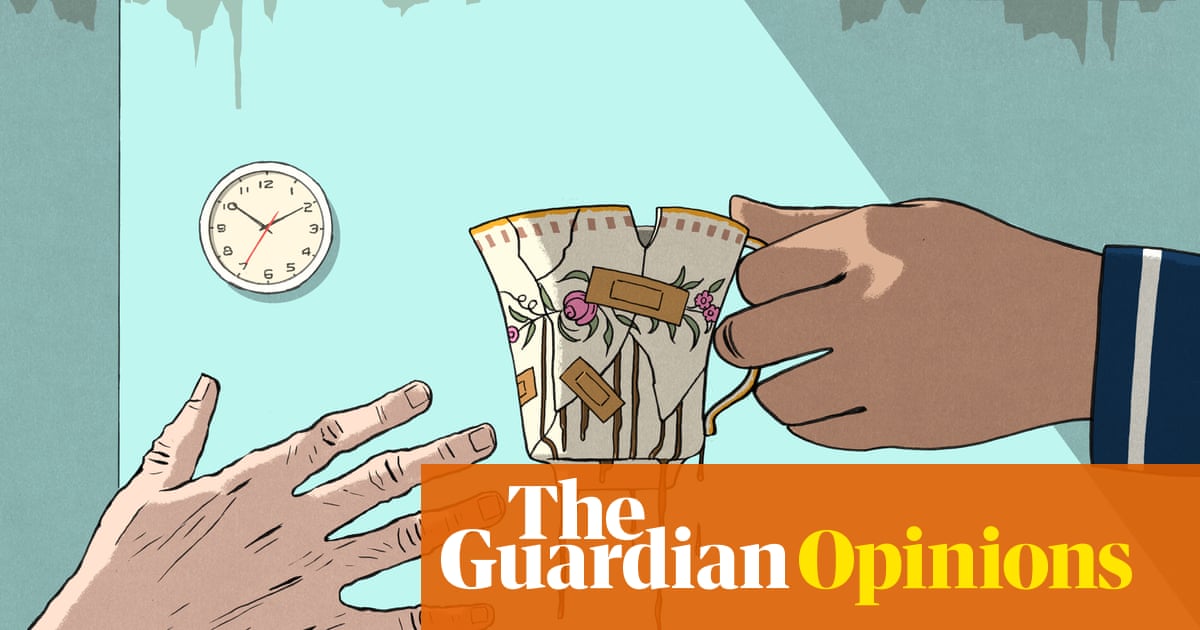
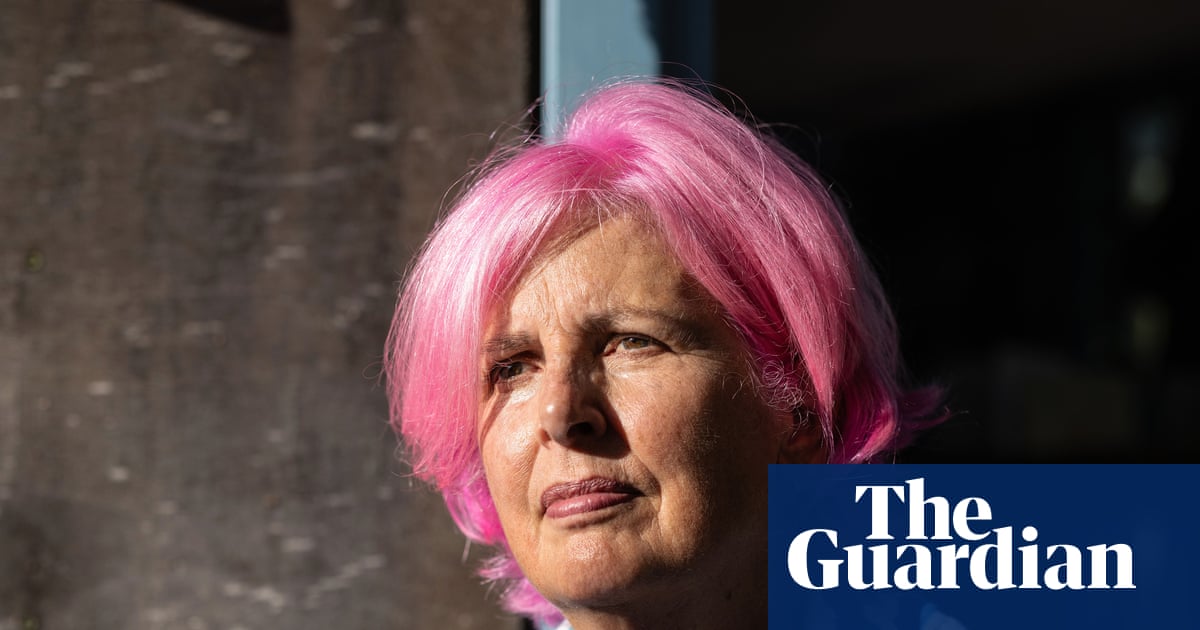
In Sarah Wilson’s new book, one page is mostly blank. It’s intended as a reprieve, a neutral space “for you to stare at for a minute while your feelings catch up”.
You will need it. In I Eat the Stars, Wilson argues that the world as we know it is in collapse – and that we are too late to avoid the worst.
This is not just about the climate, but civilisation buckling under the weight of its own complexity. Given worsening inequality, political polarisation, falling fertility, resource shortages and global conflicts, Wilson argues that we are hurtling towards the same end as ancient Rome, the Mayan civilisation and every other sophisticated society before us.
Wilson, an Australian journalist, has often been ahead of the curve, writing bestselling books about quitting sugar, anxiety and the climate crisis before those topics were mainstream. I Eat the Stars was serialised on Wilson’s Substack newsletter before being published by Penguin.
It is an intensely sobering read, seeming to confirm all our worst fears about the future. But it also delivers clarity. Yes, things are that bad, but there is still plenty to fight for and much we can shape – if we are willing to confront reality.
I spoke to Wilson, who lives nomadically, shortly after she arrived in Greece. “A life skill I’ve developed over the years is finding wifi,” she jokes. Our conversation has been edited and condensed.
You’ve written about sugar, anxiety, the climate crisis and now collapse. What do you see as the common line?
My first book, I Quit Sugar, was contentious back in 2009. Can you imagine, our biggest enemy being big sugar? There were headlines: “Sarah Wilson’s telling us to get rid of a food group.” It was very hard for people to understand that there could be a different framing. From there I moved on to anxiety, tackling big pharma and the hold it had on the narrative – not saying that there isn’t a place for medication, but again treading in the grey area.
What I do is feel what people are thinking and wrangling with internally, but hasn’t yet been expressed as a public narrative. My dad says: “If there’s an elephant in the room, Sarah will just scream it out.” I’m not claiming to be the expert – I’m just bringing the complex science into the public realm.
What’s the difference between climate crisis and collapse?
We’ve been dealing with the climate as an isolated, almost linear concept, where it’s a problem with a fix. But not a single nation stuck to the Paris agreement. People are getting solar panels, but we’re all using more carbon-emitting fossil fuels as well – our habits aren’t changing. We’re still trapped in the mindset that caused the problem in the first place: believing in infinite growth, and that we don’t have to change our ways of being.
A civilisation is a complex system of complex systems. Eventually all complex systems, without exception throughout history, have collapsed under the weight of their complexity. A small crisis like a heatwave can be enough to tip the whole thing over, so the climate crisis is a really powerful node in this whole thing, because it is dictating the buildup of tension of all these other complex systems – while those, of course, are also adding to the climate crisis.
We’re used to glimpses of this, in headlines, reports, expert warnings – you bring them all together, and the outlook is dire. What’s actually at stake right now?
I think we are in a liminal moment: we know the present set-up can’t hold, but we don’t know what’s going to come next. We are basically at the top of this very sharp bell curve, just in the moments before it tips down the other side. Everything that has been going up and up and up – population, wealth, the price of oil – are about to dip.
It’s a terrifying moment, I’m not going to pretend otherwise, but it’s also a moment of stunning possibility. These periods of transition historically have been times of incredible human flourishing. Existentialism, communism and fascism were established between the two world wars. The Axial Age was another liminal time that produced Judaism, Buddhism, Confucianism, the market system and great art. There’s a threshold, and an opportunity.
What does collapse look like?
We do not know: uncertainty is the main characteristic of all this. Anyone who tries to tell you when and how collapse is going to happen, I wouldn’t believe them. We know that certain models are going to decline, but how that plays out will depend on how those things interact together, and also where you live. I would argue that there are parts of the world, such as Sudan and Gaza, that already know what collapse looks like.
What I would say is that, for anyone alive today, things are not going to keep improving. Particularly around the climate crisis, we’ve been hoping that if we just get solar panels and recycle and vote in a good government, then we can go back to the way things were – that ain’t going to happen. Collapse is going to basically look like things being shit and, instead of improving, getting shittier still. At a bare minimum, life is going to get extremely uncomfortable over the coming decades.
If everything is only going to get worse, why should we try to change or care about the future at all?
The reason I wrote the book is that there’s an opportunity here: what’s collapsing is the post-industrial, colonialist, extractivist, growth-based system. If we tether ourselves to that system, we will go down with it, but if we start to distance ourselves, see what’s happening and refuse to take part in its worst excesses, the better chance we have. The way it’s going, the ultra-rich and the tech bros are going to take everything anyway. The market is going to collapse, the millionaire set will suddenly be without assets, and that’s when revolution happens.
Many feel angry that this is our lot, and that people in power aren’t doing enough. How can we avoid turning on each other?
I go into detail explaining these complex systems concepts so that people can see there isn’t a cabal of bad dudes plotting; the government isn’t out to get us. We’re all part of this system … no one is to blame. Yes, there are people who are responsible, and opportunists who are taking advantage of this chaotic time – Trump, the technofascists and so on – but saying “They’re doing it to us” is a very binary thing. I think that by talking about the layers of crises, we can actually resolve the dissonance in our brain, relax and start thinking expansively.
When I started writing about what was happening in this brutal, upfront way, the response was relief. Once you’ve absorbed all that, you want to understand more. The next layer is realising, “hey, this is what’s happened to other civilisations, because they got too complex”. This is not because people are horrible, or it’s “us versus them”. It’s all of us.
You’ve said you have no hope. None?
I have no hope that it’s all going to be OK if we just recycle, or that we can return to the way things were, when everything was comfortable and we didn’t have to take responsibility. But I still have hope that the natural systems of life are going to force us into being the best versions of ourselves.
after newsletter promotion
Basically I see what’s happening as a correction: we’ve gone in the wrong direction, we took individualism too far, capitalism no longer serves us and the centre cannot hold. Nature will recalibrate and find balance again. That’s what’s happening now. In the process, we are being forced to return to everything that makes us human.
AI, for example – it’s going like a bull out of a gate, and we were not consulted. It’s terrifying, but it’s actually forcing us to ask: if it can take our jobs, and become a lover, what is left? It’s art, poetry, messiness, all that juicy human stuff.
What collective action should we be prioritising?
Not everyone has the capacity to comprehend all of this. Those of us who do, need to get sturdy in our nervous systems, become islands of sanity and use whatever privilege we have to fight for things we want to hang on to.
The pathway into the new world will be based on ideas that exist now. I would argue that we need to be fighting for democracy, and our rights to protest, which are being eroded everywhere.
Researchers have found that the two determinants of the speed and likelihood of collapse are basically levels of inequality and polarisation. We have the capacity to actually do something about those two things. That will steer how fast and how bad things are, and how much time we have to adjust.
On the individual front, are there practical things we should be doing, to prepare?
One way is starting to simplify your life, make consumer choices that are based on the smallest amount of trade routes and supply chains.
Another is going analogue – building that muscle and normalising it with your children. There’s a whole generation who don’t know how to get across their suburb without their phone, but at a bare minimum, we’re going to be experiencing outages of power and internet.
Knowing how to ride a bike, use a compass – I would go as far as saying they’re survival skills. People in Europe have already been advised to put together survival kits, whether for world war three or heatwaves. Having water and food for three days, a battery-operated torch, pen and paper ready to hand – it’s not so fringe.
So do you think we should all be preppers?
People often ask me this. I say absolutely not, because if things get so bad that you need to be off in the hills with a stockpile of tinned corn and batteries, then you’ll need to be able to defend it with weapons and violence. I myself am not prepared to do that, and I think it is absolutely the wrong direction.
We need to be going collectivist. Our strength as a species is in collaboration and communication. That’s when we flourish. Studies have shown that less than 5% of “intentional communities”, which are set up away from the usual systems in an assumed “self sustaining” fashion, last longer than five years. What does work are organically formed communities of roughly 20 to 30 families, or an apartment block. We need to be forming stronger bonds where we are now: joining food co-ops, getting together in groups, sharing tools and assets and skills whenever we can.
You write that there’s joy to be found from going through this transition. How?
The title of the book, I Eat the Stars, comes from a poem written by Rebecca Elson, an astronomer who was diagnosed with terminal cancer, as an antidote to fear of death. Once we’re pushed right up against the prospect of things ending, then we go: well, let’s max the hell out of this. There’s an urgency to live fully.
Neoliberalism has taught us that we don’t live for the moment; instead we save up, build a nest egg, retire, play golf and then we die. What we’re talking about here puts a bomb underneath all of that. I see a lot of people putting off what really matters to them, because they’re caught up in a system that is now going down.
We don’t know what’s going to happen – so live beautifully regardless. That’s what these aphorisms and parables are essentially saying: you’re still allowed to have a beautiful life. In fact there’s an imperative now.
-
I Eat the Stars: How to Live Fully and Beautifully in a Collapsing World by Sarah Wilson is out now through Penguin Life