.png) 6 hours ago
6
6 hours ago
6
John Croft, who has died aged 103, was a codebreaker at Bletchley Park in Buckinghamshire during the second world war, and subsequently in London, where he worked on Soviet cipher systems used to send secret messages to European communist parties and sympathisers.
Croft was studying history as an undergraduate at Christ Church, Oxford, in 1942 when his tutor asked if he might be interested in intelligence work. “The prospect, whatever that involved, seemed enticing and I gratefully accepted the opportunity,” he later recalled. He was subsequently interviewed in Oxford by Col John Tiltman, Bletchley Park’s chief codebreaker. “Tiltman himself appeared to me almost the parody of a regular army officer, with toothbrush moustache and rather clipped speech; as I was to discover later, he was a man of outstanding skill and experience.”
A few months later, Croft was ordered to report to Bletchley for training in how to break basic codes and hand ciphers, along with a number of other recruits, including the future author Angus Wilson, who was to become a lifelong friend.
Croft was then put to work in the Testery, the section (run by Ralph Tester) which carried out the initial manual and linguistic process of breaking a recently intercepted German Lorenz enciphered teleprinter system. Tiltman managed to break into a single message as a result of a mistake by an operator, and the mathematician Bill Tutte worked out the internal cipher system. However, the settings changed daily and were different for each teleprinter link – Croft was one of the codebreakers brought in to break the cipher on a daily basis.
The Lorenz ciphers, codenamed Fish by Bletchley, were used on the highest security links between Berlin and the various German fronts, and often carried personal orders from Adolf Hitler to his generals. The final breaking of individual messages was carried out in the Newmanry, run by Max Newman, where a number of different machines were used to decipher the messages, culminating in December 1943 in the creation of the Colossus computer, the world’s first digital computer.
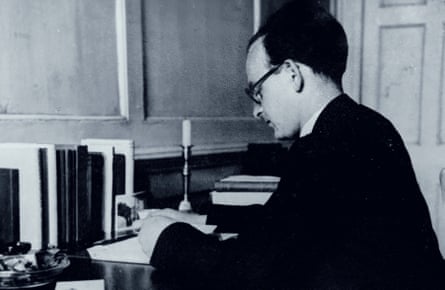
Croft recalled that one of the highlights of his time in the Testery was “the breaking of a personal message from Hitler demanding the apprehension of the Yugoslav partisan leader General Draza Mihailovic, for which the reward would be ‘a large quantity of gold’”.
But the work was sometimes boring and Croft enlisted the help of an aunt, who had a close friend in MI6, to engineer a move to Bletchley’s diplomatic and commercial section, based in Mayfair. He was assigned to the section’s offices on the top floor of Aldford House, on Park Lane, where he briefly worked on Finnish diplomatic ciphers, before being transferred to a new section set up to read the messages between Moscow and communist parties and sympathisers across Europe.
The section head was the mathematician Bernard Scott, who had managed to break into the messages, which used a substitution cipher, with the 36 letters of the Russian alphabet transposed as numbers.
The indicators of each day’s keys were taken from an English edition of Shakespeare’s plays, and Scott and Croft spent a day searching through the editions on the British Library shelves looking for the one used to encipher the key, without success.
“With the advance of the Russian armies in 1944, the traffic on the network began to increase rapidly,” Croft recalled. “It was mainly concentrated in the Balkans, although some but not extensive radio activity was identified as far afield as southern France and in other areas behind the allied lines.”
The need for more hands led to three more codebreakers being brought in, including Ernst Fetterlein, who had been Tsar Nicholas II’s official codebreaker and had fled to Britain after the 1917 Bolshevik revolution.
Kim Philby, who was now the head of a new counter-espionage section inside MI6 dealing with Soviet spies, was a recipient of the decoded messages and on one occasion he visited the section and was introduced to Croft.
“Fetterlein kept copies of his translations in a locked wooden cupboard,” Croft recalled. Shortly after Philby’s visit, “Fetterlein arrived to find that his cupboard had been forced open and his papers disturbed,” he said. Although nothing was taken, Croft made no secret of his belief that Philby, who was subsequently exposed as a Soviet double agent and part of the Cambridge spy ring, was responsible.
John was born in Brondesbury, north London, to Doris (nee Phillips) and Oswald Cohen. The family was descended from Dutch Jewish immigrants and changed their name to Croft in the late 1930s. Oswald was an executive at the London offices of Paramount Pictures. His son was educated at the Hall preparatory school in Hampstead, and then Westminster school, before going to Christ Church.
After the war, Croft returned to Oxford to finish his degree and then applied to join GCHQ (Government Communications Headquarters), the peacetime successor to Bletchley, based at Eastcote in west London, but he was refused and an appeal to the then foreign secretary, Ernest Bevin, failed.
Croft then had a second encounter with a member of the Cambridge spy ring when he briefly considered taking a degree in the history of art at the Courtauld Institute in London, and was interviewed by its director, Anthony Blunt. When Blunt asked Croft what he had done during the war, he gave the official response that he had worked for “a department of the Foreign Office”. Croft recalled that Blunt, who would later be exposed as the “fourth man”, was “remote and chilly” for the rest of the interview.
He studied for a master’s in sociology at LSE and graduated in 1953. After a spell as a teacher at North Hammersmith secondary school for boys, Croft joined the Home Office, eventually, in 1972, becoming head of the Home Office Research Unit, where one of his colleagues was the novelist PD James, another great friend. Croft retired in 1981 and was appointed CBE the following year.
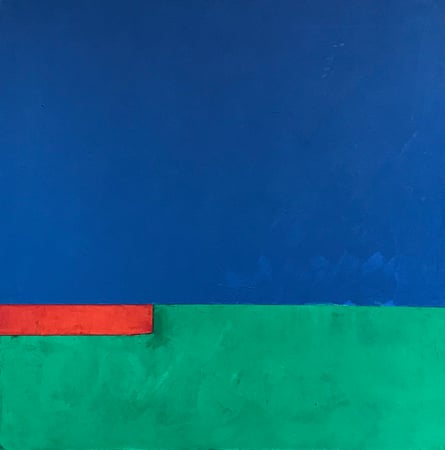
While working at the Home Office, he took up painting in oils and became a highly regarded abstract artist, focusing on “non-figurative, minimalist work derived from landscape”. His paintings were included in group shows from the 1960s onwards, and were described by the art critic Brian Sewell as “exquisitely judged, hard-edged abstracts”. He had two solo exhibitions, at the Gardner Arts Centre (now the Attenborough Centre for the Creative Arts) at the University of Sussex in 1970, and at the University of Warwick in 1971.
After a period living in the Isle of Man, Croft moved with his parter, Ray Kelly, a former employee of British Airways, to Bath. Kelly died in 1999.