.png) 4 hours ago
6
4 hours ago
6
The career highlights of William Orbit, who has died aged 69, would run to several pages, featuring collaborations with Robbie Williams, All Saints, Prince, Kraftwerk, Britney Spears, Beth Orton and U2, but one of the most celebrated was his partnership with Madonna on her 1998 album Ray of Light.
Coming at a point when Madonna had starred in the movie of Evita and had her first child, Lourdes, and her music career seemed to be waning, Ray of Light marked a decisive step into a new world of techno and ambient music. Orbit, who had previously made remixes of Madonna’s Justify My Love and Erotica, proved to be the perfect production partner, and Ray of Light’s blend of styles and textures made it one of Madonna’s most admired achievements, with 16 million copies of the album sold worldwide.
“I kind of revere her really, as an individual to work with, as a colleague and as a boss,” Orbit said. “She’s also a collaborator. There’s never a dull moment.” Ray of Light earned Orbit two Grammys, and he won another for his work on the song Beautiful Stranger (1999), performed by Madonna and co-written with Orbit for the Austin Powers film The Spy Who Shagged Me. Also in 1999 Orbit produced Blur’s album 13, which saw the band making a determined effort to break free from their Britpop origins, and the debut solo album of the Spice Girl Mel C, Northern Star.
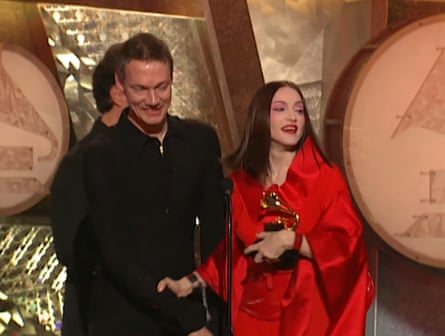
The stars had evidently aligned perfectly for Orbit in 1999, since this was also the year when his solo album Pieces in a Modern Style reached No 2 on the UK chart. This was a selection of classical compositions filtered through Orbit’s electronic treatments.
His version of Samuel Barber’s plangent Adagio for Strings gave him a No 4 hit on the UK singles chart in a remix version by the Dutch DJ Ferry Corsten. Corsten said that Orbit “constantly challenged convention, embraced the unexpected, and created sounds that felt years ahead of their time.”
He was born William Wainwright in Shoreditch, east London, the elder son of parents who were both schoolteachers. Classical music was the habitual soundtrack in the Wainwright household.
William attended Minchenden grammar school in Southgate, but as the biography on his website puts it: “At the age of 15 he chose to leave formal education in favour of being self and world taught.”
Years of travelling around Britain and Europe found him “living in squats, fruit-picking camps in Norfolk and Evesham, Worcestershire, and on a grain barge in the Netherlands”.
He worked as a builder and a hospital porter, and even a trainee draughtsman at Humphreys and Glasgow, a company that designed offshore oil rigs.
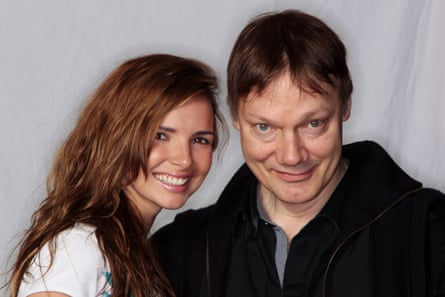
His musical adventures began with his learning the guitar, which led to him busking in London and Paris during his teenage years, and also becoming accomplished enough to play lunchtime gigs at the King’s Head pub in Islington, north London.
However, his musical destiny would not be shaped by the guitar but by his aptitude for exploiting the new world of electronic music, synthesisers and galloping advances in recording technology.
He took a decisive step in 1980 when he formed the group Torch Song with Grant Gilbert and Laurie Mayer. Based at a disused school in Notting Hill, dubbed the Centro Iberico, between 1984 and 1987 they released three albums of music in an ambient-electronica vein, Wish Thing, Ecstasy and Exhibit A. Their track Prepare to Energize was featured in the 1984 Tom Hanks film Bachelor Party. Having disbanded, Torch Song reformed in the mid-1990s and released Toward the Unknown Region (1995).
Miles Copeland, who had signed them to his IRS Records label, said of Orbit: “He’s one of the few people I’ve come across in my career who I’d describe as a genius. He had an awareness of playing with space and time that I’ve only ever heard in one act before, and that was Pink Floyd.” Orbit himself said that “sound is like putty, it’s elastic. You can do anything with it.”
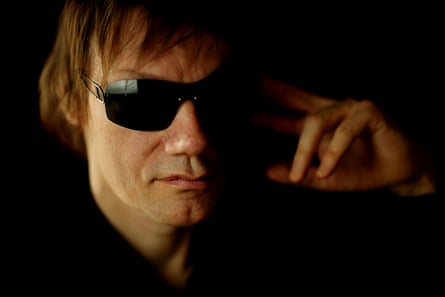
In 1979, Orbit and Mayer had founded Guerilla Studios, which would be the base for Orbit’s label, Guerilla Records. Artists who recorded at Guerilla included the Cocteau Twins, Howard Devoto, Erasure, the Fall, Gary Numan and Sting. In 1988 Orbit also collaborated with the comedians Harry Enfield, Paul Whitehouse and Charlie Higson on the single Loadsamoney (Doin’ Up the House), which became Orbit’s first hit record when it reached No 4.
It was typical of Orbit’s unconventional career that, after decades in the popular music business, it was only after he turned 60 that he suffered traumatic experiences with drugs.
He had been living in Los Angeles, but returned to London in 2017, then moved to Chipping Norton in the Cotswolds. A surfeit of cocaine and a selection of mind-altering products prompted a breakdown that led to his being sectioned in St Mary’s hospital, Paddington, for 28 days.
In a 2022 interview with Channel 4’s Krishnan Guru-Murthy, coinciding with the release of his album The Painter, he described how he was feeling happy and creative again after “I had four pretty awful years. There was a lot of lifestyle awfulness, some of which I brought on myself, some of which was fate. Stuff that just happens all stacked up to the point where I was unhappy.”
The album title reflected the fact that Orbit was also a talented and prolific artist, having begun painting while on a stop-smoking retreat in Nevada where he attended “vino and Van Gogh” adult art classes.
“You turn up, get drunk and mess around with cheap acrylics,” he put it, with characteristic self-effacement.