.png) 3 months ago
73
3 months ago
73
Nelson Mandela said: “Sport can create hope where once there was only despair.” Too optimistic? In 2026, almost certainly. Sport is still a common language, uniting unlikely groups like an all-powerful Esperanto, but it is in trouble.
The pitches we play on, rivers we swim, seas we surf, mountains we climb, parks we run in, air we breathe – all are being degraded by the burning of fossil fuels as the climate crisis turns the sporting landscape upside down.
Which is why The Hotspot, the Guardian’s new fortnightly newsletter on sport and the climate crisis, is here. But we want to do something more than tell you how sport is changing or about to be changed, though we’ll be getting our hands dirty covering that too. We hope to find the best stories and navigate a way forward, inching past the turnstiles, through the mud.
All over the globe, extreme weather has wiped out competitions and made grounds unplayable through flooding or storms or wild fires. Increased heat and air pollution puts grassroots and pro athletes at risk – take your pick from heat exhaustion and heatstroke in one hand, asthma and cardiovascular disease in the other. Tennis player Holger Rune summed things up nicely during the Shanghai Masters last year, when he asked an official: “Do you want a player to die on court?” High pollution and crazy temperatures also increase the risk of injury and reduce performance. Officials and spectators suffer too.
Sports in climate vulnerable countries bear a higher risk. “We have to play on the pitch as it is, not as you would like it,” said Mia Mottley, the Barbados prime minister. But richer countries and sports bodies look away.
The writer David Goldblatt has estimated that sport has a carbon footprint the size of a small- or medium-sized country, somewhere between Cuba and Poland. It talks the talk, but ever expands, eyes greedy for growth: bigger, fatter, richer. Its sparkling laundry effect attracts dollars from despots and fossil fuel companies alike – who follow in the ashy footsteps laid by the tobacco industry.
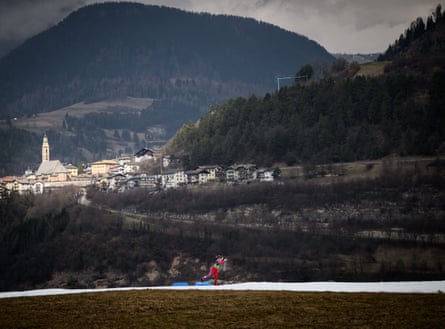
The 2024 report “Dirty Money” by the New Weather Institute suggested that a combination of state-owned and private fossil fuel companies were spending at least $5.6bn (£4.2bn) on sponsorship of global sport, across 205 active deals. The recent Winter Olympics at Milan Cortina (where they had to pump water from faltering rivers to make fake snow) was sponsored by oil company Eni; while this summer’s men’s football World Cup, dubbed the most polluting ever by Scientists for Global Responsibility, who estimate that GHG emissions are up 92% from a typical tournament in 2010-2022, will be plastered with advertisements for Aramco, the word’s largest corporate greenhouse gas emitter.
Fans haven’t taken all this lying down. Of course not, sport is the great catalyst, dispatching you for a run on a damp November evening and waking you at 2am to watch the Ashes. From Surfers Against Sewage to Fossil Free Football, FrontRunners to Protect Our Winters (and many more),grassroots organisations have sprung up to fight back. Individual clubs, like Forest Green Rovers, individual athletes, like Australian men’s cricket captain Pat Cummins, stand up and speak out. Clubs, like Fillongley CC, shown in the UK pavilion at Cop30, plant for nature.
Sports are connecting with alternative sponsors – Northern Rail have linked up with Rugby’s Super League, cricket with (Bank Green approved) Metrobank. Oxford United’s limited-edition shirt features an interpretation of John Ruskin’s “Study of a Wild Rose” to mark the opening of a new exhibition at the Ashmolean museum: “How Plants Changed Our World.” But there is so much more fan capital to be utilised, so much geeky data to deep dive – a sure-fire recipe for a sports fan’s and scientist’s love-in.
Sport knows how to come from behind – it is its favourite thing. The planet needs that last-second scrambled winner.
-
This is an extract from our newsletter, The Hotspot. To subscribe just visit this page and follow the instructions.