.png) 3 months ago
62
3 months ago
62
Efforts to end Sudan’s catastrophic war have been criticised as “unacceptable” by the country’s top UN official as a series of new reports confirm that the world’s biggest humanitarian crisis is worsening.
Speaking to the Guardian on the eve of the third anniversary of the war, Denise Brown expressed her concern over the apparent lack of political urgency to end a conflict that has forced 14 million Sudanese to flee their homes. Tens of thousands of people are missing.
Ahead of a conference in Berlin on Wednesday that many hope can push Sudan closer to the summit of the diplomatic agenda, Brown said: “It seems to me, every single conversation on Sudan is about the humanitarian crisis. How about focusing on finding a solution to end the war?”
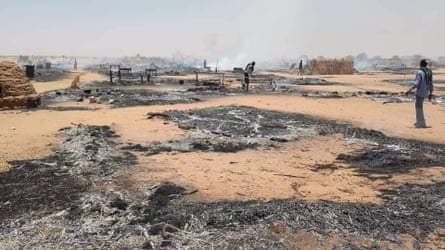
Asked to sum up a crisis that has left 33 million in need of assistance and is estimated to have killed at least 150,000, the UN’s head in Sudan said: “Bloody unacceptable is what it is. Unacceptable that the world focuses on other crises and leans into it entirely to find solutions: why not here?”
The scale of Sudan’s deepening suffering is underlined by a wealth of new reports released ahead of 15 April, the third anniversary of the ruinous war between the paramilitary Rapid Support Forces (RSF) and the Sudanese army.
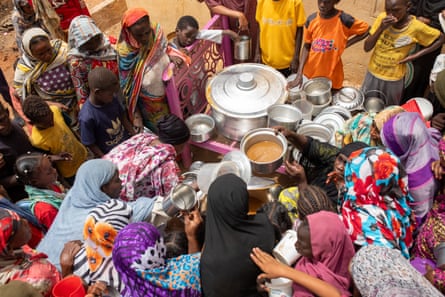
New Islamic Relief research reveals that almost half of Sudan’s vital community kitchens – a lifeline for millions – have closed in the past six months, exacerbating hunger and the threat of famine.
Two other studies corroborate the food crisis. One, by a coalition of aid agencies including Action Against Hunger, found millions of Sudanese were surviving on a single meal a day, while analysis by Mercy Corps highlighted alarming disruption to one of the country’s most crucial food-producing regions.
With fighting showing no sign of abating, further research chronicles the deliberate targeting of Sudan’s health infrastructure, with 37% of hospitals deemed “non-functional”, according to the Sudanese American Physicians Association, and more than 200 documented attacks on health facilities.
Overall, the war has set Sudan’s economy back more than 30 years according to a detailed assessment by the UN Development Programme and the Institute for Security Studies, which also found that an additional 34 million people could be pushed into deprivation if the conflict continues until 2030.
Meanwhile, investigators are attempting to track down tens of thousands of civilians reported missing or forcibly disappeared since the start of the war.
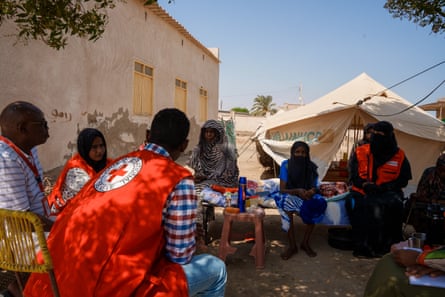
Cases of missing persons recorded by the International Committee of the Red Cross (ICRC) in Sudan stand above 11,000 – an increase of more than 40% during the last year – with the true figure believed to be many times higher.
Last year, the ICRC helped 62,000 families track down relatives who had gone missing, confirming the chaotic nature of the conflict.
Daniel O’Malley, head of the ICRC in Sudan, said: “There’s a constant pattern of people going missing, disappearing, especially when a location changes hands.”
One person currently looking for a loved one is Fatima, who was displaced from the city of El Obeid to Port Sudan, 1,200km (750 miles) away, after her stepson vanished during fighting in Kordofan province, the current centre of the conflict.
“My stepson has been missing for a year. We do not know whether he is alive or dead,” said Fatima.
Her comments came as the German government prepared to host the latest conference on Sudan, an event aid agencies hope will secure increased funding and pressure warring parties to allow humanitarian access throughout the vast country.
Various “peace talk” initiatives have failed to stem the violence – characterised by repeated atrocities and war crimes – with both sides apparently believing they can still win outright.
The issue of money has become increasingly critical with overall funding for Sudan’s humanitarian plans now only 16% met this year.
Sheldon Yett of the UN agency for children, Unicef, said even the modest amounts forthcoming are becoming less impactful with transport costs increasing 30% due to the Iran war.
“In some cases, the cost of delivery is now greater than the cost of the supplies themselves. The price of fuel is going through the roof.
“At the same time that the cost of providing humanitarian support is going up, the resources available to us are going down,” said Yett.