.png) 7 hours ago
6
7 hours ago
6
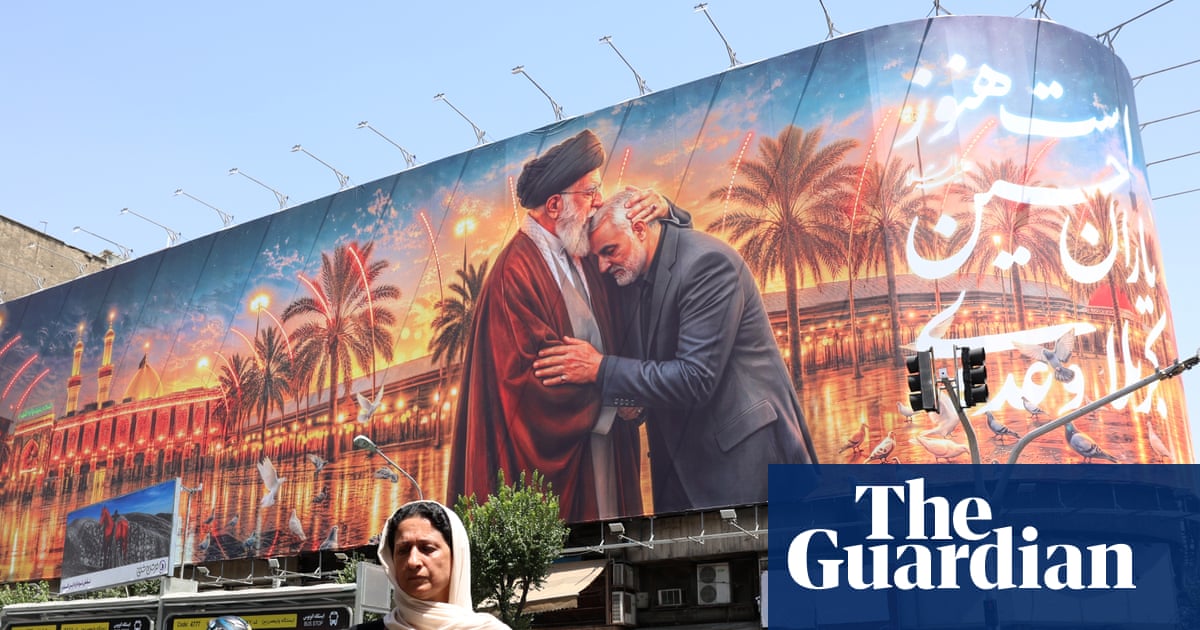
British foreign correspondents could be at risk of prosecution if they use sources within state-backed groups in countries such as Iran under national security legislation being rushed through parliament this week.
David Anderson, a former UK independent reviewer of terrorism legislation, has warned that unless the bill is amended it could accidentally pull journalists working in danger-zone countries into prosecutions for terrorism.
The new anti-terror powers are designed to allow the UK government to label state-backed groups as terrorist organisations, enabling them to ban groups such as Iran’s Islamic Revolutionary Guards Corps (IRGC).
The legal change, which is expected to complete its final parliamentary stages this week, would also create new criminal offences for people who “support, assist and obtain material benefits” from groups formally listed as state-supported threats.
However, there are concerns that the national security (state threats) bill would in practice go beyond its main aim of targeting proxies, and could end up penalising foreign correspondents as well.
The Home Office denied the bill would undermine the work of journalists. The department’s guidance suggests that journalists are protected, but Lord Anderson said those protections were not explicit in the bill.
“The bill seems to have been pulled together in a hurry, with mooted safeguards for NGOs and journalists largely absent from its text,” the peer said. “That needs to be put right early this week, before the bill becomes law.”
Under the legislation, material benefits include not just financial benefits but also information. It would be an offence both to “obtain, accept and retain” this material benefit but also to “agree to accept” it – and there is no “reasonable excuse” defence for either.
Jonathan Hall, the independent reviewer of terrorism legislation, has also argued for the law to be amended, extending the “reasonable excuse” defence to cover information. The government has not accepted his recommendation.
“There are obvious concerns here for anyone whose legitimate business might cause them to have contact with a designated body or those in a position to give information on its behalf,” Anderson said in a briefing note.
“It would place in potential jeopardy a charity such as Halo Trust, which could not lawfully ask the IRGC or its agents where the landmines were laid, or a conflict resolution organisation that needs to engage with designated bodies as part of its work.
after newsletter promotion
“Foreign correspondents could also be affected. Indeed on the face of it, they would be at risk of prosecution if they were to have contact of any kind with sources within designated bodies or their agents.”
Ministers have argued that information would only fall within the prohibition if it “possesses an inherent value that enriches the recipient”, but Anderson points out the definition of material benefit includes information as a separate category, distinct from the financial benefit clause.
They have also offered the reassurance that those potentially caught by the new offence would only be prosecuted if the attorney general considered it was in the public interest. “[You] will have their own views on how robust such a reassurance is in practice, and in all possible political futures,” the cross-bench peer said.
A Home Office spokesperson said: “This bill does nothing to undermine the vital work journalists do, and any suggestion otherwise is absolutely false. Legitimate activity including journalistic freedoms are protected under the bill, as well as diplomatic and humanitarian engagement.
“We have a proud tradition in this country of upholding the freedom of the press. Indeed, it is our obligation to ensure journalists are empowered to carry out their work.”