.png) 3 hours ago
3
3 hours ago
3
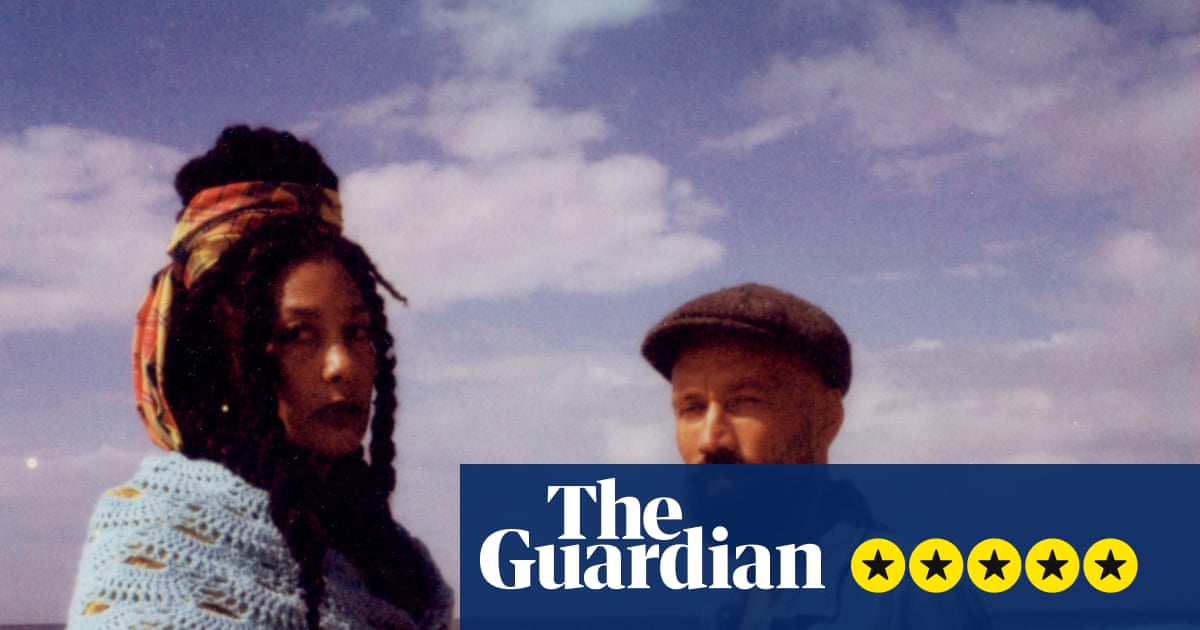
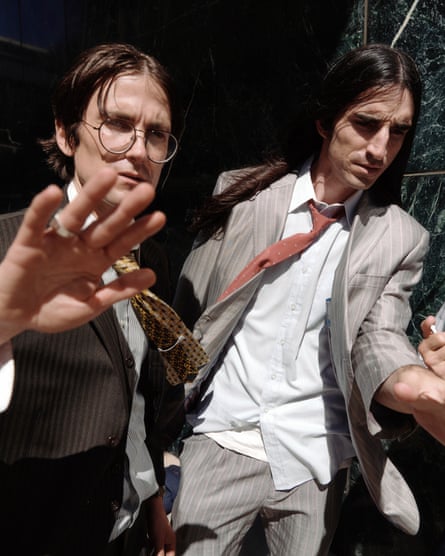
Zachary Cole Smith used to be a miserable interviewee. He had plenty to say – always generous, always voluble – but spoke with grim introspection, chastising himself and cataloguing his misdeeds with a fervour that engulfed him like his oversized T-shirts. A decade later, the Diiv frontman who materialises on my screen seems well rid of that old self. Suspiciously well rid of it, perhaps. He looks as if he has stepped out of a middle management meeting.
“Precisely!” Smith concurs cheerfully, speaking via video call from a back garden in La Cañada, California. “We’re trying to have a visual language, which is fun. We’ve never done that with what we wear.” The singer-guitarist, 41, wears thick-rimmed square glasses, slicked-back black hair and a pinstripe shirt, its neck clasped by a tie printed with stock market emblems. He has an earnest but pranksterish energy. He uses the word “fun” so many times – more than a dozen within 10 minutes – that I suspect he is testing some sort of subliminal PR strategy.
The Diiv album he is promoting is called Zirp! (meaning “zero interest-rate policy”) and produced by Alex “AG” Cook, the bubbly, neon pop accelerationist and co-conspirator of Charli xcx. Cook is by no means a natural fit for Diiv, who are one of the least garish bands around. Their buzzy early albums set 80s goth to a motorik pulse, with dream-pop riffs refracted like sunlight into a cobwebbed drawing room. Though they have likely benefited from the TikTok-aided shoegaze revival, their fourth album, 2024’s Frog in Boiling Water, waded into the swamp of anti-capitalist ennui. Cook has helped airlift them out: on Zirp!, for the first time in years, Diiv sound like they are finally having – hang on a minute …
“It’s fun to do something fun,” proclaims Smith, smoking the first of several cigarettes. Today’s costume, accordingly, is based on a darkly comic figure: “the recession-era, stock market crash guy”. Smith strikes a pose like Rodin’s Thinker if he had just cost his hedge fund a billion dollars. “This kind of vibe, with the dishevelled suit.”
To go with the look, the band coined a tongue-in-cheek genre dubbed the New Alternative. It reminds Smith of both the loathed Thatcherite slogan “there is no alternative” and the influential Mark Fisher book Capitalist Realism: Is There No Alternative? “I really want to reclaim that word,” Smith says. “There is an alternative to capitalism.”
For starters, he dreams of a publicly owned streaming library that could operate as an alternative to the current ecosystem, particularly Spotify. “I do feel that that company absolutely should not exist and should be dismantled,” he says. “For Spotify, [music] is just fodder in their ecosystem. They’re selling tech. Apple is a company that’s selling phones. And music is this resource that they can pillage and plunder.”
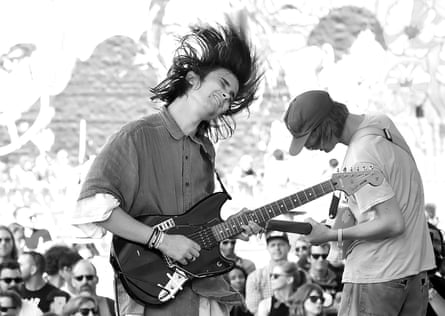
New songs Evangelizer and The Crash are similarly forthright: the former, a wraithlike monologue, depicts “BlackRock master keys” and “Palantir-Pfizer collab pills” in what Smith calls a “post-capitalist hellscape”; the latter is a wonky, end-of-days art-pop screed by a narrator determined to “throw the billionaires screaming in an alligator pit”. As to what a New Alternative might be, he concedes that the term, for now, describes nothing beyond a break from “some kind of norm”. He shrugs helplessly, then seems to remember he is wearing a tie. “Alternative stocks are up!” he declares.
One afternoon in January 2025, Smith invited his bandmates to his home in Altadena to demo My Star, a thrashing alt-rock love song to his one-year-old son. As they left, a windstorm was brewing. When nearby Eaton Canyon went up in flames in the wildfires, Smith and his wife, who was seven months pregnant, decided to gather their son’s belongings. “We gotta do bedtime,” he remembers thinking. “Let’s just pack up his little crib and his little jammies and get a hotel room, and then the power won’t go out.”
By 3am, their hotel secured, Altadena was ablaze. “Our neighbours were describing the scene: it’s raining orange, it’s snowing orange.” Three hours later, “everything was gone. Then at 6.30am, our son woke up and was just like, ‘What are we doing today!’” As their adrenaline ebbed, the gravity of the loss struck. “All of a sudden, we had nothing. But once he woke up, we just had to make everything be normal.”
Their home was now a pile of rubble beside the burnt-out carcass of a car. Finding a new place was hard “because so many people were displaced”, says Smith. A series of temporary lodgings led the family – now including their second child – to the La Cañada house where they have lived for the past six months, awaiting a distant peaceful life. “Where we’re at now feels like where we’ll be until we rebuild our house, which is a slow process,” he says. “But one that, I think, at some point, will become fun.”
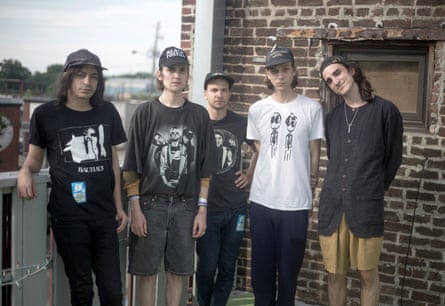
Work on Zirp! swiftly resumed. Inspired by a 2023 arena tour supporting Depeche Mode – and a dip into the band’s 1980s catalogue – Smith had already decided to “surrender perfectionism, work quickly and not be precious”. Having run into Cook at a party, he cemented the partnership after hearing the grunge anthem Bewitched from the producer’s triple album Britpop. Cook renders Diiv’s shoegaze textures as if in arcade mode: portentous riffs wriggle like pop-punk earworms; feedback harbours micro melodies like radio jingles. “Knowing the songs were gonna wind up in front of Alex made it so much more fun to take risks,” says Smith.
There were other benefits to recruiting an auteur producer. Though Smith single-handedly produced and masterminded the first two Diiv albums, the band gradually became more collaborative as he treated, and finally cut out, his drug use. “Addiction is all about control,” he says. “You want to block out what anybody else is saying, so it lends itself really well to dictatorship.”
His addiction had become a minor scandal in 2013, when Smith and then-girlfriend Sky Ferreira were arrested for possession of heroin and ecstasy (he took full responsibility). He went to rehab, left and relapsed. He spent four years talking up Diiv’s second album and playing lacklustre shows in a period of heightened scrutiny: drummer Colby Hewitt was dealing with his own substance use and bassist Devin Ruben Perez had been exposed for bigoted messageboard posts. (Both left the band.) As Diiv threatened to slip through his fingers, Smith became preoccupied with collecting rare coral reefs in a 50-gallon saltwater tank at his Brooklyn apartment.
With the help of his girlfriend (whom he married in 2020) and mother-in-law, Smith kicked drugs in 2017. The “ego destruction” of sobering up prompted him to democratise the band. “I’ve worked to repair the trust with my bandmates and whoever I damaged during my active addiction,” he says. “I just want to utilise that to get us to where we want to be,” moving forward in a “spirit of fun and playfulness and risk and experimentation”.
Smith has spoken relentlessly about all those he has let down and lied to. After all that, I ask, how did it feel to receive $100,000 in crowdfunded wildfire aid for his family, from a community that trusts and supports him? “I want to cry just thinking about it,” he says, choking up. “It taught me something, you know? It was profound. I’ve never experienced love like that. And it did feel like …” He sighs. “I felt like I deserved it.” As part of his recovery, Smith has helped others living with addiction and maintained a network of the similarly afflicted. “I feel like we earned it through being good to our friends, family and communities,” he says, “being available to people or letting a band borrow the van. I don’t know how I would have learned that lesson any other way. But it was probably the most meaningful thing that’s ever happened to me, on an interpersonal level.”
The rebuilding of Smith’s family home remains clogged up in various city-planning departments. “But the Altadena community is stronger than it’s ever been,” he says, lighting another cigarette. “The relationships we have with other families that lived on our street is remarkable. Even the crowdfunding – the silver lining is how it showed this sense of community, lifting each other up.” For a little while, it seemed as if the fire would consume their whole world. “It could have felt really alienating, but luckily, we had each other.”