.png) 2 hours ago
7
2 hours ago
7
‘Theatre still has a sheen of respectability, so people feel they can behave badly because where they are cancels out how dreadful they are being,” says John, who has been a box office manager for 15 years. From my early 20s to my mid-30s, I too worked in the box office, at some of London’s top theatres. During my decade in the job, I witnessed audience behaviour ranging from the odd and the outrageous to the outright belligerent. If you are under any illusion that theatre audiences are classy, allow my former colleagues to disabuse you of that notion.
The misuse of phones is one of the most common offences. In April, Cynthia Erivo stopped her one-woman West End production of Dracula mid-performance to urge an audience member to stop filming. Former Love Island winner Amber Davies, starring in a tour of Legally Blonde, last month asked staff to kick out an audience member who was filming the performance from the front row of a Dublin theatre. And in May, Rosamund Pike spotted an audience member texting during the climax of her performance in Inter Alia. After the curtain call, Pike returned to the stage and shamed the behaviour, without singling out the culprit. Part of me hoped that, like a teacher, she would make the individual in question read their texts out to the rest of the theatre.
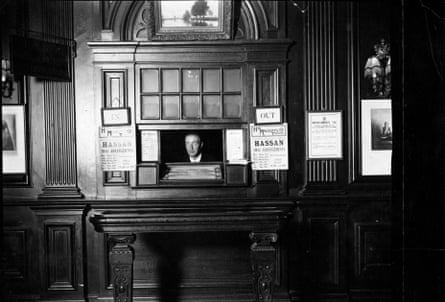
Front of house (FoH) theatre staff are all too familiar with such disturbances. It’s “distracting and rude” and “hugely disrespectful to the people who have worked tirelessly to create the show,” says Jackie, 35, from Hertfordshire, who has been an usher since 2021. Naomi, an usher since 2016, says that when she has asked audience members “to stop filming the performance”, she has been called a Nazi or told: “This is worse than the Soviet Union!” Ushers had to be particularly vigilant during one show at the London Coliseum that included acrobatics and aerial stunts. “Audiences don’t realise how distracting phone use is,” says Naomi. Not only did she have to tell them to stop filming, she also had to plead with them not to use the flash, as it can distract performers during their acrobatic tricks. “At the interval, an audience member told me I was acting like a member of the Gestapo. No one is putting them in front of a firing squad. I was just asking them to sit and enjoy the show.”
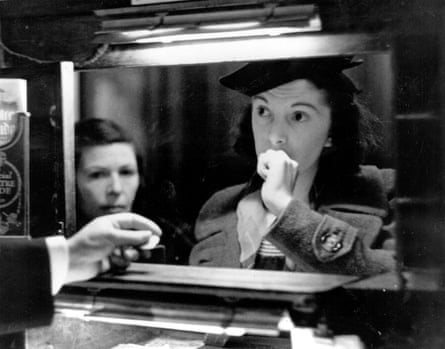
Working as a box office assistant, I soon realised that I needed to know the running time. When a customer speaks to you, it is nearly always to ask about this – they get all dressed up, pay a fortune for tickets, but cannot wait for the show to end. I also learned that the box office is the first port of call for official complaints; it’s unbelievable how often people ask for a refund because they “didn’t like the show”. My technique was to respond with excessive empathy: “Oh no, I’m so sorry you didn’t enjoy the show – that’s such a shame. Poor you!” Without fail, this outpouring of sympathy would throw them, and their complaint lost all momentum. A former colleague, Emma, recalls having to keep a straight face when a customer complained: “There were too many wars in War Horse.”
In the box office, there is usually a glass panel between staff and the public. Ushers have no such luck. Laura, 35, who moved to London from the West Midlands and has worked as an usher for more than 15 years, recalls one particularly horrifying experience. During the performance of a high-profile rock musical, an older male audience member handed her “a plastic pint cup filled with warm urine”, smiled, then disappeared back into the crowd without a word.
Bodily fluids are an alarmingly common problem. Laura witnessed a disturbing incident during an electronic music concert. “At the back of the stalls, I saw a woman squatting and taking a dump on the floor. By the time the cleaners turned up, it had been spread across the floor and on to unwitting people’s shoes.” Another West End usher, Adi, went to the aid of a customer who, during an expensive West End musical, was vomiting over the balcony on to the people below. He proceeded to vomit all over Adi. Not wanting to disturb the show any further by leaving, Adi stood at the back, picking regurgitated sun-dried tomatoes off himself throughout the second act.
Hannah, a veteran box office assistant in London, says ushers regularly had to knock on the doors of the boxes to stop audience members from “the giving and receiving of oral sex during The Wizard of Oz”. Apparently, the actors playing the evil winged monkeys flew in from the rafters and got “an eyeful”.
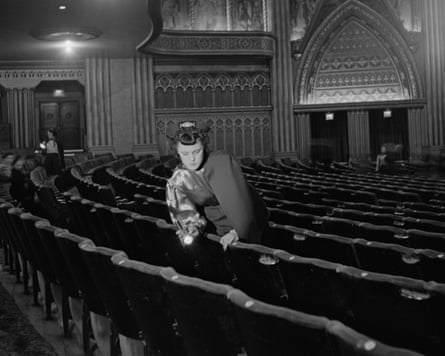
Interrupting sex is a familiar part of the job. Lizzie, who worked as an usher in the West End for more than 10 years, says: “A couple were having full sex in the stalls during a magic show.” The woman was drunkenly straddling the man in his seat. “We didn’t know what to do, so the duty manager, who had just clocked out, had to come back and politely tell them to stop.” At one north London theatre, says Lizzie: “A couple were having sex in the disabled toilet. The usher gave them a five-minute courtesy knock so they wouldn’t miss the show.” They got to their seats just in time for the curtain.
John says some theatregoers have a sense of entitlement. “If people have spent their money, whatever the price, £10 to nearly £200 a ticket, they feel they can do whatever they want.” John recalls one woman arriving to collect tickets from the box office and insisting that he give her his half-drunk cup of water because she was thirsty. He persuaded her to try the bar.
Lawrence, who has spent 20 years as a theatre usher, says some audience members act as if they are at home. “People cannot sit for more than 20 minutes without getting up for a loo break or another alcoholic drink.” Bare feet are also a bugbear. “The number of times I’ve seen audience members take off their shoes and socks and put their feet on the chair in front of them is unreal,” says Lawrence. Nadia has seen something similar. “A man lifted his wife’s feet on to his lap, took off her shoes and massaged her bare feet in the middle of the stalls,” she says. Another usher recounted finding toenail clippings in the stalls: “They were too big and yellow to be from fingers!”
To ensure everyone enjoys an uninterrupted show, the role of the usher often goes way beyond their job description. One former colleague had to intervene when a couple who had split up after buying tickets to a hit West End show each turned up with a new partner, thinking they were entitled to both tickets. “They arrived just before the curtain went up. It appears it wasn’t an amicable breakup, as it quickly erupted into a full-blown screaming match over who would see the show. It happened four rows from the front of the stage and everyone could see and hear. When they showed no signs of sorting it out themselves, the ushers intervened. They awarded the tickets to the girlfriend because they were in her name.” The rest of the audience were treated to two shows – a five-star West End musical and a full-blown domestic drama.
To avoid disruption, FoH are adept at removing disruptive customers discreetly. Jimmy, an usher, spotted a young teenager looking unwell. The lad had used a family trip to a classical music concert to experiment with ketamine. “I could tell he was in a K-hole,” says Jimmy. The ushers came to his aid and swiftly removed him from the auditorium. He begged them not to tell his parents that he had taken ketamine (and they never did).
Jimmy came to the rescue again at the same high-end London venue when a Cirque du Soleil production was showing. He had to call an ambulance for a group of teenagers who had got carried away. “Their parents had bought them tickets for VIP areas with free booze. Before the show started, they had to be taken out in wheelchairs to waiting ambulances and have their stomachs pumped.”
Then there are those who nap. Hannah recalls one incident. “The show began, and a woman in the front row put her feet on the stage and fell asleep,” she says. “They had to wake the woman up without disturbing Adrian Lester, who was in the middle of a 20-minute opening monologue.”
Theatregoers are particularly likely to show their true colours when, God forbid, the A-lister they are expecting goes off sick. An overwhelmed young usher had to deal with angry customers who had arrived to see Hollywood heartthrob Josh Hartnett in a West End production of Rain Man, only to find that he was off sick with gastric flu. “I thought they’d tear the place apart,” she says. “They didn’t just demand refunds; they expected them.” Most theatres now have written into the terms and conditions something along the lines of: “The absence of a specific actor (even a star performer) does not entitle you to a refund or exchange.” But from my experience, you need to be ready to duck for cover the moment you say: “Sir, if you read the T&C’s …”
Rudeness to staff ranges from a simple lack of politeness – “The art of ‘hello’ is gone. People come up to me and just yell ‘Toilet?’,” says Lizzie – to the extremely insulting. “I was called a ‘cold-hearted bitch’ for not letting in a latecomer to the Proms,” says Laura.
FoH staff are often out-of-work performers and creatives. “FOH are arguably some of the most talented individuals you’ll ever meet, who are grafting hard to make their dreams a reality,” says Lizzie. If that doesn’t make you watch your manners the next time you go to the theatre, you might end up on our “list”. Or, as one theatre calls it, “the wall of wankers”. That’s show business, baby.
Do you have an opinion on the issues raised in this article? If you would like to submit a response of up to 300 words by email to be considered for publication in our letters section, please click here