.png) 4 hours ago
9
4 hours ago
9
We all love bumblebees. Not only are they beautiful, busy and social, they perform pollination services that are crucial for plants, crops and human civilisation.
Any bumblebee would be a worthy winner of invertebrate of the year but a gorgeous giant ginger bumblebee fondly known as the flying mouse? Come on!
There are about 250 species of bumblebee and Bombus dahlbomii is the largest. The gloriously furry females can measure 4cm in length. These unusually heavy-bodied bumbles, weighing up to 1.5g, are found flying in the temperate forest-clad mountains of Patagonia, in Argentina and Chile.
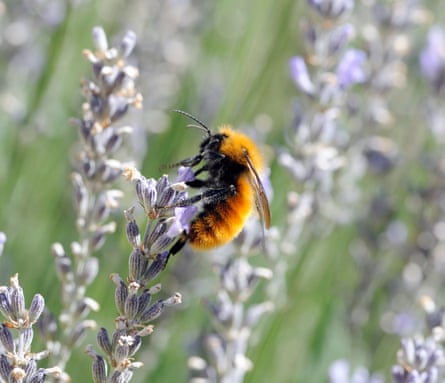
As a Patagonian endemic, the bumblebee is an important pollinator of native plants such as the Peruvian lily (Alstroemeria aurea) and the Chilean bellflower (Lapageria rosea). The latter is red, which most bees cannot see, so they typically avoid red flowers. But the moscardón visits them because it uses a special receptor system to detect and distinguish the colour red. Its furry appearance is due to long bristles that cover the thorax and abdomen.
Unfortunately, the magnificent moscardón is threatened by human actions that go beyond the usual habitat loss and destruction. Populations have rapidly declined since the introduction of two non-native invasive European bumblebees, the ruderal bumblebee (Bombus ruderatus) and the buff-tailed bumblebee (Bombus terrestris), which have been imported to Chile since the 1980s to assist commercial agricultural pollination. These species may be much loved in their natural environments, but in Chile and Argentina they have rapidly spread, not only outcompeting Bombus dahlbomii but bringing in novel pathogens and diseases that are decimating populations of the native bumble.
after newsletter promotion
It’s terrible news for the web of life that intersects with Bombus dahlbomii, from native flowers to other endemic species such as mites that live on the giant bumble. But the invasive bumblebees are also helping invasive non-native plant species from Europe, such as broom, spread more rapidly. Today, the invasive bees are too widespread to be eradicated. When will we learn?
Bombus dahlbomii received a fabulous nomination from the researcher Anton Gradišek in Ljubljana, Slovenia, a partner in an academic project developing bioacoustics – the analysis of sound recordings – to better study the endangered bumblebee. “When we were out in the field, we saw only a handful of them,” he says. “Bumblebees are the pandas of the insect world, and a mascot for biodiversity conservation.”
-
It’s invertebrate of the year again! From 3-12 August, every day we will profile one of the thousands of amazing invertebrates that our readers have nominated. And then, when you’ve heard about all of them, we’ll open the voting so you can choose your favourites. Don’t hesitate to get in touch with thoughts and ideas: email us at [email protected] with Invertebrate in the subject line.