.png) 1 month ago
55
1 month ago
55
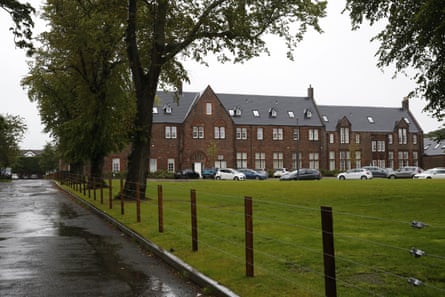
On a spring morning in 1987, a 30-year-old man named Robert Kilgour pulled up beside a row of foamy cherry trees in the town of Kirkcaldy, on Scotland’s east coast, to visit an old hotel. The building was four storeys of blackened Victorian sandstone. Kilgour was a big man, a voluble Scot with a knack for storytelling. He already owned a hotel in Edinburgh but wanted to branch into property development and was planning to turn this old place, Station Court, into apartments. A few months after he completed the purchase, however, the Scottish government scrapped a grant for developers that he had been counting on. He had just sunk most of his personal savings into a useless building in a sodden, post-industrial town. He urgently needed a new idea.
Care homes weren’t so different from hotels, Kilgour thought. And the beauty was, their elderly residents were unlikely to get drunk, steal the soap dispensers or invite sex workers back to their rooms. Turning Station Court into a care home seemed like the best way out of a bad situation. Kilgour arranged a bank loan and in June 1989 he launched Four Seasons Health Care, taking the name from a restaurant in Midtown Manhattan where he had once dined.
By sheer luck, Kilgour had found himself at the start of something big. The following year, the government in Westminster started to transfer responsibility for social care on to local councils. This gave businessmen such as Kilgour a huge opportunity. Councils began paying them to provide beds that had previously been supplied by the NHS. Demand boomed.
Kilgour opened three other homes in Kirkcaldy, another overlooking the Firth of Forth, and a further one near Dundee. Alongside running his new business, he juggled the pastimes of an increasingly wealthy man. He raised money for a cancer charity, played tennis, networked ceaselessly and began to dabble in politics, campaigning (and failing) to become one of Scotland’s few Conservative MPs. By 1997, he owned seven care homes across Fife.
That year, he chaired a fundraising appeal to open a new hospice in the grounds of Kirkcaldy’s main hospital. The guest of honour was an irascible TV celebrity called John Harvey-Jones, star of a reality show called Troubleshooter in which he dispensed tough-love advice to underperforming British businessmen. Over tumblers of whisky, Harvey-Jones counselled Kilgour: “He said I was stuck in a regional comfort zone. He said I needed to break out of it and go wider.” Deep down, Kilgour agreed.
He had few contacts in London, where the serious money was. It occurred to him that his best lead might be an accountant he knew called Hamilton Anstead, who had recently left a job at a care company in the south of England. Kilgour invited him up to a hotel in Glasgow and the two men hatched a plan for Anstead to join Four Seasons as a joint chief executive.
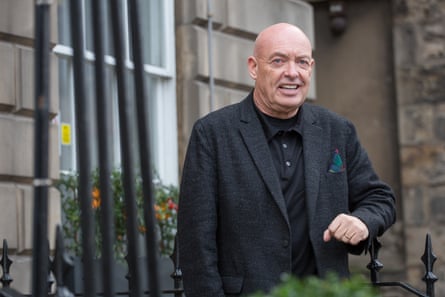
Kilgour told me all about this over coffee at his private members’ club in Mayfair, a high-ceilinged, low-lit place with clusters of velvet chairs arranged for quiet conversation. He had now entered the “legacy” phase of his life, he said: more concerned with what he was leaving behind than what lay ahead. He often mentioned the politicians with whom he was on first-name terms, as if showing me the photographs in a well-handled album. Mostly, he seemed happy, but there were aspects of his past that bothered him.
Over the course of two years, Kilgour and Anstead built Four Seasons into, if not quite an empire, then a small dominion of 43 homes dotted across Britain. As the business grew, however, their relationship soured. Anstead often felt that Kilgour was more interested in his political career than the minutiae of spreadsheets or suppliers. (“I’m a strategy and vision person, not a detail person,” Kilgour said. “Hamilton is a brilliant micromanager and I’m an entrepreneur.”)
In 1999, the two men decided to sell the company, with the idea that they would stay on as executives. Anstead identified a buyer, a private equity firm called Alchemy Partners. Shortly after they signed the deal, in August that year, he called Kilgour and said they urgently needed to meet. Anstead put it bluntly: neither he nor the company’s new owners wanted Kilgour to stay on as an executive at Four Seasons. Kilgour felt his temper rising. He was being asked to leave the business he had created from scratch. “He started effing and blinding and calling me all sorts of obscenities,” Anstead recalled. (Kilgour later told me that by this point he was exhausted, and wanted out.)
Alchemy sold Four Seasons in 2004, and the company became notorious as a failed experiment, a byword for the folly of entrusting elder care to private equity. “You could ask me, well, do I feel guilty about what happened?” Kilgour said. “And yes, I do, actually.”
Private equity relies on a basic technique known as the leveraged buyout, which works like this: you, a dealmaker, buy a company using just a small portion of your own money. You borrow the rest, and transfer all this debt on to the company you just bought. In effect, the company goes into debt in order to pay for itself. If it all goes well, you sell the company for a profit and you reap the rewards. If not, it is the company, not you, that is on the hook for this debt.
Leveraged buyouts first came to prominence in the 1980s, when dealmakers on Wall Street began targeting underperforming companies and bloated conglomerates in the US. Then, these American businessmen and their British imitators started to scour the world for other places to put this technique to work. With a dwindling supply of undervalued companies to choose from, some of the sharpest minds in finance found a new and unexpected target: care homes.
As people were now living well into their 80s and 90s, financiers began to think of elderly people as recession-proof investments, and assumed that the care home market in Britain and the US would keep growing. In the UK, many of these homes were bankrolled by local authorities, which guaranteed a steady income from the government. Elderly people who paid for their care out of their own pockets typically covered the cost by selling their houses, and the ceaseless increase in property prices endowed them with so much housing equity that they became the human equivalent of ATMs. Care homes were the slot for withdrawing their cash.
It takes a certain kind of mind to look into the world of colostomy bags, incontinence pads and emollient cream and see dollar signs. Nevertheless, from the turn of the 21st century, private equity investment in care homes ballooned in both Britain and the US. Fund managers thought “there are all these affluent baby boomers heading towards retirement. They’ve made a fortune from their houses, or inherited money from their parents, and they all have gold-plated pension schemes,” Nick Hood, a chartered accountant who has studied Britain’s care sector, told me. “They rubbed their hands together and said, ‘Sooner or later, as the demand increases, the prices must go up.’”
In the UK, a stream of deals took place. New companies emerged and new care homes went up, some built out of faded hotels whose clientele had migrated to southern Spain after the advent of cheap air travel. Other businessmen bought crematoriums as well as care homes, in anticipation of their clients’ final billable requirements. “Private equity’s presence in British care homes was negligible 30 years ago,” said Peter Morris, a researcher and associate scholar at the University of Oxford. “Since then, it’s grown inexorably.”
Anstead and Kilgour belonged to a small group of newly minted care home millionaires. At the heart of many of these new fortunes was a technique financiers called “sale and leaseback”. You would take a care home and split it into an operating company, or “opco”, which dealt with everything concerning the business of care, from staff to beds, medicine cabinets and cutlery. On the other side you had the property company, or “propco”, which now owned the physical home. After splitting these in two, you could sell off the propco to someone else, allowing you to quickly raise cash (this was how Anstead and Kilgour initially managed to grow Four Seasons to 43 homes in just two years).
In theory, sale and leaseback was an efficient way of raising money, with estate agents acting as middlemen between fund managers who were buying and selling the homes. “In practice, a lot of the deals were bananas,” Paul Saper, a former healthcare consultant, told me. A care home that no longer owned its own property was like a family that sold its house to a rapacious landlord. If the landlord decided to raise the rent, obviously the family would have less to spend on other essentials.
“There’s a phrase my friends use when analysing companies,” Hood told me. “Hang gliders.” Just as a hang glider coasts through the sky supported only by the spread of its wings, a company can coast along for a while supported only by the stability of its cashflow. But if it is crippled with debt, or locked into escalating rental payments, its cashflow dries up and “it crashes to earth. Because it’s got nothing to keep it up there.”
After Anstead and Kilgour sold Four Seasons, it was passed between a string of different owners. Alchemy sold the company in 2004 to a German insurance firm called Allianz Capital Partners, which then sold it to a Qatari private equity fund in 2006. When the financial crisis arrived in 2008, the care company’s debts had soared to an estimated £1.56bn. As its Qatari owners couldn’t find anyone willing to refinance the company, Four Seasons fell into the hands of its creditors, led by the Royal Bank of Scotland. “It was wonderful for the financiers, who put in these supposedly clever structures that took equity away and replaced it with debt,” said Ros Altmann, a Conservative peer who has studied the sector. “They were playing financial pass-the-parcel with elderly people’s lives. They could pile on as much debt as they liked, and there was nothing to stop them.”
By February 2012, RBS was still looking for a buyer, and word had spread about a bidding war. Among the rivals for control of Four Seasons were a Canadian pension fund, the Abu Dhabi investment authority, a Hong Kong billionaire and four private equity firms including Terra Firma, founded by Guy Hands.
After starting on the trading floor at Goldman Sachs, Hands had made his name at the Japanese bank Nomura, buying up trains and pubs, among other things. He was ambitious and had an uncompromising streak. When his team reached the final, frenetic stages of a deal, Hands would hardly sleep. He was known for having a temper. “I’m not a particularly conciliatory human being,” he told me. In an FT report in 2024, several former colleagues accused Hands of screaming and raging at staff and humiliating junior employees. (Hands and Terra Firma forcefully denied these accusations.)
In 2002, he broke away from Nomura to found Terra Firma, a phrase used by 17th-century Venetian merchants to describe the areas of Italy ruled by Venice. Like a doge surveying his kingdom from across the water, Hands relocated offshore, to the tax haven of Guernsey.
Despite his grand ambitions, however, his deals were not always a great success. In 2007, Terra Firma bought EMI, the iconic British music label that had recorded the Beatles at its Abbey Road studios. The match was ill-fated from the start. Hands had little understanding of the music business or the power that artists exerted over the label, and his clinical approach to profit creation left some musicians cold. Paul McCartney described how EMI became “boring” once it was under Terra Firma’s control, while Radiohead were so incensed by the new management that they released an album on their website, sidestepping the label altogether. Two years into its new ownership, EMI was reporting losses of £1.75bn, and in 2011 Hands surrendered control to its creditors, Citibank. (Later, Hands insisted to me that the thesis of the deal was still “100% right” and would have made Terra Firma’s investors over £14bn “had Citigroup not seized the company”.)
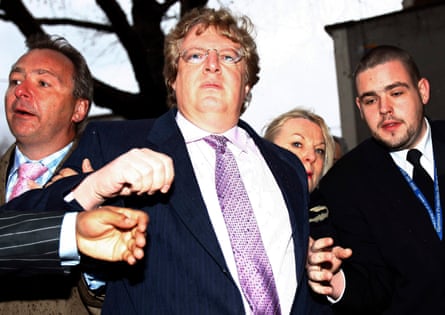
With his reputation now tarnished, Hands was desperate to convince the world that he could still do his job, and soon alighted on the care home sector.
In the early months of 2012, Terra Firma held 10 board meetings at which its partners frantically analysed pages and pages of presentations. Their proposition hinged upon a simple premise: they would make Four Seasons into the “IBM of care”, providing reliable, unglamorous services to local councils, much as IBM had sold reliable, unglamorous computer systems to the public sector. In the scramble for acquisition, Terra Firma’s offer won out.
Not everyone was happy. Mark Drakeford, the then first minister for Wales, was concerned that Terra Firma planned to add Four Seasons to a grab bag of unrelated assets: a garden-centre company, a group of wind farms, the Odeon cinema chain and an assortment of motorway service stations in Germany. “Older people are fellow citizens, not commodities,” Drakeford later wrote, likening the transaction to buying a sack of compost or a tub of geraniums. “It just isn’t good enough.”
Hands told me he wanted to improve the quality of care at Four Seasons to attract more residents, which in turn would make the business more profitable. “The cost of doing it would have been about £1,100 a week [per bed],” he said. “And we were getting paid about £550 by the local authorities.” Terra Firma had bought the company for £825m, putting down £325m of its investors’ money and borrowing the rest. While the firm paid off some of Four Seasons’ existing liabilities, the company was still hobbled with debt, and interest payments of £50m each year. In May 2015, the chancellor George Osborne outlined plans to cut a further £55bn from the state’s budget. This trickled down to local authorities, which cut funding for care homes. That autumn, the ratings agency Standard & Poor’s warned that Four Seasons was on track to run out of money.
In Hands’s view, the government’s unwillingness to spend more money on the sector was what caused his plans to unravel. “We believed the government was going to support care, and we got it completely wrong,” he told me. “We saw a Conservative government, with old voters, family values, and we thought, these guys are going to put money into this sector. And they did the reverse. They drained it.”
While the austerity drive undoubtedly did upset Hands’s calculations, it was almost impossible to know what was really going on inside Four Seasons. By now, its corporate structure had become a labyrinth, with 185 separate companies organised across 15 different layers. We know this thanks to research by forensic accountants at the University of Manchester, who studied the company for a 2016 report. “The rules of capitalism have been changed through the construction of opaque, complex groups of companies,” they wrote. “Four Seasons is a black box and only Guy Hands and a few close associates understand what is going on.”
Hands insisted that, in this case, the structure was inherited from Terra Firma’s predecessors, though his firm didn’t exactly simplify things. “It’s a little bit like the government issuing laws,” he told me. “They issue laws the whole time. They never abolish any … it’s much more exciting putting rules in than taking rules out.”
Private equity people tend to be better than just about anyone else at two things: managing huge amounts of debt, and concealing the inner workings of their companies. Fund managers can charge mysterious “monitoring” and “transaction” fees to a company they own. Or they can borrow against that company to pay themselves or their investors a dividend. Whenever I have spoken to policy researchers or trade unionists about this dynamic, the picture they have painted isn’t so different from the argument often made about foreign aid: that it’s pointless pouring money into countries with corrupt governments, as a group of middlemen will siphon off the donations before they can reach the people who need them. Likewise, if it isn’t possible to see how much money a care home is actually making, its owners can more easily pressure the government for more funding.
“In the old days of unionism, you had the factory up the road and you could see how well they were doing,” Natalie Grayson, a trade union organiser who worked with care home staff, told me. “But you can’t do that when your employer gets bought by an investment fund. A company can say, ‘We haven’t got any money, we can only afford to pay people the minimum wage’ and because we don’t know how much debt a company is paying, and there are so many separate companies and holding companies … it makes it impossible for us to trace that money and disprove their arguments.”
On the other hand, when presented with an impossible case, sometimes the most unlikely people find themselves playing sleuth.
It was a stifling August day when I travelled to meet Eileen Chubb, a slight, serene woman with perfectly coiffed hair and silky mannerisms, in a suburb of south London. We were sitting in her living room which, despite its crowd of ornaments and bright-orange paintwork, was a place of remarkable calm. Chubb had poured me a coffee and set out a plate of biscuits. Her rescue dog, Strider, sat at her feet.
Chubb used to work at a care home, until she became concerned by its falling standards and blew the whistle. From her living room, she then founded a charity, Compassion in Care, to help whistleblowers in similar situations. “I always tell people: go home, sit in a chair for eight hours, without food, without water, without human contact. That is what poor care is like,” she said.
In 2013, Chubb started running undercover inspections of care homes. She would pretend she was visiting to find a space for her elderly mother, and use false names – colours (Mrs Black, Mrs Green) or country and western names (Mrs Parton, Mrs Cash). Sometimes she took a walking stick to feign immobility, which let her slow down to better survey the landscape. Chubb had uncovered details of disturbing cases all over the country, both in small, family-owned homes and those run by large companies. Some of the worst cases she learned of were at homes owned by Southern Cross in the late 2000s, in the years before it collapsed. There was Betty Delaney, who developed excruciating bed sores at a home in Rochdale, two of them so bad that they wore down to muscle and bone. Or Alan Simper, a former electrical engineer who was staying at a Southern Cross home in Leighton Buzzard and was covered in dry excrement by the time he arrived at a hospital in 2009. A coroner later found he died “for want of care”.
I thought these might just be tragic exceptions, but Chubb told me that at any one time, her charity was helping between 200 and 300 employees at homes where they were worried about the quality of care, many of which were owned by private equity. “Every single day, I hear about people who haven’t been fed or given fluids, or are left in their own faeces. We see it all the time,” she said. Chubb was a one-woman detective agency, effectively doing the regulator’s job for it. She had little faith in the Care Quality Commission (CQC), the watchdog for social care in England, which had neither the resources nor the inclination to investigate many of the complaints it received, as it lost more than 10% of its budget and almost 10% of its staff between 2016 and 2020. In the six years leading up to 2024, in-person care home inspections fell by two-thirds.
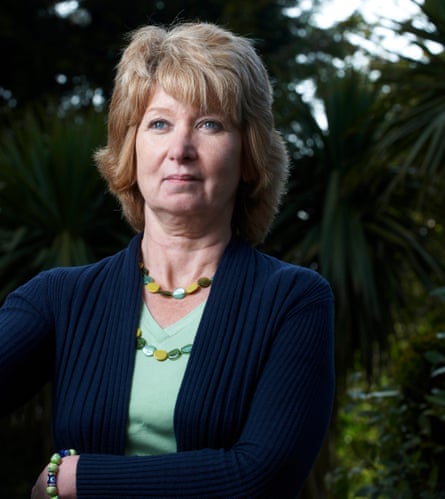
Poor care, Chubb told me, mostly happened behind closed doors, to people who were too sick or senile to protest. Many of the whistleblowers who called her hotline were sharing vital information about wrongdoing that would otherwise never be exposed. But those who took matters into their own hands often found themselves alone. One woman whose mother had suffered falls and a black eye while staying at a Four Seasons home in south-west London in 2013 tried to find out whether this was an isolated incident. She wrote to the council, which refused to give her any information about other complaints patients had made because it said sharing this would affect the company’s “commercial interests”. She then submitted freedom of information requests to the CQC, which said it had received more than 1,000 notifications of serious injury from Four Seasons homes over the previous 12 months, but that it was unable to say how many residents had died as a result of specific types of injuries, because it did not keep a central record of this information.
Were these problems worse in private equity-owned homes? Anecdotally, Chubb noticed a pattern of “ingrained” cost-cutting when homes were taken over by these investors. “The staff are run ragged, absolutely exhausted. You can see it in their faces,” she said. Some of these observations were borne out in qualitative data: in one study from 2022, more than a dozen anonymous staff members in homes taken over by investment funds said their employers were “cutting corners” to curb costs. One said there were sometimes so few staff on duty, cleaners were roped in to care for elderly residents.
One of the most unsettling studies I found was from 2021. Atul Gupta, a health economist at the University of Pennsylvania, had set out with a team of researchers to analyse the changes that took place in nursing homes in the US after private equity takeovers. The team sifted through more than 100 deals between 2004 and 2015, and a dark picture emerged. After a takeover, deaths among residents increased by an average of 11%.
This result was so stark that Gupta initially thought it was an error. But when his team checked their results, they were robust. At homes that had been acquired by private equity funds, researchers found there were fewer staff. Residents were more likely to have pressure ulcers and reported higher levels of pain. “And we found an increase in the use of antipsychotic drugs, which are sometimes used [on residents] as substitutes for restraints,” Gupta said. “So we found a worsening of outcomes on multiple dimensions, including death.”
By the spring of 2016, Four Seasons’ position was tenuous. An American hedge fund was now buying up its debt, betting on financial meltdown. An interest payment of £26m fell due in December the following year. Terra Firma failed to meet it.
The hedge fund operated out of Connecticut under the management of a former Lehman banker called Spencer Haber. Little was known about Haber save for the fact that he had large sideburns and was passionate about animal welfare, making numerous donations to a charity for homeless cats in New York. That, and the fact that he had never owned a care home.
As Haber bought up more of the company’s debt, he acquired more power to determine what happened once the firm was reorganised or liquidated. Terra Firma fought to sell some of the more profitable homes, and Hands agreed to remain an owner in name alone, while Haber’s fund dictated a restructure. In 2019, Four Seasons announced it was going into administration. It could no longer pay its debts, so the restructuring would begin.
And then the pandemic struck. Suddenly, UK care homes were all over the news. The basic problem was that patients with Covid-19 were being discharged from hospitals into homes staffed by low-paid workers with little experience of dealing with a deadly and contagious virus. Compounding this, they often didn’t have enough masks or gloves to avoid catching it themselves. Eileen Chubb told me calls to her hotline increased by about 60% during the first wave of Covid-19. She found herself trying to console distraught care workers until 10pm each evening. “Many were in tears, terrified of what was going on. Being told to get used PPE out of a dustbin, spray it with Dettol and put it back on. Having to use sanitary towels for face masks,” she recalled. At first, the CQC kept data on care home deaths from Covid secret, partly – by its own admission – to protect the commercial interests of providers. It was as if the regulator didn’t want the public to find out what was happening inside these homes. Or perhaps it didn’t know: during Covid, it paused routine inspections entirely.
Once again, the task of analysing what was going on fell to self-appointed investigators and academics rather than the state. According to one paper, at the peak of Covid’s first wave, the homes with the greatest debts, where leverage was above 75%, had a death rate nearly twice as high as homes with no leverage at all. “In bad times, leveraged operators have to cut costs more than unleveraged operators,” the researchers explained.
The pandemic forced the public to focus on the industry, and the UK government sprang belatedly into action. It pumped an extra £2.1bn into the sector – about £5,900 for each bed. Homes received free PPE, money to cover staff sick pay and subsidies for empty rooms as residents died. As Amy Horton, an economic geographer and professor at UCL discovered, however, staff working in the largest for-profit homes, the majority of which were owned by private equity funds, reported working longer hours and receiving less than satisfactory sick pay. “These differences,” Horton suggested, “could be because some companies are paying out significant portions of their revenue to investors, landlords and creditors, rather than reinvesting in the service.”
Hands seemed to regret his decision to buy Four Seasons. When I asked him whether his industry should ever be responsible for the care of elderly people, he told me he felt there was a “fundamental mismatch” between private equity and social care. “I mean, private equity’s role is to make profits for its investors. And you can’t, in the care home business, just make profits. You’ve got to take into account something that is more important, which is people’s lives.” I didn’t disagree, though it seemed an easier thing to say once you had retired offshore, having made a sizable fortune.
In 2022, the remaining homes from the Four Seasons estate appeared on the website of a real-estate broker. The photos showed an early Victorian mansion, an Edwardian pile and a 1990s neo-Georgian housing block. In real-estate vernacular, the portfolio was described as “attractive”, with “strong average fee uplifts” and “favourable demographics”, a euphemism for locations where house prices had boomed, once again conjuring the idea that elderly people were asset-rich cash machines.
Ever since he was ousted from Four Seasons, Robert Kilgour had resolved to create what he told me was a different type of care business. I met him on a rainy day in Edinburgh to visit three of the homes he now owns. We drove between them in his SUV, which had a personalised number plate spelling out his surname. The first was a crenellated, three-storey Victorian manor. Inside, Kilgour pointed with pride to the artworks he had donated, and paused to appreciate the texture of a brass light switch. For lunch that day, the residents could choose between mushroom stroganoff and shepherd’s pie. There were small vases of carnations on each of the dining tables. I checked: the flowers were real. Kilgour chatted with an attendant who ran the in-house hair salon, then we went to look around the bedrooms. “This,” Kilgour told me, stroking a bedstead in an empty room with a theatrical flourish, “is life stuff.”
It would be nice to think that homes such as this provided a solution to the care crisis, but the residents of the home we visited that day paid upwards of £1,700 a week, a hefty bill that effectively ruled out almost everyone without an expensive property to remortgage or sell. Kilgour planned to expand his business to 30 homes by the end of the decade, and said he’d received various approaches from private equity funds. “You know, ‘We’d like to invest £100m in the care home sector, and we’d like to do a deal with you’ – that sort of thing.” Kilgour didn’t tell me who these were, but he was adamant that he wouldn’t work with any of them after watching what their industry had done to Four Seasons.