.png) 3 hours ago
6
3 hours ago
6
Multiple injuries including bruising and fractures have been documented by a health service supporting people returned to France under the controversial “one in, one out” scheme.
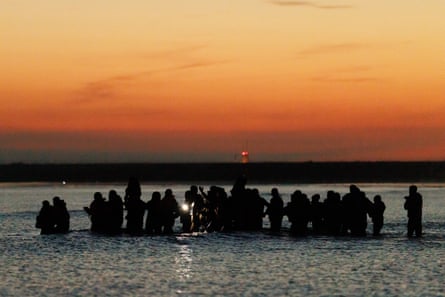
The pilot scheme involves one asylum seeker who crosses the Channel in a small boat being returned to France in return for another in northern France being legally brought to the UK to claim asylum. The scheme is due to end on 1 October.
Samusocial de Paris (SSP) has been commissioned by Île-de-France’s regional health agency to provide healthcare for asylum seekers returned to France in the first eight days after their deportation from the UK, when they are accommodated in a shelter in Paris.
They have documented the cases of 90 returnees between 22 January and 7 June 2026. All are young men, mostly in their 20s and early-30s, who sought sanctuary in the UK after fleeing a variety of conflict zones including Eritrea, Sudan and Afghanistan.
About 1,400 people have been forcibly removed to France by the Home Office since the scheme began in August 2025, although some have subsequently returned to the UK in lorries or small boats.
The evidence compiled by SSP has been submitted to the French Assembly’s cross-party inquiry into the impact of the Anglo-French border deals known as Le Touquet agreements. This evidence comes from their own clinical consultations with returnees and some hospital reports from those sent to A&E.
Many of those detained in the UK for “one in one out” have fled torture and other forms of persecution in their home countries, and have been subjected to modern slavery on their journeys in countries such as Libya. However, the focus of the report is on what happened to people while they were detained in the UK as part of the scheme and during their removal to France.
According to the report: “Consultations are revealing signs consistent with recent physical and psychological violence as well as the consequences of prolonged detention in conditions described as particularly degrading.” It states that the physical and psychological conditions documented are “explicitly linked to the implementation of the France-British agreement”.
The report adds: “The frequency and recurrence of the incidents reported by people transferred under the Franco-British agreement appear particularly worrying.”
One A&E medical report from a returnee who arrived in France in such a bad state that he was sent to hospital reads: “The patient’s general condition was marked by significant suffering and shock upon arrival necessitating referral to the hospital emergency department. The medical certificate mentions reports of physical violence in England, including diffuse bruising, injuries consistent with restraint (lacerations with handcuffs) and abdominal pain resulting from repeated blows.”
The report includes 13 case studies documenting a range of injuries, including problems that worsened due to a lack of medical treatment, while people were in detention in the UK. Concerns were also raised about mental health conditions such as PTSD.
In one case, a man was referred for emergency psychiatric treatment because he was too disoriented to find his way back to the dormitory while in the shelter, suffered from body tics and incoherent speech and was deemed to be at risk of suicide. The report highlights limited options for ongoing psychiatric treatment for this group.
SSP recommends that a mechanism should be established to collect information on allegations of mistreatment by the British authorities that can be sent to the UK. It also suggests reporting this issue to the French prosecutor under article 40 of the French code of criminal procedure.
Nihal Osman, a programme coordinator for Médecins Sans Frontières, which also provides health support for this group of returnees, said: “This one in one out agreement is a machine for psychological destruction.
“The deeply concerning physical injuries sustained whilst in detention in the United Kingdom, which we have documented among those deported, must be viewed in the light of a serious psychological deterioration.”
The UK Home Office and the company Mitie, which provides the guards for the asylum seekers, have been approached for comment.