.png) 3 hours ago
7
3 hours ago
7
My aspirations in life are modest: I want to write, spend time with my loved ones, and someday find a lipstick that flatters my skintone. But perhaps my greatest ambition is this: I want to be able to do a handstand.
Why? It turns the world upside down. It seems fun. It displays a mastery of one’s physical form that I have never quite felt. And it looks cool! Maybe it has to do with that one time in third grade when all my friends could do a handstand and I couldn’t, but that’s for me and my therapist to sort out later.
A handstand is an inversion, a type of position where one’s heart is above the head. Besides looking cool, there is a lot to gain from inversions. When the head is below the heart, oxygen-rich blood flow to the brain increases, according to the UC Irvine Integrative Health Institute. This helps “regulate neurotransmitters and nourish brain cells”. Other benefits include stress reduction and increased physical strength and mobility, says Antoinette Webb, a registered yoga teacher.
Below, experts share advice on how to start doing handstands.
A handstand is a full-body exercise
“A handstand is a full-body inversion in which you support your weight through your hands while balancing upside down,” says Frank Medrano, a calisthenics athlete and coach.
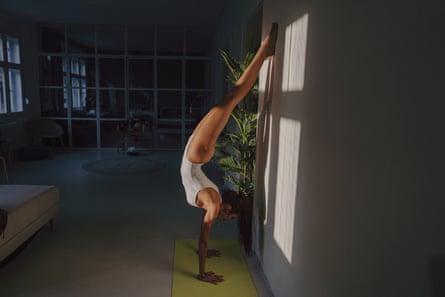
Although it looks like an upper-body exercise, the position requires nearly every part of the body to work together, he says. The hands and forearms help maintain balance; the shoulders, upper back, chest and triceps support and stabilize the body; and the core, glutes and legs create the tension necessary to keep your body aligned.
“A strong handstand is not simply about kicking your hands overhead,” Medrano says. “It is about controlling your entire body as one connected unit.”
Because it is such an advanced exercise and it temporarily increases blood pressure in the head and upper body, there are certain groups who should be cautious or avoid handstands and other inversions, says Webb. These include individuals with conditions including high blood pressure; osteoporosis; neck, shoulder or spine injuries; and heart and eye conditions.
Assess and build up your strength
First, you need to figure out how strong your upper body is.
“I would start with downward dog, and hold that position for about 90 seconds,” says Dianne Bondy, a certified yoga teacher and pilates instructor, referring to the popular yoga position in which the body forms an inverted V, with hips in the air and hands and feet on the ground.
In order to prepare the rest of your body and help with mobility, Webb suggests working on yoga poses that help strengthen the core and hips, such as plank, locust, boat and cobra.
Use a wall for support
Once your upper body strength is sufficient, Bondy suggests progressing to positions where your feet are against a wall. This helps familiarize you with “the feeling of going upside down and pressing weight into your hands”, she explains.
after newsletter promotion
Webb suggests building up comfort by learning to hold an L-shape against the wall, with your torso and legs at a right angle from each other, chest facing the wall. Your hands will be on the floor and your feet against the wall. How you get into this position is up to you – experiment safely to find your preferred method. This will help you learn how to tap into your breath and alignment, and practice bracing your body while pushing the ground away with your hands, she says.
As you progress, you can inch your feet gradually up the wall, says Medrano. The higher your feet go, the closer your hands, arms, torso and legs will move to the wall, until you are almost flush with it. Keep your body tight, and “only move as close as your strength and confidence allow”, he says. This process teaches body proper alignment without relying on the momentum of simply hoisting your legs into the air.
Practice freestanding (briefly)
When you can hold a controlled wall stand, Medrano says you can try removing one foot from the wall at a time. Eventually, this may progress to removing both feet from the wall. Keep these attempts short. “Quality is more important than duration,” Medrano says.
Learn to fall
When it comes to handstands, it’s not a matter of if you will fall, but when.
“You are absolutely going to fall, so how you can do so safely is the question you have to answer,” says Webb.
Medrano suggests “practicing stepping down deliberately”. One way to do this is learning how to turn out of the handstand, instead of falling over. This involves twisting from a handstand into a cartwheel, so that your legs swing to the side and you land on your feet. Make sure you have adequate space. (If that is difficult to envision, an instructional video, like this one, can help.)
More from How to start:
Keep practicing
“When I learned to do a handstand for the first time, I was in my 40s,” says Bondy. “I learned that it’s never too late. I still do them to this day.”
Bondy says she also learned that handstands were a “use it or lose it” skill. If you want to be able to keep doing it, you have to keep practicing.
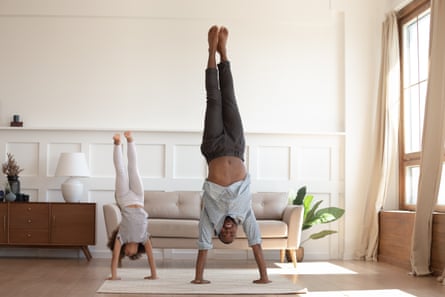
Everyone’s progress will be different. If you’re miles away from doing a full handstand or wall stand, that’s fine.
“Comparing your journey to someone else’s is going to keep you struggling to take the first step,” says Webb. “Your handstand or headstand on the wall, with blocks or supported by another person is just as valid as someone in the middle of the floor standing on one hand.”
As with any physical goal, “give yourself grace and the space to see what you’re capable of,” says Webb.