.png) 3 hours ago
7
3 hours ago
7
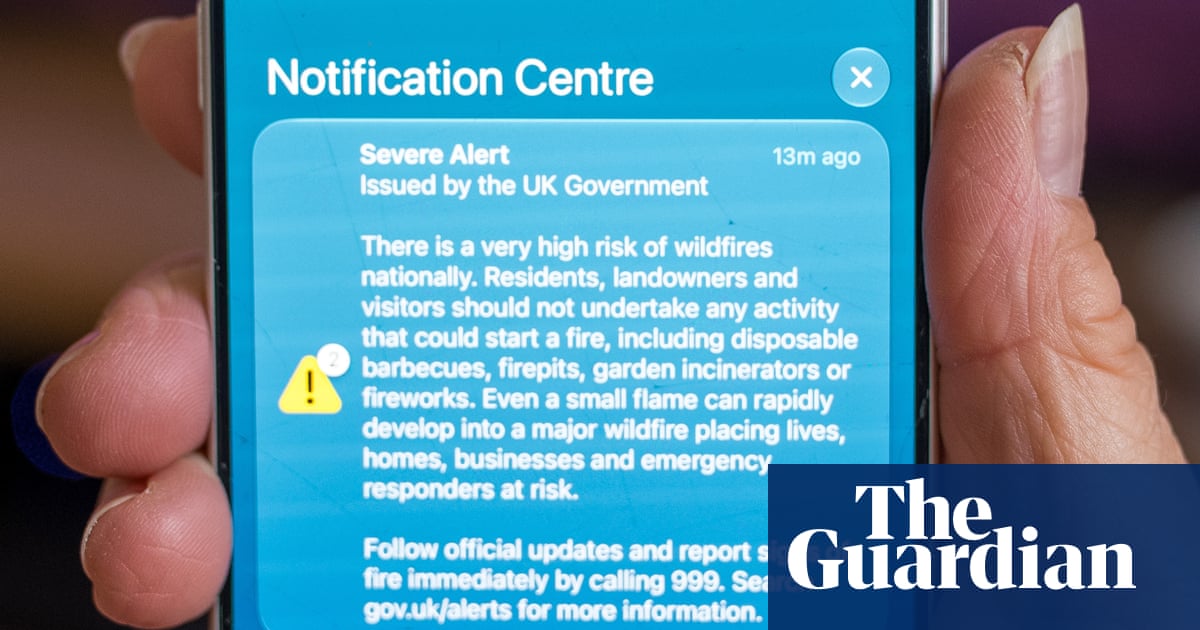
Dr Reese Richardson’s phone constantly buzzes with notifications. The scientific research integrity specialist has been tracking shadowy organisations known as “paper mills”, which turn a profit by offering fraudulent academic authorship of scientific papers, IP registrations and other scholarly outputs.
For a fee, paper mills offer to list people as authors of scientific journal articles, often of falsified research that bypasses the peer review process.
Richardson has joined dozens of groups across apps such as Telegram, WhatsApp and Facebook where a buffet of fraudulent and fabricated research is advertised to hundreds of members. “I can just look through my notifications and I can see that I’ve gotten, like, 20 WhatsApp messages from paper mills in the last 24 hours,” he says.
Scientists are under constant pressure to publish new research papers which, in many parts of the world, remain the currency of academia. They beget more grant funding and accolades, and enhance academic profiles. But robust, high-quality science takes time, and papers can take years to get published.
Paper mills offer a fraudulent shortcut, using instant messaging and social media platforms to find prospective buyers looking for papers and patents to stack their CVs. According to an analysis Richardson conducted with Anna Abalkina and Spencer Hong, the median price to buy authorship is around US$800 (A$1,150).
In a recent paper, which has not yet been peer reviewed, the trio of scientists led by Richardson, formerly at Northwestern University in the US, detailed more than 18,000 advertisements from seven paper mills across seven countries between 2020 and 2026.
“We wanted to get an idea, across a wide range of paper mills, countries, topics and product types how much these things actually go for,” he says. “What we put together is the largest ever dataset of paper mill advertisements.”
They found many groups advertising authorship of scientific manuscripts across Telegram, Facebook and various websites for as little as US$30.
In the last 15 years, paper mill activity has exploded, with one estimate produced by Richardson in 2025 suggesting their products have been doubling approximately every 18 months. The journal articles produced by these paper mills typically bypass the accepted scientific editorial process of peer review, either because the journals do not institute those processes or because editors are themselves part of paper mill activities.
This amounts to an industrialised injection of falsified data, polluting the scientific ecosystem and compromising medical research, drug discovery and clinical trials. The scale is massive: in 2023, Hindawi, a now defunct journal brand owned by major publisher Wiley, retracted more than 8,000 articles. A further 3,000 retractions came by the end of 2024.
Richardson says his research is a useful starting point for trying to grapple with how and where paper mills operate, and who they target. The advertisements are like fingerprints at a crime scene, potential evidence of malicious activity. “You can get a lot of information from the advertisements,” he says. He has directly tracked some of these to fraudulent papers in the scientific literature.
Designs and IP for sale
Other advertisements relate to copyrights and design registrations, another area ripe for fraud, which may provide buyers with legitimate intellectual property rights. Richardson notes one of the reasons to do this is to bolster resumes in service of academic advancement.
Richardson has previously identified exploitation of IP systems in the UK, finding thousands of design registrations. His new work identifies 12 instances where design registrations were advertised by a paper mill operating in India and catering to Indian academics.
Richardson’s data shows these design registrations are being advertised as “Australian design patents”. The paper mills sell positions as “owners” of design registrations, charging between $95 and $150 per owner, for up to eight people to be registered on any given design. A design registration application through IP Australia costs $200 in total.
Guardian Australia identified cases where the registrations were listed as patents on CVs.
“They’re using the services of the Australian government to defraud others,” Richardson says. He points to several unusual instances of design registrations.
One Australian design registration, for an “AI based membrane bioreactor for treatment of wastewater”, belongs to six people whom Guardian Australia has traced to research institutes in India. Five of the six were contacted; none responded to requests for comment.
A “GS Collison” is listed under the address for service on the registration, as well as for 11 other design registrations. However, there is no trace online of GS Collison as an entity, and the address listed for it – level 11 in one of Sydney’s Darling Park towers – corresponds to the offices of IAG, an insurance firm. In response to questions from Guardian Australia, an IAG spokesperson noted level 11 is occupied by a series of meeting rooms.
Another example, a “Smart humanoid robot for industrial applications”, includes Dr Nilesh Torwane, a postdoctoral researcher at the University of Queensland as a design owner. When contacted by Guardian Australia, Torwane says he “did no design work on the product” but was invited to be named on the design by others listed on the registration. He also noted the registration “never formed part of any claim I have made for professional or academic advancement”.
“I have disclosed the matter proactively to the University and am taking steps to correct the record, including seeking removal of my name from the registration,” Torwane says. Guardian Australia is not suggesting that the registration is not for a legitimate product, only that Torwane was not involved in its design.
When contacted by Guardian Australia, a spokesperson for IP Australia suggested it was not aware of the research paper by Richardson and colleagues.
“IP Australia welcomes any information that may indicate that the designs registration system is not being used for its intended purposes, and we will consider the implications raised by the research paper. However, we have no data to suggest that there is widespread misuse of the Australian designs registration system in the manner suggested.”
Though Richardson’s paper goes some way to exploring how paper mills are operating, the mills remain “shadowy organisations”, according to Prof Adrian Barnett, a metascience researcher at the Queensland University of Technology who has previously published with Richardson.
“It could be some techie kid in their bedroom, or some of them might be larger organisations that even have morning teas and employees of the month,” he says. “Who knows? But we can see they’re making a decent amount of money.”
While Richardson is being interviewed, his phone buzzes again: another advertisement in a WhatsApp group. The organisations are operating at such a scale and speed it’s hard to keep up.
“We’ve still barely scratched the surface,” he says.