.png) 5 hours ago
8
5 hours ago
8
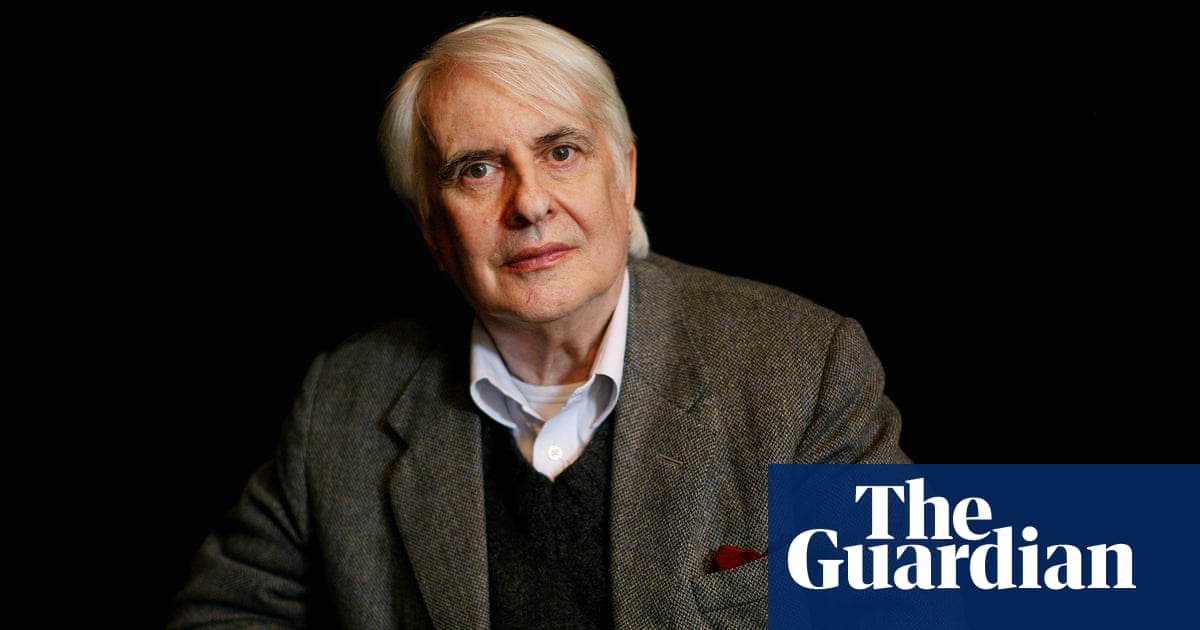
If the first rule of column writing is to be read and the second and third to be interesting and provocative, the journalist Rod Liddle, who has died aged 66 after a short illness, certainly met the bill.
His columns in the Sunday Times, the Spectator and the Sun, and his Saturday morning shows for Times Radio, gave his fans, mainly on the political right, all they needed to fulfil their prejudices, laced with a satirical edge and verve. He could fill the 2,500-seater London Palladium, as he once did for his conversational show.
A tousled and dishevelled figure, shirt flapping open, Liddle’s iconoclastic targets in recent years have included bureaucrats, politicians, “thought police”, campaigners for gay and trans rights and, above all and constantly, the supposed politically correct, liberal-left elite alleged to be undermining the stolid, respectable working classes, leaving them feeling left behind and ignored.
The columns regularly became boisterously laden with invective moderated by an ebullient, wrecking-ball humour and were the subject of regular complaints by those who did not see the joke.
Welsh nationalists were “miserable, seaweed munching, sheep bothering, pinch-faced hill tribes” and grievance groups indulged in “furious yapping”; others were waxen-skinned spaffgoblins. The alleged sacking of the old order had “left us fraught and clamorous, unhappy, isolated and averse”, never mind that some of his readers espousing such views were inflamed and confirmed in their opinions precisely by his prose.
The one person to whom he felt he owed an apology was the Labour politician Harriet Harman for a crude snub, saying that he had not thought how the remarks would affect her. Liddle was the first journalist to be censured by the Press Complaints Commission in 2010 after alleging that the majority of violent crime in London was carried out by “young men from the African-Caribbean community”.
It was an irony that some of his most ardent fans were among those he had mocked in regular columns for the Guardian for more than three years between 1999 and 2003. When in 2002 he had derided conservative members of the Countryside Alliance who had demonstrated against the Blair government as “angry ruddy-faced people”, going on to say “you may have forgotten why you voted Labour in 1997 but then you catch a glimpse”, he was condemned by the Telegraph and the Sun, which he would subsequently go on to write for.
Liddle was born in Sidcup, Kent, into a respectable, church-going family, the son of Margaret (nee Clee), who worked for the then Department of Health and Social Security, and Edwin, who came from a north-east family of railway workers but was himself an Inland Revenue clerk. They moved back up north when Liddle was eight to the Middlesbrough “select” suburb of Nunthorpe, a description that he later characteristically described as like saying “a select suburb of Mogadishu”.
He was educated at the Laurence Jackson comprehensive school and Prior Pursglove sixth form college, undergoing as he did so a rite of passage as a punk, a sartorial style that never completely left him, and briefly joining the Socialist Workers party. Canvassing for Labour at the 1983 general election, he claimed his appearance must have cost Labour 5,000 votes.
Liddle joined the South Wales Echo as a journalist, and then moved to London to study social psychology at the London School of Economics and worked as a researcher for the Labour party before joining the BBC as a trainee producer.
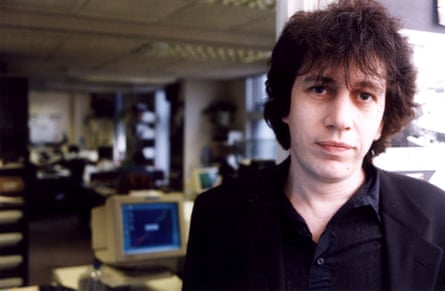
In 1998 he was made editor of the Today programme on Radio 4 and became perhaps the first to be widely known beyond the corporation. He undoubtedly made the previously rather cosy programme sound more aggressive and competitive, with more use of investigative journalism, and increased its audience figures accordingly.
It was under his watch in 2003 that the BBC was engulfed in a furious row with the Blair government over allegations that a dossier alleging that the Iraqi government was preparing weapons of mass destruction had been “sexed up” as a pretext in advance of the Iraq war – a story that led to the suicide of the weapons expert David Kelly, who had been the unwitting source of the reporter Andrew Gilligan.
Liddle defended the programme and the BBC vigorously in columns for the Guardian against the government and other newspaper attacks, reserving deepest scorn for Peter Mandelson, whose briefings he claimed had heightened the row.
It was Liddle’s increasingly outspoken columns for the paper that goaded the corporation into requiring that he either gave them up or left the BBC. Choosing the latter course, he soon found himself in demand by the Sunday Times and others for his pugnacious commentaries, delivered professionally on time and to length. A novel and books of his writing followed, including Selfish Whining Monkeys in 2014 and The Great Betrayal (2019), stating why in his view the Brexit referendum vote had been undermined by, naturally, the liberal elite and politicians.
While at the BBC in 1993, Liddle began a relationship with Rachel Royce, a reporter, whom he married in a ceremony in Malaysia in 2004. The relationship had already produced two children, Tyler and Wilder, but Liddle left the honeymoon early to his wife’s fury when she discovered he had done so to continue his affair with Alicia Monckton, a receptionist at the Spectator magazine who was half his age. Following the divorce from Royce, Liddle married Monckton in 2008 and the couple had a daughter, Emmeline.
Alicia and the three children survive him.