.png) 4 hours ago
5
4 hours ago
5
Peter Gill, who has died aged 86, was one of the unsung heroes of British theatre. As both director and playwright his work was characterised by its uncompromising honesty and unflinching integrity. Much admired by his fellow artists, he at last achieved a degree of public fame in his annus mirabilis of 2002 when his terrific play The York Realist won a number of awards and the Sheffield Crucible staged a month-long retrospective of his work as well as a brand-new play, Original Sin.
Few remember that Gill, born into a Welsh, working class Catholic family, began life as an actor: look closely and you can spot him in the film of Zulu. But it was at London’s Royal Court, where he began work as an associate director in 1964, that he learned his craft and acquired the values that were to shape his whole career: a belief in the sanctity of text, the purity of design and a respect for actors.
His first play The Sleepers Den, showing three generations of women all in bed next to each other, was a meticulous re-creation of working-class life. But it was his rediscovery of three neglected plays of DH Lawrence – A Collier’s Friday Night, The Daughter-in-Law and The Widowing of Mrs Holroyd – staged as a trilogy in 1968, that marked him out as a first-rate director: as Irving Wardle wrote, “the ordinary processes of living became not only interesting but objects of respect and something beautiful.”
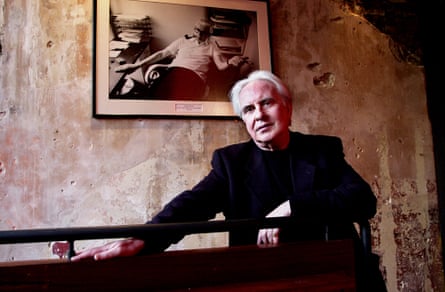
Gill’s work as a playwright and director were ultimately inseparable because they were linked by an unsparing honesty. In Small Change (1976), he recalled the unhealed emotional scars left by an adolescent sexual relationship. In Kick for Touch (1983) he wrote with equal truth about a Welsh world of male bonding, rugby-as-religion and women as outsiders. Gill invariably directed his own work but he approached classic texts in the same rigorous, investigative spirit. One of his finest achievements was to turn a former TV studio into a performance space at the Riverside Studios in Hammersmith, London, and to stage a number of productions, including The Cherry Orchard, The Duchess of Malfi and Measure for Measure, of glittering clarity there. If the Riverside is still a going concern, it is because of Gill’s visionary enterprise.
He also worked extensively at the National Theatre, where his many productions included a brilliantly hard-edged version of Christopher Hampton’s Tales from Hollywood and an astonishing revival of Otway’s Venice Preserv’d, where Ian McKellen, Michael Pennington and Jane Lapotaire achieved a heroic acting style that perfectly matched the tone of Otway’s verse-tragedy. Gill’s tenure as director of the National Theatre Studio, which he founded in 1984 to develop new work, ended less happily. But during his time there he tirelessly championed new writers and ensured their work reached the stages of the Royal Court and the Bush.
If I had to seize on one play that shows Gill as both writer and director at his best it would be The York Realist. Its involves a farm labourer, George, who has an affair with a London-based director, John, while working on a production of the York Mystery Plays in the early 1960s. It owes an obvious debt to DH Lawrence in its emotional intelligence, raw honesty and fascination with the intersection of class and sex. For John, the Yorkshire countryside has an exotic otherness of which he can never fully be a part while his lover, George, relishes the intellectual excitements of London but is wedded irrevocably to the land. It was as if much of what Gill had learned during his early years at the Court had been not just absorbed but miraculously enhanced.
Gill carried on working as both dramatist and director but in later years became increasingly detached from the British theatre. Periodically my phone would ring and he would be on the line, often talking volubly for half an hour, about something that had caught his attention. He cared passionately about the theatre and his occasional gripes were dictated by his adherence to the highest standards and his belief in the sacrifice of personal ambition to the primacy of the work itself.