.png) 3 months ago
72
3 months ago
72
It’s fair to say that the UK will change after the elections on 7 May. But few places will change as thoroughly as Wales. The polls suggest that after the vote our next Senedd will be led by either Plaid Cymru or Reform: this would make it the first time in 100 years that Welsh Labour is not the largest party in Cymru. However, Plaid and Reform’s visions for Wales are polar opposites – and their supporters are torn between two wildly different visions for their country.
When you look at the Plaid and Reform manifestos, the differences are immediately apparent. First of all, Plaid’s document is a chunky 74 pages compared with Reform’s 18. Plaid dedicates huge amounts of ink to explaining how the party is going to fight for concessions or increased power from Westminster on everything from tax to rail devolution. Contrast that with Reform’s leader in Wales, Dan Thomas, who said that a Reform government in Wales would not “pick a fight with Westminster” except on the “one matter of immigration”.
Within these manifestos you can see battles playing out between those who feel Welsh and those who feel British. Reform (only 4% of whose voters speak fluent Welsh) has pledged to scrap Welsh-language targets, whereas Plaid (more than a third of whose voters are fluent) have about 1,000 words of bullet points on how they will support Cymraeg. To be fair to Reform, it did say that “the Welsh language is central to Wales’s unique identity” but this sentiment was slightly ruined by the fact it misspelt two out of the three Welsh words on the manifesto’s front cover.
Perhaps the biggest difference between the two parties comes down to how they see the future of Wales as a political entity. Reform has put several devolution-sceptic candidates on its lists. Some have even previously stood for the Abolish the Welsh Assembly party, and one of its current MSs has not ruled out closing our parliament. Plaid, by contrast, has asserted the need for further devolution and promised to establish a national commission for Wales that will: “Lay the foundations for a future white paper on Welsh independence – addressing the challenges and setting out the opportunities and positive changes independence would bring for Wales.”
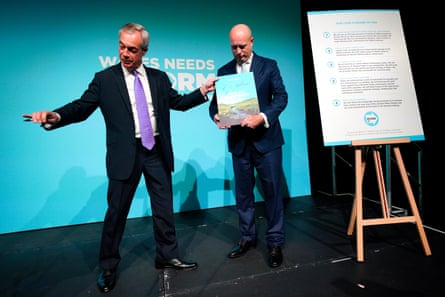
So, to recap, a Plaid-Green coalition would see a Wales looking to expand on devolution and bring more powers to the country, whereas a Reform-Conservative one is likely to be hostile to the very idea of a Welsh parliament.
Either result is likely to make one set of voters happy – and completely alienate the losing side. Those voters are generally very different, polling shows. We know from research at Cardiff University’s Wales Governance Centre that Plaid voters are more likely to be younger, to skew left, and to identify as Welsh; Reform voters are more likely to be older and to feel “British”.
But nowhere is the divergent nature of Wales’s voters better summed up than when it comes to gender. In recent YouGov polling, only 42% of Reform voters were women. For Plaid, that was almost exactly 50%, whereas for the Greens (a likely coalition partner in a Plaid-majority government) women make up 60%. Women in Wales are leaning more to the left than men.
This gender divide is likely to play out inside the Welsh parliament as well. Because Plaid introduced candidate selection rules aimed at gender equality, the second name on each regional list must be a woman. The academic Jac Larner simulated the latest YouGov polling to project how many men and women would be elected inside the Senedd and the results were stark: Plaid Cymru was forecast to have 27 women to 16 men. Reform was predicted to have 21 men to just nine women. So the next Welsh parliament seems likely to contain a group of leftwing women facing off against a group of rightwing blokes.
In essence, on 8 May, Wales will either wake up to one of two quite different forms of nationalism as the largest party. Either the one put forward by Plaid Cymru, or the one put forward by Reform.
As I have written before here, the rest of the UK ignores the lessons of Wales at its peril. In England, the situation is very similar to Wales. The two parties perceived to have the momentum are the Greens and Reform. Neither party has led a government before – and the visions of Nigel Farage and Zack Polanski for the UK are polar opposites in many respects.
The key difference is that in Wales we have a proportional electoral system that will reflect the fact that the country is bitterly divided. Neither Reform nor Plaid is likely to get a majority on its own – because a majority of people don’t support them. Contrast this with Westminster, where the monstrosity that is first past the post leads to the awful possibility that one party can win an outright majority in a polarised society with less than a third of the vote (Labour won 411 out of 650 seats with just a third of the vote in 2024, while some projections have Reform winning 335 with 30%). It won’t happen on 7 May, but once again the rest of Britain’s voters will be able to look to Wales to see their future.
The imminent election is a battle for the future of Wales. This isn’t about slight course corrections. Every likely result will lead to a 90-degree turn in the direction of travel. In a divided nation, whoever wins needs to govern for the whole of it, not just the people that put them there. The easiest way to do that is to focus on the one thing that both sides agree on – that what we currently have is not working and politicians should take action to quickly improve public services and people’s lives. AKA, do their jobs and do them well.
-
Will Hayward is a Guardian columnist. He publishes a regular newsletter on Welsh politics