.png) 3 months ago
85
3 months ago
85
Reform UK has been cold calling people asking them to become “paper” candidates for the party at the local elections, as parties dash to sign up enough names before Thursday’s deadline.
Nigel Farage’s party has been ringing members of the public asking them to stand despite apparently knowing very little about them except that they have signed up for Reform’s email updates.
Those who have been asked to stand include members of other parties and even a Guardian journalist, who was asked in a call last week: “Will you come in to become a paper candidate today and help us to win the election?” The caller added: “Just have your name on the ballot and maybe you will actually win the election.”
Prospective paper candidates are told they would not need to do anything apart from provide their name and address. They are then asked if they are bankrupt and if they have any criminal convictions, before being offered a candidate application pack.
The method of asking people to be “paper candidates” is one usually used by parties asking their own known members to stand without doing any campaigning – rather than approaching unknown members of the public through phone calls.
One Reform mailing list in London sent to anyone who has signed up to receive updates reads: “Even if you just want to assist by being a ‘paper candidate’ please help Nigel and our team by signing up as a candidate today.”
The Conservatives also released a tape of a cold call from a Reform representative asking in a stilted message whether the person would like to stand in an area of Birmingham.
However, in Warwickshire on Tuesday, Farage denied that Reform had been cold calling people in Birmingham “begging them to stand in local elections”, saying it would be “very, very fruitless”. Farage said there would be a full slate of candidates across the region.
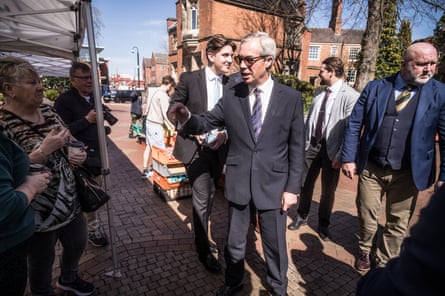
“Have we called paid-up members of the party to see if they want to get engaged? Yes, but of course every party does that,” he said. All parties were “running very fast” to fill slots before the 9 April deadline, he said.
He added: “These elections would not even be taking place if it wasn’t for the fact that we’d applied and been granted a judicial review in the high court, and the government caved in. There are 4.6 million people, including many in the West Midlands, who only have a vote because we pushed legally for it to happen.”
The Conservatives have also been asking people to become paper candidates, with one email sent in Tameside saying there would no requirement to run a full campaign or commit large amounts of time, and that the only requirement would be being named as a Conservative candidate on the ballot paper. The Greens and the Lib Dems have also released guides to being a paper candidate in previous elections.
Experts say the practice of parties fielding “paper candidates” can be unfair on voters, if those standing for election are not committed to the work involved in being an elected representative.
The new closeness between five parties – Labour, Reform, the Conservatives, Greens and Lib Dems – in many areas of England at the local elections gives a new unpredictability to the results, meaning there could be unexpected victories for people who have put their names forward without expecting to win.
Dr Jess Garland, the director of policy and research at the Electoral Reform Society, said: “As the first-past-the-post system means many votes often don’t count, we regularly see parties fielding ‘paper candidates’ that are deemed to have no real chance of winning.
“This is a morbid symptom of our outdated two-party voting system, which is now also struggling to cope with the new multiparty politics and producing increasingly erratic and unrepresentative results.
“The danger here is that this leads to further disillusionment in voters, who feel their vote counts little towards the outcome on polling day, but also could end up with town halls that don’t properly represent how an area voted.
“This only strengthens the case for moving to a fairer, proportional system for elections that ensures far more votes count and that town halls and parliaments better represent what people expressed at the ballot box.”