.png) 3 months ago
84
3 months ago
84
The television drama director Paul Seed, who has died aged 78 of cancer, helped shape some of the most influential British series of the late 20th and early 21st centuries, including the BBC political thriller House of Cards (1990). His career was defined by intelligence, emotional precision and a rare instinct for performance.
He began his professional life as an actor but transitioned to directing after completing the BBC directors’ course in the late 1970s. Not long afterwards, he was offered his first television drama, Too Late to Talk to Billy, by Graham Reid, for the BBC’s creatively daring drama slot Play for Today. The film, screened in 1982, also marked Kenneth Branagh’s first appearance on television.
Paul also directed David Rudkin’s haunting drama Across the Water (1983), featuring a young Liam Neeson at a formative stage in his career. Paul recognised Neeson’s quiet intensity long before it became his trademark, and the film remains an early testament to Paul’s eye for actors who carried something powerful beneath the surface.
In 1987, he directed Inappropriate Behaviour – an original screen play by Andrew Davies for the Screen Two series – and cast a young Charlotte Coleman. Her raw, luminous performance hinted at the extraordinary career that would follow, and Paul’s instinct for nurturing emerging talent was already unmistakable.
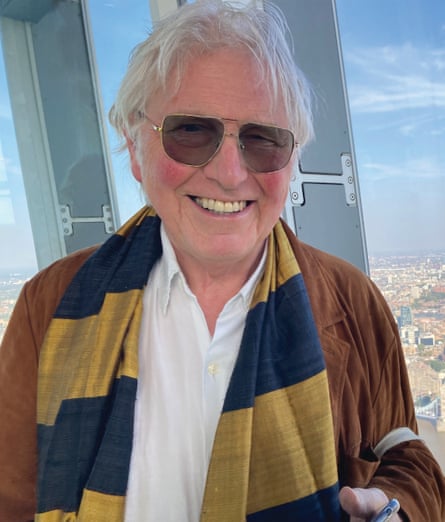
My own path first crossed Paul’s when he directed me in A Rather English Marriage (1998), with Albert Finney and Joanna Lumley. It was the story of two elderly widowers brought together by social services. Paul devised a beautiful last scene where the two old boys danced together as they dreamed of the sweethearts of their youth.
I worked with Paul for a second time in the 2003 ITV remake of Jack Rosenthal’s Ready When You Are, Mr McGill. A loving revival of Rosenthal’s wry meditation on the tedium and quiet heroism of television bit players, the production also offered an early screen appearance to Ben Whishaw, cast by Paul as an eager third assistant.
Paul’s big breakthrough had come with House of Cards – adapted by Andrew Davies from Michael Dobbs’s novel, with Ian Richardson as the scheming politician Francis Urquhart – followed by the second part of the trilogy, To Play the King (1993). The actor Miles Anderson, who played Roger O’Neill, the cocaine-snorting PR man, recalled: “On the first day of filming I remember Paul saying to Ian, ‘Why don’t you try looking directly into camera for your asides?’ A stroke of genius, breaking the fourth wall in a British TV drama that led to the familiar phrase ‘You might think that, but I couldn’t possibly comment’ being used everywhere, especially in the halls of Westminster.”
In the 2000s Paul directed episodes of dramas including New Tricks (2004), Lark Rise to Candleford (2010) and the revival of Auf Wiedersehen, Pet (2002). Other notable credits include Wynne and Penkowsky, a 1985 drama inspired by the true story of a cold war spy, Dead Ahead: The Exxon Valdez Disaster (1992), Murder Rooms: Mysteries of the Real Sherlock Holmes (2000) and an adaptation of Richmal Crompton’s Just William children’s stories in 2010. He moved effortlessly between comedy, crime and period drama.
Paul’s work earned British and international TV awards including two Baftas, for A Rather English Marriage (best single drama) and Just William (best drama). He loved what he did, and this love communicated itself to his actors. I’m sure I wasn’t the only one who thought the world of him.
Paul was born in Bideford, Devon, the first child of Joan (nee Jackson) and Jos Seed, students at Bideford art school, who had both served during the second world war – Jos in the army and Joan in the Wrens – before beginning their studies. Paul’s sister Petra was born eight years after him. When Jos secured a teaching position at a school in Manchester, the family moved north and Paul attended Manchester grammar school, before going on to study drama at the University of Manchester.
He graduated in 1970, and appeared in TV roles throughout the 1970s, in shows such as Z Cars, Softly Softly, Doctor Who and Coronation Street (in which he had a recurring role as the priest Father Harris). He also starred in the Granada TV play Heydays Hotel (1976), playing Barney in a nostalgic, pre‑war ensemble drama set in a holiday resort, and appeared on stage at the Bristol Old Vic, the Liverpool Playhouse and in London at the Royal Court and the Hampstead theatre. One of his most memorable screen roles came in Nearly a Happy Ending (1980), a Victoria Wood television play, in which Paul played Tony, the man Julie Walters’s character meets on a night out.
He met his future wife, Elizabeth Cassidy, while working on Z Cars, and they went on to have two sons, Jack and Sean. In later years, Paul and Liz settled in north Devon, where he pursued photography and enjoyed a quieter pace of life.
He is survived by Liz, whom he married in 2000, and by Jack and Sean, and his sister, Petra.