.png) 1 day ago
7
1 day ago
7
France and Italy play rugby to a very high standard, but Germany has no comparable rugby culture. Why? Tim Hare, by email
Send new questions to [email protected].
Readers reply
Maybe Germans did once give rugby a try, but not being converted declined to tackle it and instead elected to pass and pack it in?
ThereisnoOwl
Germany is actually the oldest rugby nation in continental Europe, the game being played there since the 1890s.
However, the second world war (especially) decimated the player base, and the following separation (and banning) and reunification projects were a bit too much for the governing bodies, and it never took off to the same degree as it did with their continental neighbours.
allthenamesaregone
Germany has the oldest national rugby union in continental Europe. Look up Deutscher Rugby-Verband for information on the three league divisions and the German national team.
Peter Dewar, by email
Bremen has a rugby club. It used to do a lovely exchange scheme with English clubs in the 1980s where you’d stay with a German player, play some rugby and then they would come to England the following year!
Lurch8823
There is rugby in Germany but mainly in regions where the British were the occupying force after the second world war and in some university towns.
Germany has a national team which plays in the European Nations Cup at level four with the likes of Sweden and Switzerland.
Barry J Hake, Narbonne, France
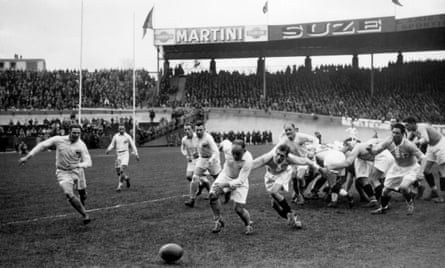
In the period before the second world war, the Germans provided serious opposition for the French rugby team after France were excluded from the Five Nations championship in 1931 due to concerns over professionalism. The Germans beat the French at rugby in 1938. The game was particularly popular in Heidelberg, Hanover and Frankfurt. The war destroyed rugby in Germany with most of the national team being killed. For some reason, rugby never recovered its popularity after that. Maybe it was associated too much with Britain and France to make it attractive to postwar Germans.
The country has about 125 active clubs with more than 12,000 active players, who are organised into two national leagues and various regional leagues. The men’s national team are ranked 35th in the world. In the Men’s Rugby European Championship in 2026, the top tier of rugby in Europe after the Six Nations, Germany came eighth out of eight behind Georgia (first), Portugal (second), Spain (third), Romania (fourth), Belgium (fifth), Switzerland (sixth) and Netherlands (seventh).
Parisse010924
I think there are a few main reasons why Germany never developed a major rugby culture. First, unlike countries such as Wales, England, Ireland, Scotland, France, New Zealand and South Africa, rugby was never fully integrated into Germany’s school or community systems. In many of those nations, generations of players were introduced to rugby through schools, local clubs and family traditions, helping the sport become part of the national culture.
Second, Germany already has a sport that occupies a very similar space: handball. It offers the same elements of physicality, teamwork, strong club structures and local rivalries, so many athletes who might have been drawn to rugby instead gravitated towards handball.
Finally, timing played a big role. Germany established a rugby federation as early as 1900, but football’s growth quickly outpaced that of rugby. By the time of the world wars and the political upheaval that followed, football had become firmly established as the country’s dominant team sport. Rugby was left competing for attention against football, handball and several other established sports, making it difficult to gain nationwide momentum.
That said, I think Germany has huge potential as a rugby nation. The country has a strong sporting culture, a large population, and a competitive mindset. If participation were to grow through schools and clubs, Germany could eventually become a significant force in European rugby and help strengthen the game beyond its traditional heartlands, alongside emerging rugby nations such as Portugal and Georgia.
David Rossiter, by email
There are a few German internationals who play in England – including a couple who serve in the British military (I assume kids from when there was a big military presence in Germany).
SouthChapel
One of the German TV channels started to show the last Rugby World Cup matches live and this proved so popular that it has continued to show international matches, including the Six Nations and the latest Nations Championship games. This has sparked an increase in the game in Germany and there are numerous clubs now competing at various levels. There is indeed a rugby culture in Germany. It is just not yet at the same level as in France or England – although outside the big professional clubs, rugby in England has become far less popular as a participant sport as many schools no longer play the game and junior clubs that used to field four or five senior teams on a Saturday now struggle to field two teams on a regular basis.
There are also individual German players who are making their mark on the international scene, the most recent being Anton Segner, who went to New Zealand in 2017 as a 16-year-old on a rugby scholarship and who now qualifies for the All Blacks, for whom he made his debut against Italy on 11 July.
Hoofitoff
It wasn’t specifically a rugby scholarship, although clearly it was Segner’s ambition to play rugby.
MckenziesBay
I’m 30 and moved to Germany four years ago specifically to play rugby for a team in the Bundesliga 2. Your statement about rugby having no comparable culture is both correct and incorrect for Germany.
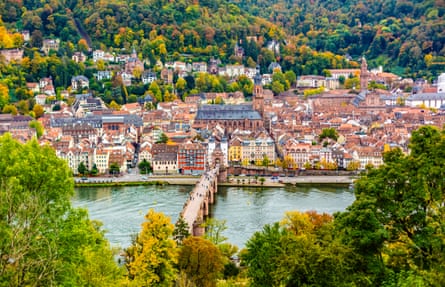
For: there are small pockets of Germany where rugby is thriving. Those being Heidelberg, where they have five rugby teams and are exclusively a rugby city. Munich, where there are four teams and rugby is ever growing, and Berlin.
Against: everywhere else in Germany rugby is fighting for player participation for several reasons. I play/coach for Neckarsulm Sport Union. We have the home of Lidl with lots of expats from rugby-playing countries but it is drowned out by lack of awareness and the options for so many other sports. Last season we started training with 20 players: by Christmas this was down to four.
This is not just a problem with Neckarsulm, but with all teams outside these rugby hubs. In the last two seasons three men’s teams have pulled out of the Bundesliga and Bundesliga 2 due to players leaving for work or family reasons or to play other sports.
This was mainly due to how the Bundesliga 2 is formed, with the closest game being one hour away and the longest being up to four hours away in Luxembourg. It is also a problem with the main German rugby board as clubs used to bolster their numbers with foreign imports but now, in an effort to focus on homegrown talent, players are in a point system where you can only have so many points: 20 points per team per game, plus two for foreign players, plus one for players playing in Germany for four years or a German who has changed clubs. Zero points for German internationals. One point for players who have been trained by their current club since they were 10. This has massively hindered the small clubs relying on people who have moved to Germany to work or even change clubs.
My final point is I’ve recently created a women’s rugby team and we’ve had up to 15 people attend but I’m already fighting with other sports to keep them interested and having to show YouTube videos as most have never heard of rugby until they arrive. I have moved now to a new club in Heidelberg as they have absorbed all teams within an hour’s drive as we simply can’t compete.
Harry Tanner, by email
Most team sports were codified in the mid 19th century in the UK. Many came from public schools, especially Rugby Union. As Britain built its empire it also exported its sports. The first empire Britain built was its physical empire, the ground a flag was planted on. This empire was driven by wealthy investors and land owners, ex-public school boys who played cricket and Rugby Union.

The second British empire was the empire of influence, investment and trade driven by the Industrial Revolution. This empire needed British workers to travel the world showing locals how to dig mines or build railways – working-class men who played football. If there’s a football team that plays in red and white strips somewhere in the world it’s because an engineer from Sunderland helped build their railway.
This was organic ground-up development. France reeling from the defeat in the Franco-Prussian war looked to Britain, the world superpower, for a way to improve its military capabilities. Aware that the battle of Waterloo was won on the playing fields of Eton, the French investigated public schools and imported Rugby Union. Top-down development. Germany followed the bottom-up path. It was not colonised by rugby-playing public schoolboys but working-class footballers who built their railways. Italy followed both pathways. A very sketchy answer but why countries or even cities and towns play particular sports is a complex mix of history and environment.
Glenn Cruddas, by email
I lived and worked in Germany in the early 1990s.I needed to find some local social connections, and having played rugby at school and university it was an obvious choice. The sports editor of the local paper gave me the phone number of the local team.
A couple of weeks later I landed up at their first pre-season practice. As a Brit, I was made me very welcome. We were very fortunate, Bad Homberg had a very successful semi-pro football team which bankrolled the rugby team – so even our Christmas dinners were free! It was started by an exchange English teacher from Wales.

The simple answer is that football (and also handball) are incredibly popular in Germany and swamp out other sports. Germany does have local and national leagues, and their national team play in qualifiers for the World Cup. But with a small player base they have yet to make it to the main event.
I spoke pretty fluent German before moving there. I can now also swear proficiently in German!
Mark Lucas, West Chester, Pennsylvania
The second world war is an answer. But more fitting is the fact that Germany was closer to the US than to the Brits. We have more clubs and players in American football than in rugby. You can earn more money with AF and it brings more money into TV channels. And No 1 sports is football. There you have more idols if you’re a young kid.
I’ve played for 40 years actively and for 20 years I have been coaching as well. I’ve seen some development over the last two decades. But that’s not enough. Sadly. Because rugby is the best sport in the world.
Frank Elsholz, SCS Rugby Berlin
Rugby was steadily on the way up in Germany, led by Heidelberg and a few other university towns. A key missed opportunity for Germany was the 2018 ruling that there was a conflict of interests with Hans-Peter Wild investing in both Heidelberg Rugby Club (RK) and Stade Français.
While a conflict of interests should be taken seriously, that was arguably one that should have been reviewed and managed constructively, given that Heidelberg RK’s European success was a mighty achievement stemming from a successful investment in a potential challenger nation. The ruling, quite possibly, made Germany less attractive for investment in semi-professional rugby and there has clearly been a decline with Germany falling out of contention for the World Cup repechage of late, even within an expanded format. Surely, investors in the clubs of tier-one nations should be encouraged to invest also in growth in the third tier, and be celebrated when the investment successfully raises a team to compete a couple of levels above where they might be expected to compete.
Thanks to the World Rugby Nations Cup, now 24 teams have a sustainable pathway, but an investment strategy will be needed soon to keep that newly minted second-tier competitive, by keeping open pathways for the next best teams across Europe, Asia, Africa and the Americas. Learn from Germany and Heidelberg RK and create packages for tier-three investment, and a plan for positive management of any resulting conflict of interests in the future, since the long-term health of the second tier, and hence the growth of rugby internationally, relies on these teams eventually doing well.
Ross, Glasgow, by email
Not sure it’s accurate to say that there is no rugby culture in Germany: my boyfriend’s team (Battersea Ironsides) played on tour there in about 1986, and one of my German cousins won a tournament as a member of a Heidelberg team much more recently.
Germany men won the first leg of the Rugby Europe Rugby Sevens tournament in Hamburg last month, although the women only managed fifth place in theirs.
Rugby Europe matches can be watched online on Rugby Europe TV.
DB, by email
I have lived in Berlin for 16 years. I have seen a rapidly growing interest in the game. There are youth teams, men’s teams and women’s teams here. Excellent places such as Piri’s in Neukölln are packed with people watching the World Cup and Six Nations. The men’s national team has also had growing success recently and I believe Germany will be continue to compete more and more in the coming years.
Alex from Dorset, by email
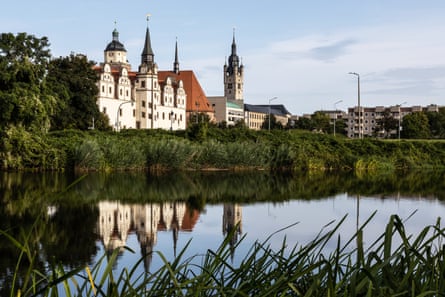
I played for about 12 years starting in the early 80s to the beginning of the 90s in East Germany. There have been around 10 clubs in and around East Berlin and two in Leipzig. And one in Dessau. Two leagues, which consists of mostly teams from the area around Berlin (East) and one or two teams from Leipzig. My team was some kind of an elevator team. One year trashing everyone in the 2nd league, the other year losing every game in the first league.
But everything was only on a non-professional level. In West Germany it was probably a bit better, but not much, as I know. And after the unification, it still remains on a amateur level. No media coverage.
And non-rugby fans confuse it with American football. It would be a hard task to make it more popular in Germany!
Hendrik, by email
There is. Just don’t approach it based on the (endlessly tiresome) assumption that “rugby” equals rugby union. Pop “NRLD” into your browser.
Simon Green, Westcliff-on-sea
There is indeed a rugby culture in Germany, but it is centred around university cities in western/southern Germany in the ex-British and French occupation zones and mostly played by students. My ex-team in Aachen in the 80s and 90s had weekly matches with the UK Rhein army teams and the Awacs, as well as other university teams but also Dutch and Belgian teams.

Our trainer at the time was Willi, an East German who defected in 1986, leaving his team in East Berlin, Stahl Hennigsdorf, a steel-workers’ team. After the Wall fell, we played East German teams, too, where, surprisingly, clubs had sprung up earlier, not seeded by UK/French forces as under Russian occupation.
The hurdles to rugby catching on in modern Germany are many: fathers and grandfathers might have played football but very, very rarely rugby, so sons and daughters lack exposure both as spectators and in teams. Both my sons tried rugby for some months but returned to football because they could cycle to their local football team/pitch, their friends were all there and rugby entailed more bumps and bruises and parents having to provide transport.
Further, rugby has to compete with American football which has all the big shoulders, helmets, glitter and girlies that attracts adolescent boys (and girls). German mothers worry more about injury rates in rugby, but let their kids have BMX bikes and skateboards.
The final and great hurdle is narrow-mindedness on how urban green spaces are allocated as they become increasingly rare. The football lobby is very strong and it sees sports with oval balls as competition for space; added to which German town hall resource allocators can easily swayed by comments like “that sport will shred your green playing fields” or “think of all the injuries and rough behaviour norms that will follow”.
Rob Hain, ex Aachen, Germany
There’s a rugby culture – it’s just simply not popular and it’s a dedicated group of individuals. I played for Viadana at the Munich Oktoberfest sevens in 1991 and Viadana won the cup v Ealing. Teams were military and expat with a scattering of German players plus touring sides.
Playing Italian rugby at the start of its exponential development was a fantastic experience. Since that time I’ve coached u14, u16 and u18 for Coq Mosan, near Liège Belgium with games v Aachen, Köln, Frankfurt and many games in Luxembourg with tournaments in the Netherlands plus the regular league in Belgium.
The same exists in Germany. It’s just the UK rugby fraternity do not understand or explore what is possible just over the Channel, especially for potential tours and development of rugby camaraderie in Belgium, Germany, Luxembourg and the Netherlands.
I know many teams over here would scare the hell out of UK amateur teams. Hopefully, there could be more of a future for UK rugby touring teams playing in Europe but not just France and Italy.
Kevin Pycroft, by email
Why does Britain have no handball culture – a sport widely played in Germany and other European countries.
Patrick Murtagh, by email
Having played rugby in Germany for 20 years, up to second division level (and now watch my club playing at first division level), I can confirm that there is rugby culture, a good grassroots club scene, and some high-quality players who qualify for Germany as well as other nations (see All Blacks and Canada debutants from this month as examples), as well as a population base built for the sport (athletic, big people who aren’t shy of a bit of contact).
Unfortunately, football, handball and basketball receive more state support and media coverage. Additionally, the DRV (German rugby union) has historically focused support only on the Heidelberg-based clubs and financial and people management scandals devolving from that Heidelberg clique engulf the sport every few years to the point where investors in other clubs – Frankfurt and Pforzheim to name a couple of examples – have pulled support due to that Heidelberg bias coming out of the DRV.
If they ever committed at a national level from the top down then they’d likely be very good within just a few years.
elbourg
There are German rugby players playing but the good ones are outside Germany.
Macaumike
Apparently, Germany targeted participating in the 2015 Rugby World Cup but didn’t qualify. Not sure what happened in 2019 or 2023, but it seems they have yet to qualify for any of them despite the national team playing at the second level of European rugby.
andya2015
It’s not entirely true that rugby is absent in Germany. As a tour guide with an English school group, we chanced to be at a sports field outside the Olympic Stadium a few years ago where the Berlin Rugby Club were having their annual barbecue. We were invited to join them. We discovered that they were very enthusiastic about the game and had no trouble finding opposing teams in Germany. The fact that the Olympic Stadium was in the British zone of occupation between 1945 and 1989 doubtless had something to do with this.
Anschauer
When I was stationed with the RAF in West Berlin in the 1980s, we regularly played German clubs – very sociable occasions involving loads of beer. Mind you, all our rugby matches involved loads of beer.
Murphy15
There assuredly is as my brother-in-law would point out as a regular club player in Potsdam. It’s just a lot smaller than the UK.
F1Socialist