.png) 8 hours ago
4
8 hours ago
4
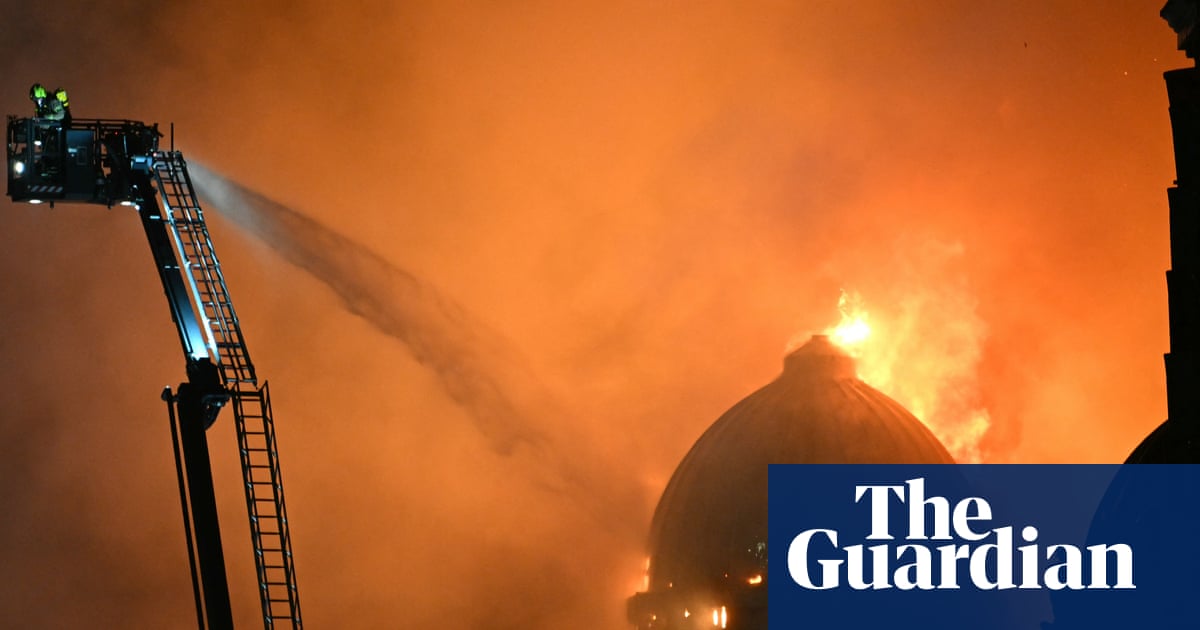
Vladimir Putin has admitted Russia is facing fuel shortages as Ukraine steps up its long-range drone campaign, with repeated strikes setting oil refineries ablaze and forcing multiple regions to introduce unprecedented petrol rationing.
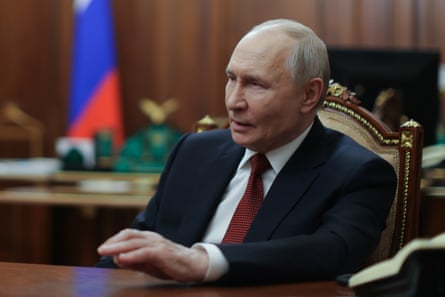
Speaking to Russian state television late on Sunday, the Russian president acknowledged for the first time that Ukrainian attacks on energy infrastructure were affecting domestic fuel supplies. “Of course, they create problems, that’s obvious,” Putin said. “Right now we’re observing a certain shortage, but it’s not critical.”
Putin said Moscow would seek to ease the shortages by boosting fuel imports, while redoubling efforts to protect refineries from Ukrainian drone strikes and restore damaged infrastructure as quickly as possible.
The strikes underscore Ukraine’s growing ability to hit strategic targets far behind the frontline, forcing the Kremlin to divert resources to protect critical infrastructure as Russia’s battlefield gains have slowed markedly. On Sunday, Volodymyr Zelenskyy confirmed that Ukrainian drones had targeted refineries in Krasnodar Krai and Yaroslavl oblast.
Ukrainian drone attacks have cut Russia’s oil refining capacity by roughly a quarter, leaving the domestic fuel market struggling to keep up with demand and creating an estimated 15% supply shortfall, analysts say.
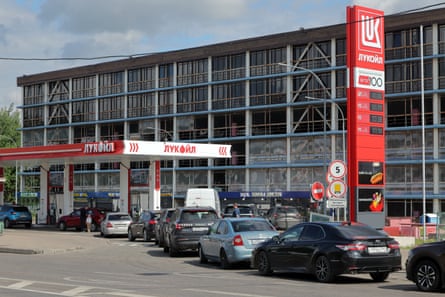
Fuel rationing was in place in at least 56 Russian regions, including Moscow, as of Thursday, according to open-source data analysed by the Moscow Times.
The situation is most acute in Russian-annexed Crimea, where authorities last week declared a state of emergency after repeated Ukrainian strikes disrupted logistics routes and oil infrastructure.
One Muscovite told the Guardian he had spent more than two hours waiting to fill up his car, forcing him to rearrange his work schedule.
The sight of hours-long queues at petrol stations across Russia – one of the world’s largest energy producers – is something not seen since Putin came to power in 2000.
Russian social media was flooded last week with videos of frustrated motorists searching for fuel, alongside a wave of posts mocking the shortages. One widely shared meme featured the Russian singer Dima Bilan, winner of the 2008 Eurovision Song Contest, singing: “Where can I find you? Which city should I fly to? Without you I can’t live” – with “you” referring not to a lost love, but to petrol.
The longer-term impact of the shortages would largely depend on whether Ukraine could sustain its campaign against Russia’s oil infrastructure, said Sergey Vakulenko, a senior fellow at the Carnegie Russia Eurasia Centre and an expert on Russia’s energy sector.
“If the attacks stop tomorrow, then probably in two months there will be no particularly noticeable consequences,” Vakulenko said. “The amount of gasoline available in Russia at the moment is determined by a race between Ukrainian drones and Russian repair teams.”
Kyiv has said its campaign is intended to weaken Russia’s war effort by disrupting fuel supplies while bringing the consequences of the conflict home to ordinary Russians.
This month, Zelenskyy said he had authorised a 40-day operation targeting Russian infrastructure to “influence the aggressor state” and increase pressure on Moscow to end the war.
after newsletter promotion
Despite the shortages and signs of growing frustration among ordinary Russians and the elite, there is little evidence they have altered the Kremlin’s determination to continue the invasion. In his interview on Sunday, Putin said Russian forces were “achieving the main task at hand – the final liberation of Donbas and Novorossiya”.
His reference to “Novorossiya” – a historical, imperial term the Kremlin uses to describe the Ukrainian southern regions of Zaporizhzhia oblast and Kherson oblast – suggested Moscow continues to pursue territorial ambitions beyond the Donbas.
Putin said Russia planned to establish a “buffer zone” in Ukraine’s northern Sumy oblast. The Russian leader on Sunday further claimed Ukraine had proposed a mutual halt to long-range strikes as a step towards peace, an idea he said he rejected
“It is clear why this proposal is being made, because our counterstrikes deep into Ukrainian territory are much stronger, have greater impact and are, frankly, more destructive,” Putin said.
“Given their catastrophic shortage of personnel, the Ukrainian armed forces apparently believe this could be their salvation. But saving the Kyiv regime is not part of our plans.”
Although Russian forces are advancing more slowly than they did last year, they are close to capturing the largely ruined city of Kostiantynivka, a key objective that could provide a staging ground for further offensives aimed at seizing the remainder of the Donbas.
The gains have come at a high cost. Russia continues to sustain high casualties, faces persistent difficulties replenishing its ranks and has shown signs of worsening morale among frontline troops.
Over the weekend, authorities arrested a former soldier after he posted a video threatening to launch an armed mutiny unless Putin met him to discuss what he described as the abuse of soldiers by military commanders. The video, which called on Putin to “tell the whole truth” about the treatment of Russian troops, was viewed more than 11 million times before his arrest.