.png) 5 hours ago
8
5 hours ago
8
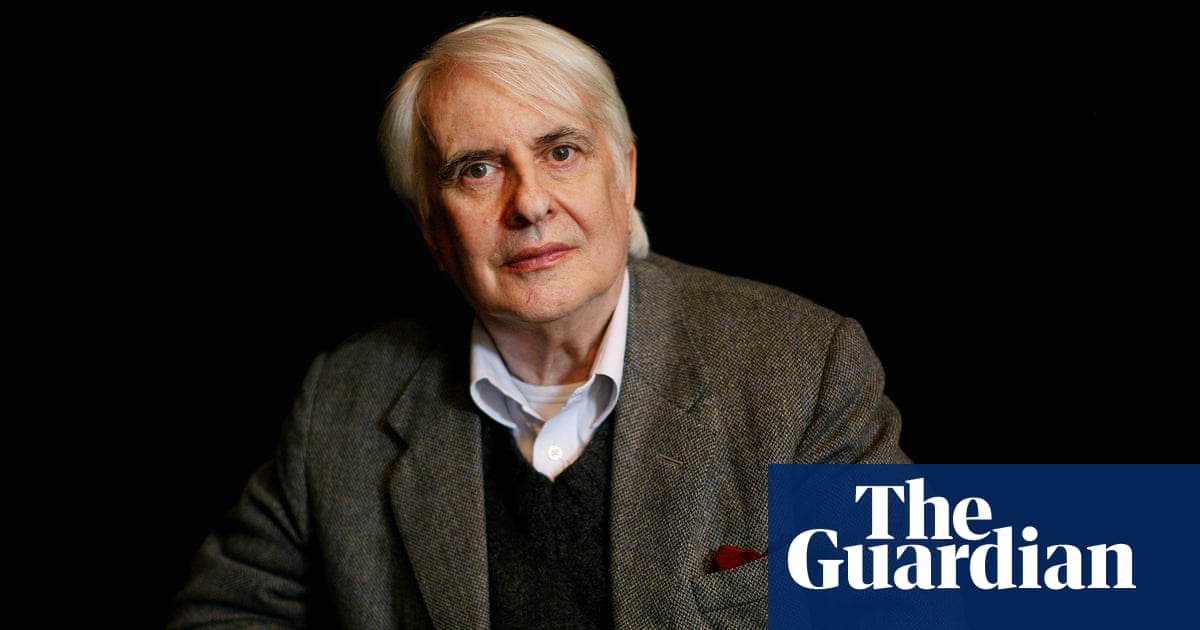
Peter Gill, who has died aged 86, was a rarity in British theatre in being an accomplished director of his own plays; he wrote them, you felt, mainly so that he could also direct them and thus maintain the vision and the poetry of his writing in their physical manifestation.
His reputation as a meticulous realist with unimpeachable good taste in casting was forged at the Royal Court in London where, in 1968, he made his name overnight by directing a trilogy of virtually unknown plays by DH Lawrence. For the first time, said Christopher Hampton, the novelist was revealed as “one of the alarmingly few really interesting early 20th-century stage writers”.
These plays – The Daughter-in-Law (1912), The Widowing of Mrs Holroyd (1914) and A Collier’s Friday Night (1909, but unpublished till 1934) – were unperformed in Lawrence’s lifetime and scarcely thereafter, until Gill unlocked their treasures of working-class realism in a Nottingham mining community, their poetry, anguish, rituals, warmth and formal audacity. The washing of a miner’s corpse in a five-minute silence shared with the audience was an indelible image of that era’s theatre.
Gill was small, wiry, mercurial, with a voluble nature and a piercing sense of purpose and seriousness about his work, his dedication verging on the monastic. He stuck to the Royal Court like a burr for many years before launching the Riverside Studios in Hammersmith in the mid-1970s as an arts centre and theatrical powerhouse.
He joined the National Theatre in 1981 to run his own handpicked company alongside that of Peter Hall, and also the NT Studio for research and “try-outs” in 1984; this latter project produced good work, but Gill, who attracted acolytes as easily as a flame does moths, operated in a fiefdom that was reported to have challenged the authority of Hall’s successor, Richard Eyre. Gill left in 1990.
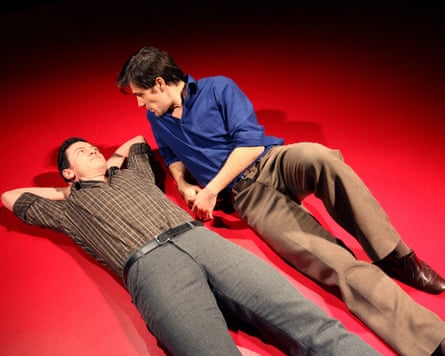
Without an artistic home, as for so many of Gill’s generation, the Royal Court of George Devine and his successor, William Gaskill, remained Gill’s professional touchstone and inspiration, and he became something of a loose cannon. He still managed to produce plays of startling beauty, returning to the Court in 2002 with The York Realist, a sort of homage to his alma mater with its setting of a tied farmhouse cottage in Yorkshire,its central character wavering between his roots and the theatre, even a Lawrentian tin bath and outside toilet; the miracle was that the seeming parody came across as utterly authentic.
“No one quite recalls how Peter Gill arrived in our lives,” said Gaskill. “He was suddenly there, like a changeling.” He was born in Cardiff, the son of a docker, George Gill, and his wife, Margaret (nee Browne). He was educated at the Roman Catholic grammar school of St Illtyd’s in the city, became addicted to musicals when taken to the Empire theatre by his father, trained briefly as an actor and moved to London, where he worked professionally between 1957 and 1965, including a short stint with the Royal Shakespeare Company in its first season at the Aldwych: he played a small role in Gaskill’s unhappyproduction of Brecht’s The Caucasian Chalk Circle in 1962.
After Gill had spent three more years as an actor in theatre, films and TV, Gaskill’s associate director at the Court, Anthony Page, hired him as an assistant in 1965. He directed Sunday night productions without decor, wrote his first play, The Sleepers’ Den (1965), adapted Chekhov’s short story A Provincial Life (1966) for the stage, and collaborated with Joe Orton on a double-bill of his plays The Erpingham Camp and The Ruffian on the Stair in 1967, the year that Orton was murdered. That year, too, Gill directed Thomas Otway’s The Soldier’s Fortune with a cast including Sheila Hancock, Arthur Lowe and Jack Shepherd.
This purple patch continued with the Lawrence trilogy, his second written play, Over Gardens Out (1969), and a great production of John Webster’s The Duchess of Malfi (1971) with Judy Parfitt, one of the Court’s regular stars. He made a brief return to the RSC in 1974, directing Twelfth Night, before completing a decade of Court work with Edward Bond’s beautiful play about the poet John Clare, The Fool (1975), starring Tom Courtenay, and directing what became his own signature play, Small Change (1976).
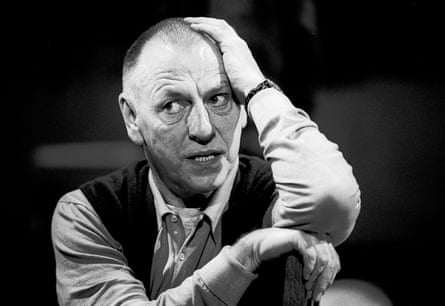
Small Change had four actors and four chairs: two boyhood friends, war babies, meet up again after one has served in the forces and survived a broken marriage; their respective mothers are close friends. As a mosaic of Welsh working-class life, it was deeply felt and acted with a shimmering grace and purity. Beneath this finely worked surface, said the playwright David Hare of Gill’s plays in general, “there is often a torrent of confused emotion”. And Gill worked hard, and successfully, to show how people struggle to express these complex memories and feelings.
In his five years at the Riverside Studios, Gill mounted fine stagings of The Cherry Orchard, with Parfitt again as Ranevskaya and the theatre’s first home-grown production in 1978, The Changeling in 1978, and Measure for Measure in 1979, with Helen Mirren as Isabella.
He opened his innings at the National in 1981 with Isaiah Berlin’s translation of Turgenev’s A Month in the Country, featuring Francesca Annis and Nigel Terry and then directed Penelope Wilton as Beatrice in Much Ado About Nothing (Michael Gambon as Benedict) and as Shaw’s Major Barbara. An entertaining production of Hampton’s Tales from Hollywood, about Brecht and the other high-minded German émigrés in Tinseltown, followed in 1983, and, in the same year, a variant of or sequel to Small Change, called Kick for Touch (1983). A year later came another Otway classic, Venice Preserv’d, starring Ian McKellen and Michael Pennington, and an attempt to dramatise William Faulkner’s 1930 novel, As I Lay Dying.
One of his biggest, and most surprising, successes was the production of Mrs Klein (1988), written by his Royal Court colleague and friend Nicholas Wright and featuring three German Jewish psychoanalysts talking to each other for two hours. They were played by Annis, Gillian Barge and Zoë Wanamaker, which helped a lot, and the play transferred from the NT to the West End and New York. In 1997 he directed his own play, Cardiff East, starring Kenneth Cranham, at the NT’s Cottesloe theatre.
He made another West End foray with a revival in 2005 of John Osborne’s second play, An Epitaph for George Dillon, at the Comedy (now the Harold Pinter), starring Joseph Fiennes as the aspiring writer, and a perfectly judged revival of Patrick Hamilton’s psychological thriller Gaslight, at the Old Vic in 2007, with Rosamund Pike and Cranham, who had appeared in his Orton productions 40 years before.
Gill never stopped writing but felt marginalised as he grew older. He was less in demand as a director, too, but he returned triumphantly to his dual function with Versailles (2014) at the Donmar Warehouse, a brilliant play for the anniversary of the outbreak of the first world war in which the central character, loosely based on John Maynard Keynes, was involved in hammering out the treaty in Paris while stalked by the ghost of his friend who had died in action.
Around the characteristic core of two friends, and their mothers, gussied up in a panoramic, large-cast social setting, Gill expressed both a lament for the passing of the Edwardian age and an anxiety about the future in Britain, the Middle East and beyond. The play for yesterday was one for today.
His final stage play was Something in the Air (2022) at the Jermyn Street theatre, in which two old men hold hands, bonding in a care home, reminiscing about former lovers. This was “slim but not slight, a poignant portrait of how brightly remembered lives can shine”, said David Jays in the Guardian while, in the Observer, Susannah Clapp applauded Gill’s “finding gravity in small scenes”.
He was appointed OBE in 1980 and, in 2008, published a gem of a small book, Apprenticeship, both spiky theatrical history and impassioned manifesto, which sprang from his discovery in a New & Lingwood shirt box of a long-forgotten diary he had kept while working with Gaskill at the RSC in 1962. Gill was elected a fellow of the Royal Society of Literature in 2019.
Two brothers, Bernard and Paul, and a sister, Mary, predeceased him. He is survived by five nieces and nephews.