.png) 7 hours ago
8
7 hours ago
8
When St Lucia’s rainy season began in May, Madeleine Solomon, 55, breathed a sigh of relief. For months, she had been feeling the squeeze of an intermittent water supply that disrupted normal hygiene and food preparation, forcing families like hers to rely on water tanks, rainwater harvesting and bottled water bought from private companies.
“I’m thanking God every day because our situation was really bad,” she says.
The water scarcity crisis plaguing the Caribbean nation had become so severe that last March the island’s hospitality and tourism sector considered bringing in water by barge from its neighbour, Dominica. For experts, this was a sign that, as the climate crisis worsens, extreme weather events could trigger systemic risks on the island.
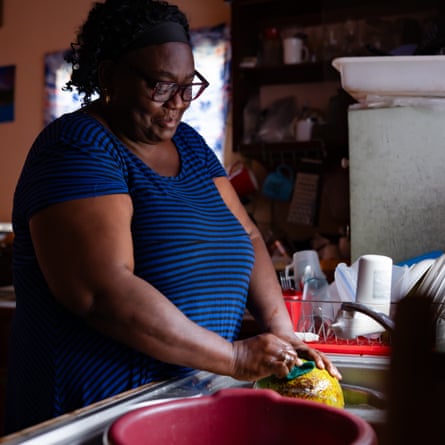
Though the rains started to come in May, replenishing the island’s main water sources, weather officials sounded a note of caution, warning that this year’s “super El Niño” is likely to limit the relief brought by seasonal showers. St Lucia primarily relies on surface water for its drinking supply, and periods of drought or excessive rainfall can seriously affect this source.
Water scarcity is not a new problem for St Lucia, which has been grappling with it for more than a decade. The issue has become one of the island’s most politically contentious, with the two main political parties – the Saint Lucia Labour party (SLP), led by prime minister Philip J Pierre, and the United Workers Party (UWP) – routinely trading accusations of mismanagement of water resources while each held power.
Yet, solving the water problems is likely to take more than good governance or strategic thinking, say experts. James Fletcher, a former government utilities minister and Caribbean Community (Caricom) climate envoy, notes that St Lucia has received substantial multilateral support, which has already been expended on efforts to improve the water supply.
That includes at least $80m (£60m) in World Bank financing across three projects in 2020, 2024 and 2025, plus additional EU- and Canada-backed technical assistance and other donor support.
“But these initiatives just scratched the surface,” he says.
Fletcher says one seemingly intractable problem is the loss of an estimated 45% of the potable water produced by the country’s sole Water and Sewerage Company (Wasco). According to him, the island’s 1,125km (700 miles) of pipelines, many of which are old and in poor condition, pose a huge challenge in terms of preventing losses due to leakage.
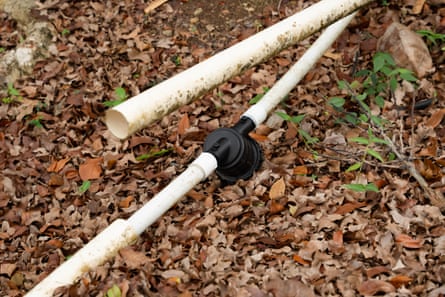
Leaking is an issue many of the Caribbean’s water utilities face, says Adrian Cashman, chair of the Global Water Partnership – Caribbean technical committee. “It’s not to say that Wasco is a very bad performer in comparison with others,” he says.
Cashman says St Lucia’s problem is partly due to a lack of “organisational capacity to operate and maintain, and the financial resources to maintain, [water] infrastructure”. The millions spent trying to improve the situation have been like pouring water into a leaking bucket, “caused by poor maintenance or lack of maintenance”.
It is a big problem to solve, especially for small-island water management agencies, even with outside funding. As is the case for a number of Caribbean islands, water is seen as a public good and generously subsidised by the government. The IMF’s recommendations that water tariffs be raised have therefore faced stiff resistance across the region. Wasco did not respond to requests for comment.
Fletcher says customers are charged at rates well below the cost of producing the water. Cashman adds that, with unrealistically low tariffs, “it becomes extremely difficult to operate and maintain the systems. And that will obviously have an impact on the quality of service provided.”
Maintenance is just one part of what Cashman describes as “a constellation of factors that come together” to create the problem. “You can’t really point to one problem,” he says. Among those factors is the competing demand for water across various sectors of the economy, with the peak tourism season coinciding with the island’s annual dry season, which runs from October to April. One report suggests the island’s hotel sector is the second-highest consumer of water, after homes.
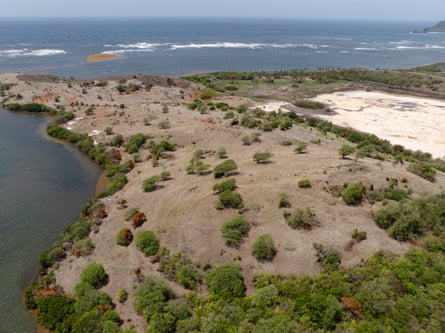
Land degradation is also an issue, as it leads to landslides and sedimentation of the water supply. Cashman says that, geologically speaking, St Lucia is relatively young and so landslides can easily be triggered by uncontrolled land clearance. This can lead to water shortages when high levels of sediment enter the water system.
An example is the John Compton Dam, which provides water to approximately half of the population. Despite repeated efforts and millions spent, the dam’s water storage capacity has been reduced by about 400m gallons because of silt buildup over the years, some of it caused by storms.
But there are measures available to alleviate the water stress. Experts agree that the island gets a fair amount of rainfall annually. The problem is that precipitation patterns have shifted considerably. A 2017 study on the effects of the climate crisis in St Lucia showed that the country has experienced drought conditions every year since 2012, leading to reductions in annual rainfall and its distribution over time.
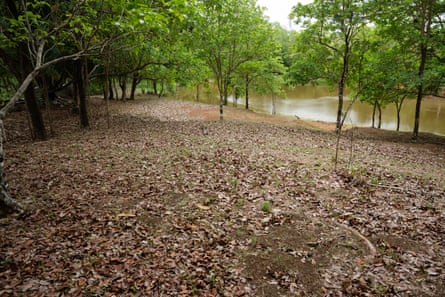
Rainfall during the dry season is irregularly distributed, resulting in high variability. Ines Celestin, a 62-year-old farmer in Micoud, has noticed the changes. “Rain comes when it wants, and that’s how it is now,” she says. “There are times when it’s in the drought, you get rain.”
Fletcher says that, even with unpredictable weather, precipitation would be enough to meet St Lucia’s demand for water and “keep its rivers and marine ecosystems healthy”. But he warns: “The problem is we’re not storing enough water, as so much of it just gets into rivers and washes out into the ocean.”
He says people need to store more water at home by harvesting rainwater. “People shouldn’t expect there will be water in their taps every day of the year,” Fletcher says. “When Wasco is not able to do that, then we should be able to meet our demand for water for at least a week.”
Anja Fernand, whose family owns an estate covering hundreds of acres, agrees. “When it’s raining, we have water,” she says. “It’s our responsibility to capture it for when there isn’t rain, because we don’t have seasons any more.”
Fernand’s family estate houses a cistern and water tanks capable of holding thousands of gallons of water. She says when her father bought the plantation house in the 1970s, it was not connected to the water utility system, so the cistern has reliably met her family’s water needs throughout the decades. “I’m never without water,” she says. “Touch wood.”