.png) 7 hours ago
3
7 hours ago
3
Unnoticeable amid the spectacle and heaving crowds at the British Grand Prix this weekend, the school that overlooks the circuit is a definitive success story and will continue its contribution to Formula One well into the future after the roar of the engines has receded.
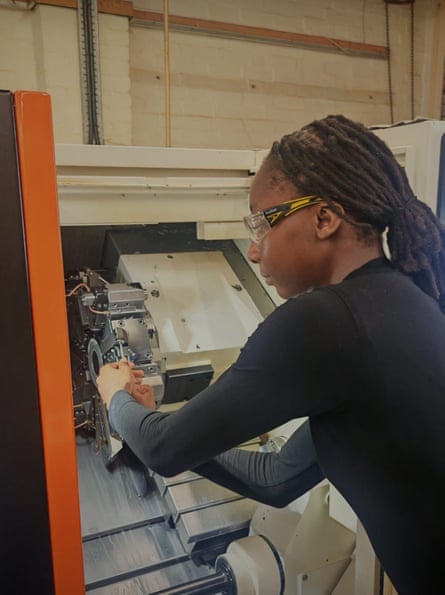
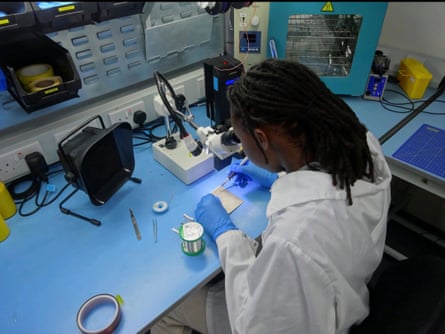
Kian Brown and Savannah Morgan both graduated last year from the Silverstone University Technical College that facilitates a fast-track into engineering, and they have gone on to take positions with F1 teams. Brown is now a composite machining apprentice at Mercedes and Morgan is an advanced digital machining apprentice at Cadillac.
They join the ranks of alumni who have gone on to roles across the motor sport and engineering industries. In 2025 as many as 30 students went directly into motor sport, including placements with F1 teams, race engineering employers and specialist motor sport degree courses.
The college, which provides specialist, technical engineering education for students aged 14 to 18, is in the heart of Britain’s motor sport valley. Home to eight F1 teams and directly next to its most storied circuit, it offers unique experiences and opportunities for the students.
“I love maths and physics but I also like doing practical work,” Morgan says. “Lewis Hamilton is a big inspiration. As a person of colour myself, seeing him stand out in such a field where there isn’t much diversity is a big inspiration.
“The opportunity for work placements twice a week allowed us to gain real-world experience and explore which areas of engineering we enjoy most. We’ve also had amazing networking events at Silverstone, where we met representatives from companies like McLaren and Williams which prepare us for careers in engineering by providing direct engagement with the motor sport industry.”

Similarly Brown, who had long dreamed of working in F1, found the chance to do something beyond mainstream A-levels as ideal for his ambitions. “I went to the school because I knew that it did everything,” he says.
“You could do every part of it, there’s the theory side, there’s the practical side, hands-on, all that. Our teachers all come from the industry themselves, so they’re able to guide us in the right direction compared to some teachers who just teach off a textbook and just expect you to be able to apply it to the real working world, which didn’t really work for me.”
The Silverstone UTC occupies a campus next to the circuit on the outside opposite the old start-finish straight between Woodcote and Copse corners and was founded in 2013, to meet the ambitions of Neil Patterson, a design engineer at McLaren at the time. The land for the school was donated by the British Racing Drivers’ Club and Silverstone circuit, recognising its goals fitted well with fulfilling the needs of the ever-expanding British motor sport industry.
after newsletter promotion
This year the Department for Business and Trade announced that F1 had contributed £12bn from a £16bn annual UK motor sport turnover to the economy. The Motorsport Industry Association survey of 2024 stated that Formula One employed 50,000 people but also identified recruitment and training as one of the most prevalent barriers to growth in the industry.
The college is part of the solution. It is funded in the same way as any state school and led by the principal Angela Murphy, who has been in charge since 2024. While it is a little known institution, already the demand for places outstrips capacity, which now stands at 480 students. Indeed, some families have moved across the country to access the UTC and its facilities. One former alumni who embarked last year on to a degree apprenticeship at Cosworth with the University of Warwick, travelled up from Kent every day to attend.
“We are just so so lucky to be here,” Murphy says. “It’s a truly enviable location I would say and one of those pinch-me places. The opportunities that we give to our students are jaw-dropping at times and that’s so special, the location is a huge part of that.
“We’ve got the proximity to the industry and over time the UTC has built up a really strong reputation with employers in engineering. Not just in Formula One, not even just in motor sport but in high-performance engineering and those relationships that we developed are bearing fruit.”
The college has full-size industry standard tools, lathe and milling equipment, computer numerical control machines, welding bays and a computer-aided design suite to use the industry-standard software. The students too show a great commitment, as Murphy notes changing schools at 14 is not a normal transition point and illustrates quite how special the opportunities are at Silverstone.
“It doesn’t feel like a school, it doesn’t look like a school,” she says. “We’ve got incredible workshops sat there with glass walls that you can see through. It’s a beautiful building, a really stunning place and the sound of the track alongside it is just an added bonus really.”
The UTC already has partnerships with Aston Martin, Red Bull and Haas, with ambitions of more to follow. “We offer something different to schools because we offer a technical education that is grounded in the opportunity to apply learning in a really meaningful way,” Murphy says.
“It’s far less abstract if you can learn from people who’ve worked in the industry or you can apply your learning to a project that has been set by an employer-partner.”
F1’s popularity, as demonstrated amply by the record-breaking attendance of 570,000 expected at the British GP this weekend, is having an effect on many levels. Not least on the next generation that will continue driving this thriving sport.
“I had to move from my town in Stafford all the way to Northampton, away from everyone there,” Brown says. “It’s probably the best decision I’ve ever made.”