.png) 4 hours ago
6
4 hours ago
6
It was a Sunday lunch in a sleepy Australian town that was at the heart of one of the country’s most high-profile murder trials.
A central question fascinated people around the world: did Erin Patterson deliberately serve her in-laws poisoned beef wellingtons on 29 July 2023?
More than a year after a jury found Patterson had murdered her in-laws, an Australian court will consider whether her convictions should be quashed and if she should remain in prison for life without the possibility of parole.
On Wednesday, three judges of Victoria’s highest court will begin hearing two appeals – by Patterson herself and the state’s director of public prosecutions (DPP) – in the triple-murder case that attracted worldwide intrigue and intense media attention for months.
Patterson will appeal against her convictions, while the DPP will appeal against the sentence handed down to Patterson, arguing it is “manifestly inadequate”.
In September, Patterson was sentenced to life imprisonment, with a non-parole period of 33 years, for the murders of her estranged husband’s parents – Don and Gail Patterson and his aunt, Heather Wilkinson. She was also convicted of the attempted murder of Heather’s husband, Ian Wilkinson, who survived the lunch after spending weeks in hospital.
Patterson, who maintained her innocence throughout the 11-week trial last year, is not expected to attend court in person. The three court of appeal judges, who will consider the arguments, are expected to reserve their decision in both appeals. They will hand down their judgments at a later date.
Patterson to appeal on seven grounds
In November, Patterson, 51, filed an appeal against her convictions but did not appeal against her sentence.
The appeal is on seven grounds including the “fundamental irregularity” around sequestering the jury in the same hotel as police and media representatives, and that her cross-examination during the trial was “unfair and oppressive”.
While considering the verdict, the jury was sequestered in a hotel in a regional town where police and members of the media also stayed. According to media reports, the matter was raised with authorities by her lawyers at the time, but no concerns about the process were raised during the trial.
The appeal documents allege the sequestering issue “fatally undermined the integrity of the verdicts” and argue for the quashing of the convictions and the ordering of a re-trial.
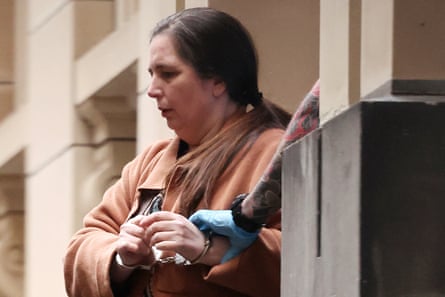
Patterson is also appealing on the grounds that cell tower evidence – along with evidence of death cap mushroom sightings near her home – should not have been heard in the trial. The court last year heard that analysis of Patterson’s mobile phone records revealed she may have visited two locations soon after death cap mushroom sightings were reported.
She is also arguing evidence from her Facebook “friends”, who met Patterson through a true-crime group, should not have been allowed as it was not “relevant”. Patterson told a Facebook group chat that she wanted “nothing to do” with her parents-in-law, according to messages shown in court.
The other four grounds of appeal relate to Patterson’s cross-examination by prosecutors over five days, along with issues over other evidence, and the opening and closing addresses of the prosecution.
Patterson’s legal team is arguing the prosecution’s closing address caused a “substantial miscarriage of justice”. While the prosecution maintained there was no evidence of motive, Patterson’s legal team claims, this changed in the closing address to imply a motive for murder.
If Patterson is successful in her appeal, the court will quash her convictions and could order a retrial or acquit her.
Prosecution: sentence ‘manifestly inadequate’
Separately, the DPP is appealing against Patterson’s sentence, arguing that “the sentence imposed on Patterson is manifestly inadequate”, and that the trial judge erred in finding she was likely to spend “years to come” in solitary confinement when allowing for the possibility of parole.
During a pre-sentencing hearing last August, the DPP argued Patterson should not be granted a parole period because of the nature of her crimes, which the judge, Justice Christopher Beale, agreed were “horrendous”.
While the defence and prosecution agreed that Patterson should receive a life sentence for the murders, her then defence barrister, Colin Mandy SC, argued she should receive a non-parole period. Mandy argued Beale should consider the onerous conditions of her conditions in custody.
At the time of the pre-sentence hearing in August 2025, Patterson had effectively spent the past 15 months in solitary confinement, the court heard.
Beale found that Patterson would continue to be held in those conditions for years to come for her own protection due to the high-profile nature of her crimes.
If the DPP’s appeal is successful, Patterson’s non-parole period could be extended or she could be sentenced to life without parole, with no option for release.
No further documentation has been released to the media since the two appeals were lodged last year. This includes the written cases relating to the appeal.
During Patterson’s 11-week trial, the prosecution did not put forward an alleged motive but pointed to the deteriorating relationship between Patterson and her estranged husband, Simon, in the months leading up to the fatal lunch.
Patterson told the court she had accidentally served beef wellingtons containing death cap mushrooms to her lunch guests in July 2023. She raised the possibility that mushrooms she had foraged may have been in a Tupperware container which also contained store-bought dried mushrooms she said she had used in the beef wellington meal.
But the jury ultimately sided with the prosecution, finding Patterson had deliberately included death cap mushrooms in the infamous lunch meal with the intention of killing her four guests.