.png) 3 months ago
69
3 months ago
69
Kutupalong camp is at its quietest just before dawn. A thin grey light over the hills of Cox’s Bazar in south-east Bangladesh, traces the outlines of tarpaulin roofs and bamboo frames – the fragile architecture of the largest refugee camp in the world.
Inside the shelters, women wake early not out of habit, but necessity, stepping carefully over sleeping children, pausing when any cramp or dizziness sets in. For many Rohingya women here, pregnancy is endured rather than anticipated, shadowed by the knowledge that when labour comes, it may be far from the care that could keep them safe.
For years, childbirth in the camps has taken place in spaces not designed for it: on woven mats, in narrow rooms and overcrowded clinics stretched beyond capacity. When complications arise, options narrow quickly. The journey to a better-equipped facility can take hours – sometimes longer than a woman in obstructed labour can afford.
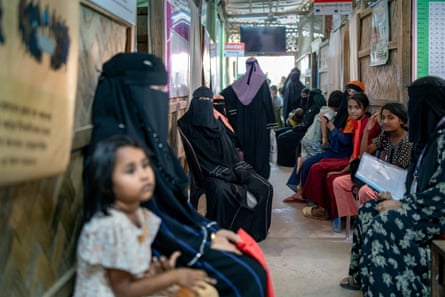
Now, a maternal hospital has opened inside the camp, offering a rare point of stability in an increasingly fragile environment. Eight years after fleeing Myanmar, more than a million Rohingya refugees remain in Cox’s Bazar, over half of them women and girls. Cuts to foreign aid in 2025 have forced health centres to close, schools to shut and food rations to shrink, straining already limited resources even further.
The hospital, run by Save the Children, provides round-the-clock emergency obstetric care alongside routine maternal and newborn services. It is modest and functional, embedded within the camp rather than set apart from it. But inside, there are beds, surgical equipment and trained staff able to act when childbirth turns dangerous.
Healthworker Rozina Akhter, 29, moves quickly between examinations, counselling, deliveries and newborn care. “This work is very important to reduce maternal and child mortality,” she says. “If a mother has complications, I refer her for specialist care at the new hospital.”
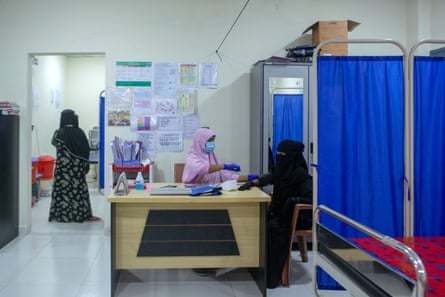
Before, referrals meant women needing scans or caesarean sections had to travel elsewhere, costing precious time. The journey can be high risk, with patients sometimes carried for miles on bamboo stretchers. “Now we have C-sections and ultrasound here,” she says. “The camp has changed.”
Still, patients often arrive too late, after trying to manage complications at home. Outside the hospital, the conditions that shape those emergencies remain largely unchanged.
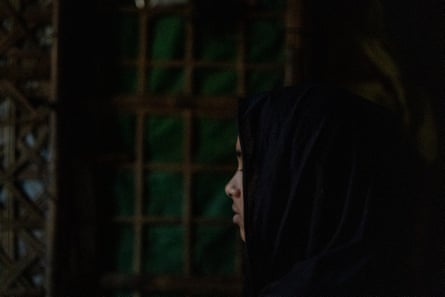
“Everything has been reduced: food, gas, medicine,” says Zohara Begum, 17, who arrived in Bangladesh as a child. Schools have closed and daily life has grown more precarious. She remembers Myanmar as a place of space and openness. “Here, it feels suffocating,” she says.
The hospital is one of the few visible improvements. “Babies can be delivered safely there – mothers won’t die and babies can survive.” Yet her thoughts turn to the future she hopes to delay. “I will not get married before I turn 18,” she says, aware of the risks early pregnancy carries.
Nearby, Najma Khatun, also 17, is preparing for her first child. Now nine months pregnant, she recalls the weakness, dizziness and pain of her early months. Regular checkups at the hospital have eased some of that fear. She plans to give birth there. “Now I feel better,” she says, “and less worried about what could go wrong. The doctors will take good care of me.”
But that sense of security is fragile. Further cuts to food rations loom, raising new fears about survival beyond childbirth.
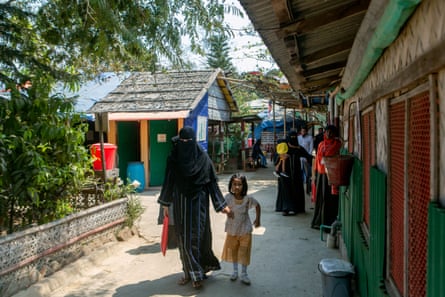
Noor Kalima, 27, understands that calculation. Three months into a carefully considered pregnancy, she speaks with deliberation. “Having a child means responsibility,” she says. She waited five years after having her first child before trying again. “Sometimes our children want something different, but we cannot provide it.”
The hospital made that decision easier. Its proximity allows her to imagine a safe delivery. “I have no fear,” she says, “as long as I can get there.”
Not all women have had that chance. Sokina Bibi, 42, has given birth seven times; two of her children have died. She remembers one delivery that lasted three days and nights. Her blood pressure rose dangerously, and the baby was in the wrong position. She feared being transferred to another hospital, recalling others who had not survived the journey.
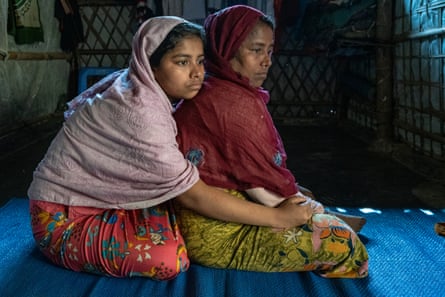
“I kept thinking, what would happen to my children?” she says. In the end, she did not have to leave. The baby survived, though the experience left its mark. “The pain is something I will never forget,” she says.
For Bibi, the hospital is not abstract. It is tied directly to survival.
Between the shelters and the wards, workers move quietly through the camp. Among them is Romida Begum, a traditional birth attendant with more than a decade of experience. She visits homes, checks on pregnant women, and refers them for specialist care at the new hospital when necessary. She has assisted about 10,000 births.
Her knowledge is shaped by experience and loss. She lists the warning signs she has seen too often: convulsions, high blood pressure, infections. Some women delay seeking care, fearing hospitals or unable to reach them in time. Some survive. Others do not.
“In one case, the placenta did not come out,” she recalls. “The mother died on the way.”
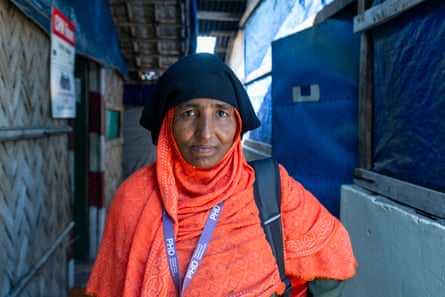
Back inside the hospital, the work continues without pause. Women arrive in labour – some early, some late, some already in distress. Midwives move quickly between beds as families wait outside for news. Each delivery carries the weight of years of displacement, shrinking resources and accumulated risk.
The hospital cannot change the broader trajectory of life in the camps. It cannot restore lost homes, reopen schools or guarantee a future beyond displacement. But in a place where uncertainty shapes almost every aspect of life, the ability to be seen, treated and cared for offers something rare: not certainty, but a chance.