.png) 3 months ago
56
3 months ago
56
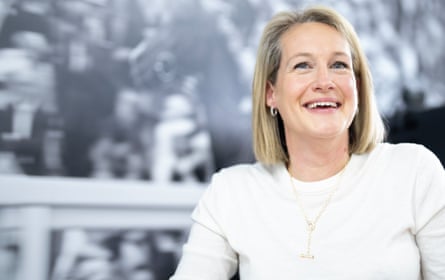
“I was used to fans,” Felicity Barnard, the chief executive of Ascot, says, recalling earlier roles in charge of commercial operations at Arsenal and West Ham. “At Arsenal, I was used to selling 60,000 shirts at the beginning of every season and that doesn’t happen here, so it’s teaching me how to be nimble and creative with our marketing year-on-year. That just isn’t necessary in football, because you’ve got people who will be with you for the whole of their life.”
Barnard, clearly, is a very quick learner. Since her arrival at Ascot in April 2021, initially as commercial director and then, from January 2025, as CEO – one of the sport’s great offices of state – Britain’s premier racecourse has shaken off any lingering after-effects from the pandemic and seen attendances and prize-money rising year-on-year. Ascot was only British racecourse to attract more than half a million racegoers in 2025, its overall prize fund of £19.4m in 2026 will be another new record, and the King George VI & Queen Elizabeth Stakes in late July will be the track’s first £2m race.
The track has been racing over jumps since Champions Day closed out Ascot’s 2025 season in mid-October, but Flat racing, the course’s heart and soul, returns on Friday, when a seven-race card will include several trials for the Royal meeting in June.
It is a reminder that Ascot’s showpiece event opens in just over six weeks – although no one who lives or works in the capital should need much reminding. The track’s familiar “Ascot You” ad campaign, first launched in 2023, wallpapered the tube network and 200 black cabs in the early months of the year, and its glimpses of carefree, midsummer days in the sun have already shifted thousands of tickets for next month’s five-day meeting.
“We’ve been working on our Flat season for a long time,” Barnard says, “whether it’s the runners that are going to be with us or all the activity that we’ve got on-site, and it’s very exciting for everyone as we go towards Royal Ascot.
“We captured the Royal Ascot campaign for 2026 [at the meeting] last year, and you’re always on it, always planning for it. It’s a global sporting phenomenon, as well as a cultural phenomenon during the English summer, which is something that we’re hugely proud of, and also unique.”
Greg Wood's Friday tips
ShowNewmarket 1.45 Earth Shot 2.20 Poseidon’s Warrior 2.55 Fort Rock 3.30 Bay City Roller 4.05 Golden Redemption 4.40 Stellar Sunrise 5.15 Cuban Lady
Ascot 2.00 Dance A Jig 2.35 Tabletalk (nb) 3.10 Coppull 3.45 Bowmark 4.20 Hockney (nap) 4.55 Crownright 5.30 Dosman
Goodwood 2.05 Harry Knows 2.40 Protection Act 3.15 King Of Light 3.50 Crepe Suzette 4.25 Kiss And Run 5.00 Lux Aeterna 5.35 Gallivanted
Warwick 4.30 Great Valley 5.05 The Dancing Tree 5.40 What A Glance 6.15 Imperial Esprit 6.50 Police Academy 7.25 Jeffery’s Cross 8.00 Unexpected Party
Newcastle 4.45 Project Kinsman 5.20 Star Cast 5.53 The Cursor 6.30 Eklleem 7.02 Starmade 7.33 The Green Man 8.10 Caragio
The uniqueness of Royal Ascot was a factor in Barnard’s jump from the Premier League to the sport of kings. There is no event in any sport with the meeting’s multiple strands of elite competition, royal patronage, fashion parade, garden party and all-round grand day out, and just a handful – the Masters, perhaps, or the Monaco Grand Prix – that are so inextricably linked with their location.
“We’re very lucky to have Royal Ascot as an event, and we’re custodians of it,” Barnard says. “We’re 300 years old, and all the learning that people long before me have brought to bear is the reason why Royal Ascot is such a success.
“The legacy was really interesting for me, and the [racing] industry [as a whole] has an incredible amount of history, stability and quality. I’m hugely positive about the sport, I love it and all the characters in it. Those varied stakeholders don’t exist in football like you’d think they would, and the rich tapestry within racing was a big appeal.”
Barnard’s dual role – custodian and executive – presents an interesting challenge: how to maintain cherished traditions and the sense of centuries of history while appealing to older and younger generations alike?
Pricing is at least part of the answer. In a week when sports fans discovered that a day at next year’s Ryder Cup will set them back €499 (£434), the cheapest ticket for Royal Ascot – in the Windsor enclosure – is £25.
“We’re able to adapt and modify the products on-site, and the experiences, and market them to different people,” Barnard says. “We offer everything from £25 tickets to tickets for thousands at the top end for our [restaurants with] Michelin-starred chefs, and everything in between.
“Our Village product in the infield is very ‘festival’ vibes, the dress code is different and it feels inclusive and welcoming, and we’ve seen the demographic and age of our consumers coming down quite significantly over the last three or four years.”
At a time of significant uncertainty in racing, Barnard is also keenly aware of Ascot’s importance to the sport as a whole. The track supported a recent call by a group including most of Britain’s biggest racecourses for major reforms to give the major players a bigger say in racing’s future.
The courses concerned are saying nothing more at present, but at a time when the industry is crying out for leadership, Ascot’s proven ability to plot a course through choppy waters offers at least a measure of reassurance.
“It’s not just about people coming to Ascot or coming back to Ascot,” Barnard says. “I believe that there is stretch in the sport and we work with a lot of other racecourses. If we can encourage anyone to visit York or Doncaster or anywhere else, that’s what we want to do.
“Within football, the numbers are big, it’s high octane and it’s always on the back pages. But funnily enough, if you work in the sport, those numbers are so huge that you can be a smaller cog in those big clocks that turn. And everybody at Ascot, and I’m sure it’s the same for racecourses around the country and around the world, has got such an integral part to play in the way that the sport moves forward.”