.png) 3 months ago
70
3 months ago
70
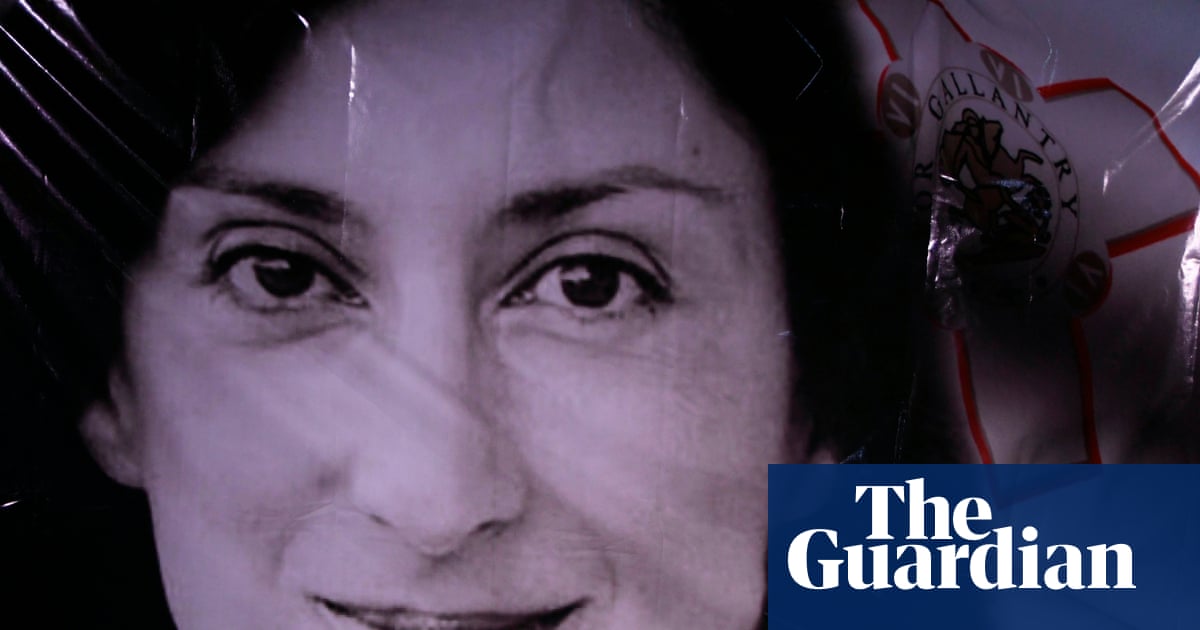
Marjane Satrapi, the French-Iranian artist, film-maker and graphic novelist whose acclaimed memoir Persepolis helped reshape international perceptions of Iran, has died at the age of 56.
In a statement provided to French news agency AFP, relatives said she had “died of sadness” after the death of her husband, the Swedish producer Mattias Ripa.
Ripa died on 8 April last year. Later that month, a series of messages posted on Satrapi’s Instagram account revealed the phrase: “For I lost the love of my life.”
Tributes have been paid to Satrapi from across French politics and culture following news of her death. President Emmanuel Macron said Satrapi was “a great artist who turned her Iranian childhood into a universal tale,” adding: “With her childlike perspective, her irony, her tenderness, her inner demons, the author created a moving world with which readers identified.”
Writing on X, Yaël Braun-Pivet, president of the French National Assembly, said: “Marjane Satrapi had turned her work into an act of freedom. With Persepolis, she had given a face and a voice to the Iranian revolution, proudly carrying the fight for women’s freedom and dignity. France loses an immense artist. To her family, to her loved ones, I offer my most sincere thoughts.”
Born in 1969 in Rasht, Iran, near the Caspian Sea, Satrapi was raised in Tehran by her father, an engineer, and her mother, a dress designer. As a teenager, she left Iran after her parents sent her to Europe to continue her education, hoping to spare her from the restrictions imposed under the Islamic Republic. She eventually settled in France, arriving in 1994 and later becoming a French citizen in 2006.
Throughout her life, Satrapi was a vocal opponent of Iran’s clerical establishment.
In 2000 she published Persepolis, a comic book memoir that became an international publishing phenomenon. It told the story of a rebellious and outspoken young girl navigating the upheaval in Iran after the shah is overthrown in 1979 and the establishment of the Islamic Republic. The story follows the protagonist’s attempts to understand the country’s violence and ideological control before she is sent alone to Europe at the age of 14.
Satrapi told the Guardian in 2024 that Persepolis was about making western readers reflect on the humanity of Iranian people, that, “Oh, they’re actually human beings like us”.
The memoir sold millions of copies, established Satrapi as one of the most widely read Iranian authors in the world, and its success challenged many western assumptions about Iranian society and culture.
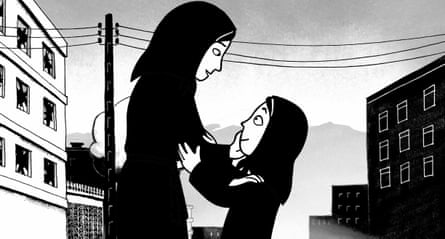
Satrapi has described how she initially had little expectation that Persepolis would reach publication. At the time, she was still an arts student in Strasbourg and had relatively limited professional experience in comics. “With Persepolis, I didn’t even think I’d find a publisher,” she told El País in 2020. “I thought I’d make 50 photocopies for my friends to read.”
Satrapi later co-directed the animated film adaptation of Persepolis, which became an international hit and earned her a place in Oscar history as the first woman nominated for the Academy award for best animated feature.
She has said that the purpose of her comic books was to reassure young Iranians that they were being heard and supported by the outside world. “If they kill you and the whole world doesn’t care, how is that? This is the whole thing I’m asking: just recognise this.”
Of her choice of medium, she said in a 2012 interview that: “Drawing – it’s the first language of human beings, before writing, before even talking, before words.”
Satrapi went on to direct five feature films, including Radioactive (2019), starring Rosamund Pike as the pioneering scientist Marie Curie.
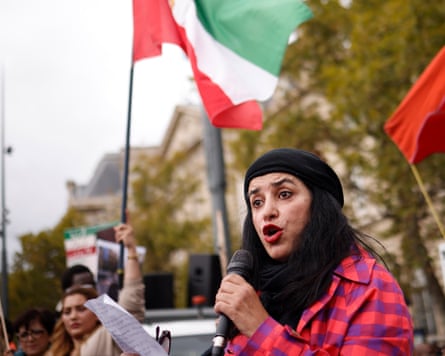
After leaving comics for years, in 2024, she returned to the medium, coordinating Woman, Life, Freedom, a collaborative graphic work bringing together 17 Iranian and international comic artists alongside academics and researchers. The book examined the protest movement that emerged after the death in custody of Mahsa Amini, a 22-year-old Kurdish-Iranian woman detained in 2022 for allegedly failing to comply with Iran’s mandatory headscarf rules.
Discussing the book, Satrapi said: “The only thing I can do is cultural work … This book is a message to the Iranian people to say, listen, you are not alone.”
French journalist Tristane Banon paid tribute to Satrapi on X, writing: “Marjane … you won’t call me to wish me a happy birthday and “celebrate those little cheeks that I adore”… and I can’t get over it. You were freedom and determination. Courage too. One day, the Iranian people will be free, with you and as much as you.”
Valérie Pécresse, president of the Regional Council of Île-de-France, said: “Great sadness upon hearing of the passing of my friend Marjane Satrapi. She was a great artist, comics creator, painter, film-maker, but above all a passionate and committed woman.
“From Persepolis to her biopic of Marie Curie, Radioactive, she established herself as a major voice in the defense of democracy and women’s rights in Iran and around the world. The death of her companion had deeply affected her. I think with affection of her loved ones and her family.”