.png) 2 months ago
67
2 months ago
67
Whether the change is down to the shifting of the Overton window or the demise of basic decency, one awful feature of the current national conversation is becoming clearer by the day: the demonisation of disabled and vulnerable children and young people – and their parents – by voices that seemingly know no shame at all.
The crude version of the “overdiagnosis” theory – essentially, the idea that such conditions as autism and ADHD are exaggerated and confected – is everywhere. Seemingly by law, every two-bit newspaper columnist must now write an annual piece about how the cutting edge of human psychology and child development is really just a byword for needless expense and sharp-elbowed families milking the state. A Facebook page used to find people to speak to the media recently appealed for a “mum who’s concerned her child’s school budget is being spent on pupils with special educational needs”. Aren’t there, the ad wondered, “more important things you feel the school should be spending money on? For example … computers, sports equipment etc?” The fee offered to anyone willing to stoop that low was £150.
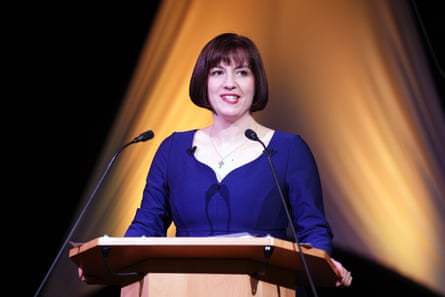
By and large, Keir Starmer’s government stands well away from that kind of nastiness. Indeed, as Bridget Phillipson spent Sunday and Monday unveiling the Department for Education’s sweeping changes to England’s system for children with special educational needs and disabilities – or Send – her messaging emphasised the complete opposite. Here, it seemed, was an optimistic, inclusive vision of increased spending on Send provision, a kinder education system, and a welcome sense that the often nuanced and intricate educational requirements of our 21st-century children – 1.7 million of whom are currently classified as having Send – are being accepted rather than questioned.
In a country now so prone to penny-pinching, her abiding tone seemed almost breathtakingly generous: the government wants to bring skyrocketing Send costs under control, but it is apparently set on investing now to save money later. £1.6bn will be spent over the next three years on ensuring that the needs of kids in mainstream schools are “identified early and met consistently”. Another £1.8bn has been set aside for “speech and language therapists, educational psychologists and wider professionals” to bring their work into schools. A new generation of Sure Start-style family hubs will each have an in-house Send practitioner. All the apparent good news was captured in the final flourish of the speech Phillipson delivered on Monday: “Our moment calls for courage. Because before us sits a once-in-a-generation chance for change.”
Underpinning everything is the government’s avowed belief in mainstream “inclusion”. That clearly avenges the exodus into specialist provision that became increasingly clear as the coalition government implemented Michael Gove’s old-fashioned vision of state education (between 2012 and 2019, the number of children with Send in English mainstream schools fell by almost a quarter, while the number attending special schools increased by nearly a third). And because it will entail a push for more open, kinder school cultures, there will presumably be fierce pushback from the kind of high-powered academies and free schools that are all about rigid discipline and a myopic obsession with “attainment”.
But before Labour cheers erupt at the prospect of such a confrontation, a warning: even if it is superficially the right thing to do, the shift from specialist to mainstream schooling looks like a high-stakes experiment. Teachers in mainstream schools worry about hugely increased workloads, the paucity of funds set aside for new staff training, and the fact that the aforementioned £1.6bn breaks down to nothing much at all (as the website Special Needs Jungle swiftly pointed out, it falls short of even allowing each setting to recruit a single new teaching assistant). I have met plenty of parents and professionals who point out that standard-issue mainstream class sizes and the sheer experience of sensory overload within most schools will place limits on the kind of transformation the government has in mind: Phillipson’s bold insistence that “children do better in mainstream schools” may be true in academic terms, but it overlooks the tangle of very human issues that sometimes mean a specialist school is a family’s best option – a realisation that can hit home at any point during a child’s time at school.
As well as concerns about the future role of the official Send tribunal, there is one other glaring tension in the reform plans, centred on education, health and care plans (EHCPs), those legally backed summaries of children’s needs and provision which are to eventually be cut back, while also being drastically reinvented. Whatever its air of bureaucratic arcana, this is another profoundly human issue, about how those documents – nearly 639,000 of which are now in place – are not only individual and specific, but the basis of clear rights of choice and redress. For thousands of parents, getting their children’s plans often took a huge emotional and financial toll. Many secured them after giving up their jobs and fighting their councils full-time. But they are now under threat.
Between now and 2030, the government says, the volume of EHCPs will continue to increase – but by 2035, reviews of individual families’ cases that will begin in September 2029 will seemingly have done their work. Assuming that pupil numbers remain stable, a new Send system that will reserve such provision for children with “the most complex needs” will have pushed the number down by 270,000. Moreover, rather than being rooted in individual children’s needs, a new kind of EHCP will seemingly be based on seven pre-ordained “specialist provision packages”, covering such clunky and old-fashioned sounding categories as “profound and multiple learning difficulties” and “sensory impairment”. For most kids, the option favoured by schools and councils will be so-called Individual Support Plans, whose legal footing and openness to parents’ input will not be nearly as strong: with an almost Orwellian chutzpah, this is the basis on which the government claims it is overseeing a “radical expansion in rights”.
But parents also fear something much more viscerally terrifying: the squeeze on EHCPs arriving at exactly the time that a Reform UK government may well be trying to shift the conversation about disability and Send into cruel and crass territory. The selling of Phillipson’s plan is implicitly based on the idea that people with her kind, optimistic instincts will always be in charge of it. But what happens to her 10-year plan if power passes to a party whose senior figures not only endorse the “overdiagnosis” myth, but have lately been heard suggesting that Send children might be educated in empty churches? Those worries surely point to a conclusion that the government will not want to hear: that this is no time to be reducing Send parents’ rights.
Because they tend to be tenacious and agile campaigners, many are already making exactly that point, while remembering the U-turns recently granted to farmers and pub landlords, and wondering if a more moral about-turn might sooner or later be forced by Send families. They stare into an uncertain, hostile, often terrifying future: the least they can expect of a reforming Labour government is that it has their back. So, as the long consultation on Phillipson’s Send revolution begins, what will be the answer?
-
John Harris is a Guardian columnist