.png) 2 months ago
47
2 months ago
47
These days, Kurt Vile songs begin in the middle of the story. In the third decade of his career, the journeyman musician seems even more content than ever to ride his own wave, to let his laid-back koans sit in the air without explanation or context, waiting for a listener to find the right frequency to understand or absorb them in their own time. The Philadelphia guitarist and songwriter opens his 10th record – an auspicious number for any musician – in the least auspicious, most Vile of ways, mumbling his way through the moment: “Smoke on my lip / I wrote a song / Some people said / I was doin’ it wrong,” he sings, his plainspoken warble as familiar, at this point, as the taste of Coca-Cola, or the smell of a summer thunderstorm.
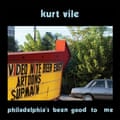
Philadelphia’s Been Good to Me relies on the fact that Vile, 46, is an elder statesman of indie rock at this point, and that it would be downright strange for him to put on any airs, or even for him to sound as if he was performing for any kind of audience. The album never labours its points or trades in anything so tacky as radical departures in sound or style. It is, emphatically, a Kurt Vile record – loose, lush, ambling, aimless, and totally, deeply poetic, bruh.
He broke out in the early 2010s with a trilogy of records – 2011’s Smoke Ring for My Halo; 2013’s Wakin on a Pretty Daze; 2015’s B’lieve I’m Goin Down … – that established him as one of indie rock’s most beloved, easily iconic figures: the long-haired stoner-philosopher quietly pumping out music that was virtuosic but unbothered, a figure of profound, understated realness rubbing shoulders on festival bills with self-consciously grandstanding acts such as Arcade Fire and Grizzly Bear. Although never as flashy or famous as those peers, Vile has maintained a level of consistency like few of his contemporaries, while refining and complicating that dirtbag shaman image.
Tap into Philadelphia’s Been Good to Me and you will find that Vile sounds as alarmingly great as ever, and more formally forward-thinking than he’s ever been. On 99th Song and Holiday OKV, he emerges as something like a jangle-pop Steve Reich, scatting and mumbling his way over subtly changeable loops, letting his repetitive grooves expand and contract alongside lyrics that pivot between the quotidian and the riotously profound. 99th Song is named for the fact that his loop pedal can only even contain 99 loops, and he turns that image into a blissful exploration of ageing from the perspective of a married father of two (“Got love in my life and three girls by my side / I’m holdin’ it down and takin’ it slow”) while Holiday OKV is a nervy referendum on his own chill sensibility: “I dream big, bomb hard, crash’n’burn, took a nose dive / Man, it feels so good to be alive.”
Vile says he’s treating this album as if it were his last, and it certainly has an air of omniscient wisdom, and a getting-the-band-back-together flair that’s enhanced by warm, high-in-the-mix backing vocals by musicians such as Natalie Hoffmann, of the underrated Memphis punk band Nots, and longtime Vile collaborator Jesse Trbovich. On the ramshackle blues of 99 BPM, he reminisces about making music with friends and a moment in time that “was 2012, but it felt like 2014”; the album’s title track lingers warmly on tour stops in Baltimore and homecomings to the Schuylkill River.
Behind every rose-coloured reminiscence is a looming sense of finality; exhaustion seeps into the sweet, sunshiny groove of Rock o’ Stone, while Every Time I Look at You, with its admission that “I flew close to the sun / And I had a whole lotta fun” feels as if it was written with the remove of someone looking back on brighter days. Vile’s music has always been about existence, but it’s rarely been this existential. Combined with these songs’ hypnotic, elliptical structures, it creates a stark sense of unease and unrest. Vile’s voice will always sound chill and extraordinarily comforting, but that voice belies some kind of deep dread this time around.
Could that be because of politics? Ageing? The climate crisis? Vile would never be so gauche as to let you know, instead preferring to let images shape like tea leaves in the bottom of a cup. The only thing he leaves certain is his own music. The album’s final line is: “You know what I mean, and you know the way I roll.” He’s assuming that’s a comfort – and rightly so.
This week Shaad listened to
Prophetic Justice Ministry – Psyop
Anthemic, blown-out psych pop that sounds like it was recorded in the Sistine Chapel.