.png) 2 months ago
66
2 months ago
66
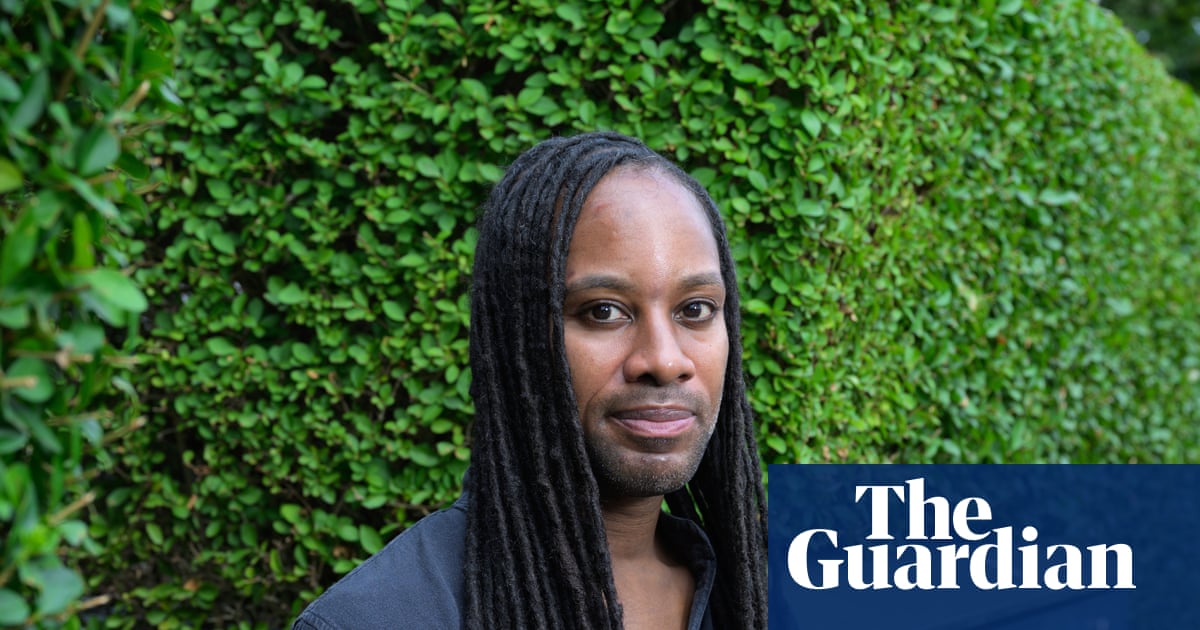
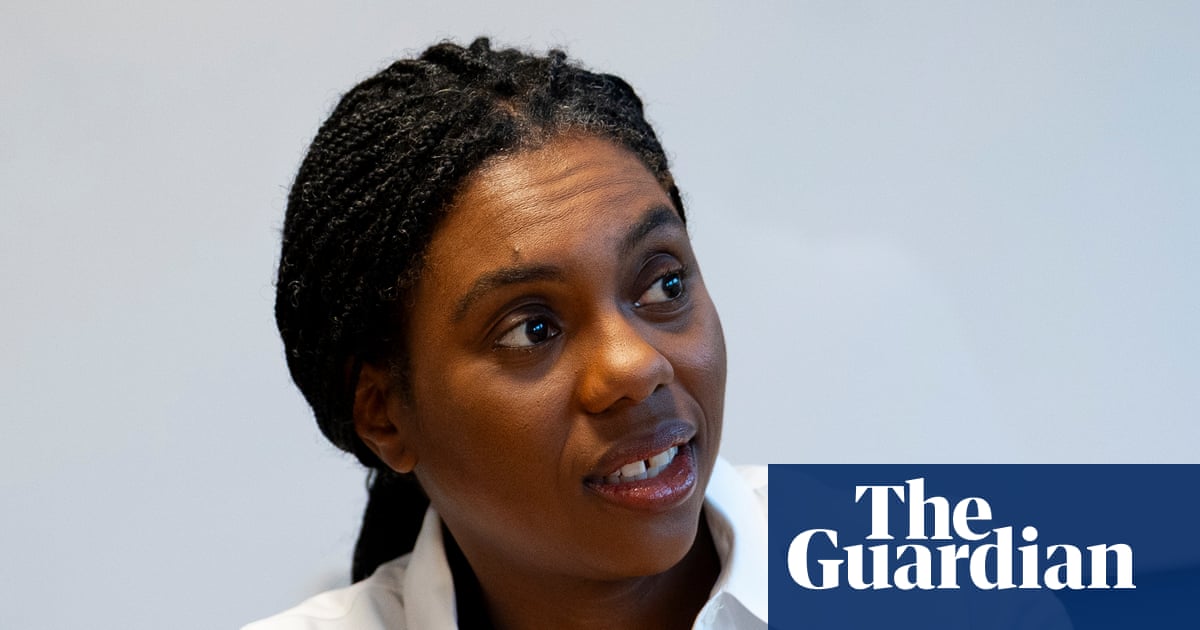
When MP Nekeisha Burchell stood up to give her maiden speech, she was keenly aware of how much Jamaica’s parliament mirrored the Westminster version, thousands of miles away in London.
As in the UK, the session on 12 May had started with the arrival of the ceremonial mace – a five-and-a-half foot ornamented silver staff representing the British monarch’s authority over parliament – which now rested on a table between the government and the opposition. Despite the heat outside, debate was presided over by the speaker, dressed in a ceremonial robe.
Burchell, the opposition spokesperson for culture, creative industries and information, approached the microphone and began to speak: “Madam speaka, mi git up dis afta noon fi mek mi fuss sectoral speech, pan me portfolio …”
The speaker, Juliet Holness, immediately cut her off.
“Hold on, hold on, hold on! Standing orders, and I think you are fully aware,” said Holness, who is the wife of Jamaica’s prime minister.
The regulation to which Holness referred was the rule that only English – and certainly not Jamaican – is allowed in parliament.
“If I have to stop you again during your presentation, you will not get any additional time,” Holness told Burchell, as parliament erupted into protest, with someone chiding “broken English”!
By then, Burchell had already ignited an explosive debate across the country and beyond about the enduring legacy of British colonialism, and whether robes, prayers for the British monarch and the “King’s English” are still right for Jamaica, more than 60 years after it gained independence.
Burchell continued her speech in standard English: “Madam speaker, perhaps I should abandon that attempt to use our local language because I have been reminded of the linguistic conventions of this honourable house.
“Because maybe there is no more fitting way to begin a presentation on culture than to speak briefly in the language understood by the overwhelming majority of Jamaican people – even if that language still struggles for full acceptance in some of our most formal national spaces, including this very parliament,” she said.
Speaking to the Guardian this week, Burchell said: “The moment really exposed unresolved tensions around language, legitimacy, and postcolonial identity.”
She added it was not her intention to disrespect parliament or cause disorder. “For me, the question is not whether parliament should have rules. Of course it should. The intention was to disrupt the comfort zone we have found ourselves in.”
She said: “We have gotten comfortable with keeping things like the prayer we say before parliament starts every single week … We’re saying these words that we don’t understand. We’re still wearing these wigs and these robes in a hot climate like Jamaica, because we are still keeping these models.”
Burchell said her intervention was not meant to be “anti-British” or “anti-English” but was more about Jamaica’s cultural confidence.
“Jamaica’s language has become one of the most globally recognisable cultural expressions to come out of the Caribbean. Through reggae, dancehall, athletics, popular culture, people across the world recognise the rhythm, energy, boldness, humour [and] the emotional texture of our language. And I think that’s part of why this conversation resonated internationally,” she said.
Marlon Morgan, the parliamentary secretary in the Jamaica’s ministry of education skills, youth and information, said the issue was not about the appreciation of the Jamaican language: “There are persons who may conflate what happened in parliament with a lack of appreciation for the Jamaican language, and that should not be the case,” he said.
Morgan said Burchell could have sought permission to suspend the requirement to speak English, arguing that a permanent change to allow the Jamaican language in parliament should be part of a “thoughtful and consultative approach”.
“What we shouldn’t have is for this discussion to be approached in an arbitrary or capricious manner,” he said.
On the streets of Kingston, the matter has split public opinion. Attorney Juliette Blake said “rules should govern”, but Danea Dunkley, an event project manager, pointed to the parliamentary bodies in Wales and New Zealand which allow indigenous languages. The issue, she said, “raises the question that every postcolonial society must sit with at some point: whose language is legitimate and what spaces can they be used in?”
Prof Carolyn Cooper, a literary scholar, was one of several Jamaican academics to support Burchell’s intervention. On Friday, Cooper interviewed Burchell entirely in Jamaican on the University of the West Indies (UWI) YouTube platform.
“I describe our language as Jamaican. Not Jamaican patois, not Jamaican creole, not dialect, none of those. Jamaican! Just like French, Spanish, English, German, and any other language,” Cooper said.
“I think the problem is that we don’t recognise Jamaican as a language, because if we did, Jamaica would be officially bilingual,” said Cooper, adding there was a widespread perception that Jamaican was not a language in itself.
“That is still the perception of the Jamaican language, that it is a broken version of English, meaning that it’s a corruption – we couldn’t learn it properly, so we twisted it,” she said.
According to Dr Joseph Farquharson, coordinator of the Jamaican Language Unit (JLU) at UWI, Jamaican “has all of the features, all of the characteristics or properties of a language”.
The language has a complex history, coming not only “out of European imperial expansion and colonialism” but also from other languages and dialects, he said.
“Jamaican is like several other languages referred to as creole languages. Those languages emerged in the context of Atlantic plantation slavery out of the interaction between Europeans and Africans, mostly West Africans,” Farquharson said.
On the campaign trail, Jamaican politicians normally use Jamaican and a 2005 Language Attitude Survey of Jamaica suggested most Jamaicans recognise “Patwa” as a language and think it should be made an official language alongside English, he noted.
“Nobody has suggested getting rid of English. What is being suggested is that we make a space for the language that most Jamaicans use and understand.”
The JLU acted as a language consultant for the Jamaican translation of the new testament, which is being used in some churches in Jamaica.
Sonjah Stanley Niaah, the director for UWI’s Centre for Reparation Research, described the parliamentary rule of speaking English only as a “direct legacy of enslavement”.
“It is surprising that, in a parliament with intentions to petition the king of England for a response in relation to whether enslavement of Africans was a crime against humanity, in a country which has a ministry of culture charting the reparation agenda, that such a negative response to the use of Jamaican was upheld,” she said.