.png) 1 month ago
64
1 month ago
64
Last week, a plush London hotel became a temple to HBO Max. Pictures of Carrie Bradshaw lined the corridors, HBO Max cushions dotted every chair in sight, and a heaving roster of A-list talent – Lisa Kudrow, Noah Wyle and Steve Carell – were poised and ready to hustle for the streamer’s UK launch.
However, you could argue that this whole circus was constructed because of one man. A few decades ago, HBO was a little-seen backwater of sport and standup. One show propelled it to the forefront of prestige television. That show was The Sopranos. The man who created it is David Chase.
Not that Chase will let himself be complimented like that. “Luck had an amazing amount to do with it,” he says, correcting my thesis before our interview has even begun. “HBO wanted to change their business model. They wanted to do original programming, and the script for The Sopranos had been turned down by every network in the States.”
Though Chase is in London to stump for HBO Max, he has long been famously ambivalent about TV. The Sopranos came after a long career in network television, writing on shows including The Rockford Files and Northern Exposure. “I’d been taking network notes and eating network shit for however many years, and I was done with it,” he says of his time spent developing The Sopranos. “And, you know, if The Sopranos hadn’t worked, I don’t know what I would have done. I was done with TV.”
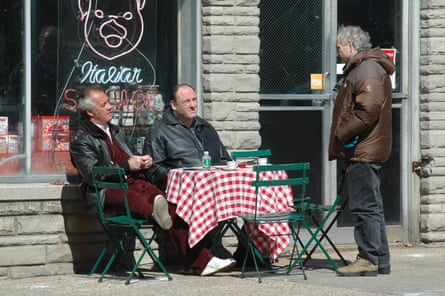
In contrast, the freedom offered to him by premium cable felt like a wonderland. Chase calculates that HBO only offered him two notes throughout the duration of The Sopranos. The first was about the show’s title (he ignored it) and the second was about an episode in season one entitled College, in which Tony Soprano kills a mob informant. The note was that, after building Tony up as a sympathetic character, the audience might abandon the show after seeing him murder someone in cold blood.
Chase ignored that one too. “I said, ‘He’s a captain in organised crime in New Jersey, and if he hears that there’s a guy up there who was a rat and he doesn’t kill him, he’s lost all believability.’” Chase won out and College – the second best television episode of all time, according to TV Guide – became the Rosetta Stone of prestige television.
Chase is now 80, and the fearsomeness of the old days has given way to something bordering on avuncular. Famously, the premise of The Sopranos – a mob boss goes to therapy – was based on Chase’s own difficult relationship with his mother. I wonder if the ensuing decades had made him reflect more on his depiction of that relationship.
“I’ve thought about the fact that some day someone would ask, ‘Don’t you have any guilty feelings about portraying your mother that way?’” he admits. However, “I portrayed her as she was. I picture people saying, ‘Well, your mother didn’t plot to have you killed,’ but in 1967 at the height of the Vietnam war, my mother said to me, ‘I’d rather see you dead than avoid the draft.’”
How did you sit with something like that? “Not well,” he chuckles. “I had to create a whole TV series to get over it.”
Another potentially difficult relationship was the one he had with James Gandolfini, who played Tony Soprano. While they butted heads, with Gandolfini going as far as calling him Satan, it was Chase who delivered Gandolfini’s eulogy when he died, aged 51, in 2013. In recent years it was revealed that Gandolfini would often go missing from set for days at a time, apparently because he struggled with the darkness of the character. I suggest to Chase that this must have been stressful.
“Well, fortunately, I wasn’t the one who dealt with him going missing,” he replies. “That was Ilene Landress, our line manager. She was the one who found out where he was and did everything that needed to be done.”
I start to move on, but Chase has more to say. “I mean, he asked to meet me a couple of times, once on the banks of the Hudson River when he didn’t want to go to work, and he was so unhappy. This happened three or four times, and we talked and talked and talked, but I was never the one who had to find out where he was.”
There is another pause. I start asking the next question, but Chase still doesn’t feel as if he’s got the right answer out. “Can I just say one more thing?” he asks. “He never refused to do anything. He never said, ‘I’m gonna go wait in my trailer, and when you’re ready to shoot it the way I want it, come get me.’ That never happened.”
He makes a comparison, eager to show that Gandolfini’s disruptions were relatively minor. “Now, when I went on to Northern Exposure, there were two trailers in the parking lot. The first assistant director was out there with a long tape measure, measuring the distance from one trailer to the front door and then the other trailer to the front door, because neither one of the two stars wanted to have a longer walk than the other. Now that wasn’t a happy set.”
It has been 19 years since The Sopranos ended, and in that time Chase hasn’t written a single line of television, his output confined to the movies Not Fade Away and The Many Saints of Newark. But that isn’t to say he hasn’t been trying. A decade ago it was reported that Chase would be making a limited series about the early days of cinema, entitled A Ribbon of Dreams. There has been no news about the project for years. Is it dead?
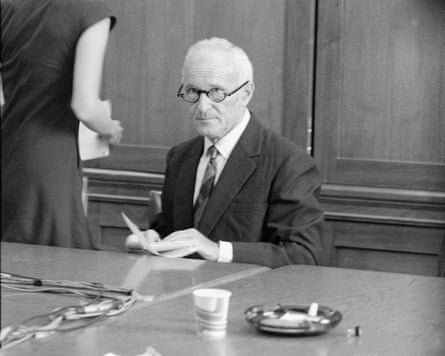
“Apparently so,” Chase replies sadly. “It was a good idea, and it was done really well. And I have to say, I was brought up not to speak well about my own work – in fact, not to say anything good about anything – but it was good. That one really disappointed me.”
I start to say that it’s both depressing and heartening to know that even the creator of the best television show ever made struggles to get his passion project across the line. But Chase is stuck on the memory of it.
“I hadn’t thought about that in a while,” he sighs. “You’re reminding me that it was actually HBO that passed on it. They said they would do it, but they wanted to shoot it in western Canada. I thought, ‘What are you talking about? I don’t even want to go into this.’”
But what does appear to be happening is Chase’s limited series about MKUltra, the CIA’s experimental programme essentially designed to create a truth serum out of a mountain of LSD. As soon as I bring this up, Chase snaps to attention completely.
“The series will be about Sidney Gottlieb and Jolly West, these scientists who sort of went over the edge in their devotion to LSD,” he enthuses. “Albert Hoffman discovered it accidentally, and was selling it to psychiatrists. But then Gottlieb saw it as something to be weaponised. I guess he had the best of intentions. He thought, ‘Well, we can win wars without killing anybody, because we’ll give them acid and they won’t be able to fight.’ But it perverted all of them. They all went crazy and it became like the big party drug of the 1970s.”
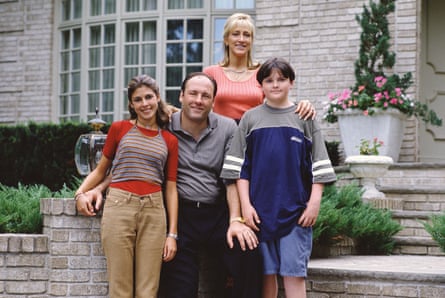
It sounds ambitious, I say. “As I write it, the spiritual side of the whole thing starts to appear draft after draft,” he nods. “In a way, we’re talking about the creator of the universe. LSD comes from a fungus that grows on rye seeds. Something created that and then, when you take it, you have several different views of the world and reality.”
It sounds fascinating, and Chase is such good company that I could happily while away the afternoon getting into the weeds about MKUltra. But our time is running out, so I return to the reason why he’s here. The Sopranos is such a foundational show, shaping our culture in ways we no longer even notice, that I ask Chase what he considers to be its legacy.
Fourteen seconds pass in total silence as he considers his answer. “Well, hopefully it’s that God is in the details,” he offers.
As we leave, I tell Chase – as so many people must, every single day of his life – that I watch and rewatch The Sopranos on a regular basis, and manage to take something new from it every time. “Oh good, do it again,” he smiles. I promise that I will and, glancing around at all the cushions, tell him that I’ll do it on HBO Max. “I think I was supposed to say that,” he replies, only wincing very slightly.