.png) 7 hours ago
3
7 hours ago
3
A four-metre barbed-wire fence runs through the desert at the UAE‑Omani border. In the early hours of 17 February 2021, Albert Douglas, 58, a British businessman, was creeping along it, looking for a way through. Douglas, who cuts a slight figure, wears spectacles and has a broad, earnest smile, never expected things to come to this. He’d been forced to abandon his home on Dubai’s Palm Jumeirah, the tree-shaped archipelago lined with upmarket residences, and go into hiding. Usually he’d be driving around in a Rolls-Royce, now he was in a pickup truck, being chauffeured by people smugglers. They’d transported him to the edge of the Al Ain border, which neighbours Oman, in the dead of the night. It was incredible, really, how fast the life he once led could evaporate. All that mattered now was getting to the other side of that fence.
A few weeks earlier, Douglas had been sitting at home, watching his supreme court appeal via video link. He was being hounded by the Dubai authorities over debts incurred by his son Wolfgang Douglas’s company and, while Wolfgang was in the UK, Albert had been arrested. Albert was facing a £2.5m fine and a three-year prison sentence – this was his final chance for a reprieve. He had always believed the truth would prevail, but as he watched the hearing play out, his faith in the system deserted him. He decided to lie low in a friend’s apartment while he weighed his options. It soon became clear that he didn’t have any. “That’s when I decided to leave,” he says. “I left it not to the last minute, but the last second.”
The escape plan was activated. Soon, Albert was making his way to the border, switching cars along the way. They pitched up in a nearby village to await nightfall. As he approached the fence, trying to locate a hole that had been cut in advance, all seemed to be going smoothly. Then the calm of the desert was broken by shouts and gunshots. Red dots peppered Albert’s body – laser sights from the weapons of UAE soldiers closing in on him. Wolfgang, who was following the situation from his home in Kensington, London, was dialled into the phone of one of the people smugglers on the other side of the fence. Now gunshots crackled down the line. Before he could find out what was happening, the phone went dead. Out in the desert, soldiers surrounded Albert. He begged them not to shoot. A hood was pulled over his head.
Albert doesn’t know where he was taken (his family believes it was a military base), but he found himself in a dark, dirty cell. He says he was stripped, slapped, deprived of sleep and interrogated over several days. He was asked repeatedly for details about the smugglers. “I wasn’t withholding information,” he says. “I didn’t have the answer. So I was beaten and I was tortured.” Albert was then taken to Al Ain central prison in Abu Dhabi. While he was being held there, three guards entered his cell. By the time they left, he was unconscious. His head had been “kicked around like a football”; his shoulder badly broken. Albert, who still wakes up screaming about the experience, recalls a state of total shock. “You just assume it’s going to stop,” he says. “It doesn’t stop, but you just think it’s gonna stop, and, basically, thereon after, you think you’re gonna die.”
In London, Wolfgang was spiralling. With no means of getting hold of Albert directly, he activated his contacts in the UAE to look for him. His first thought was that the gunshots came from the smugglers, not soldiers. He had heard about people getting killed and dumped in ditches along the border, and organised a search along the line to look for a body. They called the hospitals, even the police, but nothing. Days passed, a week. While Wolfgang frantically searched, Albert was being held in solitary confinement. About 10 days had passed when Wolfgang received a phone call from an unknown UAE number. “Son,” Albert’s voice came through the earpiece, the sound of shouts and screams echoing in the background, “I am not OK.”
Dubai has always been a place you escape to, or escape from. The competing visions of the city – the one beamed out on social media, and its complex reality – have never been more pronounced than in recent weeks, its pristine veneer pierced by Iranian missiles, causing expats, tourists and the much‑maligned “influencer class” to scramble for flights out of the country. The conflict has shaken the notion that the UAE is an island of stability in the Middle East, tarnishing its appeal to foreigners. It has also exposed the extent to which its public image is tightly controlled by its rulers. Influencers – who, since 2025 have required a government licence – as well as the general population, were warned that they faced fines or imprisonment for sharing footage from “unknown sources”. Twenty-one people – including a 60-year-old British tourist – have reportedly been charged in relation to sharing content related to the attacks.
Before the US-Israel war on Iran, an estimated 250,000 British expatriates lived in the UAE, a number that had grown substantially in recent years. Most reside in Abu Dhabi or Dubai, the latter being the most aggressively marketed of the seven emirates. The UAE is, to many, a welcome off-ramp from the high taxes, crumbling public services and miserable weather back home. Never mind the criminalisation of homosexuality; the absence of political parties; that married victims of sexual assault can be prosecuted for extramarital sex; or that the city’s network of AI-powered facial recognition cameras and biometric identification makes it one of the most highly surveilled locations in the world.
Successive UK governments have championed closer economic relations with the UAE, Britain’s largest trading partner in the Middle East. In 2021, the UK launched a joint partnership aimed at deepening ties across various sectors; this £23bn trade relationship is one reason why there are now more than 5,000 British businesses operating in the country – a number that is predicted to double by 2030. Lately, Dubai’s economic vitality has become a stick to beat the UK with, in particular by those on the political right. Nick Candy, the property developer and treasurer for Reform UK (who recently launched a $2bn luxury property venture in the UAE), told the National that Dubai had “all the ingredients you need to make the perfect cake … you’ve got low crime, low taxation, great quality of life”. After the Iranian missiles rained down in March, he said he still felt “safer in Dubai than in Sadiq Khan’s London”.
The reality is that those arriving in the UAE to do business are uniquely vulnerable. Debt is frequently treated as a criminal matter, and a bounced cheque – even a dispute over a taxi fare – can land you in prison. Power is concentrated within the minority Emirati population, and the legal system can be weaponised against foreigners who fall out of favour. In 2023, the Labour peer Helena Kennedy KC oversaw a fact-finding report on “the real cost of doing business in the UAE”. It noted “concerns regarding the criminal justice system … in particular the impact … on non-Emirati nationals”, and a “substantial disconnect” between the public image of Dubai and the evidence presented.
One of the most egregious cases is that of the British property developer Ryan Cornelius and his business partner Charles Ridley, who were jailed in 2008 after a fraud conviction related to a loan from Dubai Islamic Bank. They received a 10-year sentence, while the bank has seized assets worth $1.6bn – three times the value of the original loan – including Cornelius’s family home in London. In 2018, their sentence was extended by a further 20 years. They have remained there ever since.
These dangers are not mentioned in the UK government’s latest guidance on overseas business risk in the UAE. Previous guidance (which was withdrawn in 2020) only went so far as to admit that the country can be “a demanding and sometimes frustrating market in which to do business”. Pitched against Albert’s testimony, this is quite the understatement. His story raises uncomfortable questions about the nature of the UK/UAE relationship; the reluctance of the Foreign Office to intervene when citizens are detained there; and whether the British citizens who flock to Dubai, for work or leisure are being adequately warned about the risks of doing so.
When Albert first landed in Dubai in the late 90s, the place was everything a businessman could want: a new frontier, bursting with potential. Albert, from Enfield, north London, comes from a Romany‑Gypsy business family and had built up his wooden flooring company, CCS, over many years. He is a soft-spoken, old fashioned sort of man – the sort, Wolfgang says, who would always wear a three-piece suit, even on the beach – and has a strong work ethic. In 2002, Dubai sparked a boom in immigration when it passed a law allowing foreigners to buy property in certain areas, and a couple of years later Albert and his wife, Naomi, decided to move there full-time. Wolfgang, the eldest of four siblings, who had entered the family business as soon as he left school, continued to run operations in the UK.
At the time, Dubai was experiencing explosive growth. Mega-projects such as the Palm Jumeirah and the Burj Khalifa – today the tallest building in the world – were well under way and the population was booming. Albert soon realised that the market in the Gulf was even bigger than he had imagined, so in 2008 he suggested that Wolfgang join him and start another flooring company. It was to be a “friendly competitor” that would allow the family a bigger footprint in the region. Wolfgang closed the UK firm and flew out to start his own, named TimberWolf Flooring. By then, construction had been completed on the Palm Jumeirah and soon most of the family was living there. Albert lived on O Frond. Wolfgang on F.
At first, it was all very on-brand. The family were embraced by the Dubai elite and invited to galas and dinners. The ruler of Dubai, Sheikh Mohammed bin Rashid al-Maktoum, gifted them a pet tiger cub, Snowy (Wolfgang took care of it until it grew too big to handle, when it was returned to the sheikh’s private zoo). Every day, Wolfgang says, felt “like winning the lottery”, and as part of the “original expats” community, cruising around in Aston Martins and Ferraris while sparkling new skyscrapers rocketed up around them, they embodied the image that Dubai wanted to project. The state was developing in real time. It reminded Albert of the “wild west”, he says. “Jumeirah Janes” was the nickname given to the wives of western expats living there at the time.
Albert says he was never really there for the lifestyle. He was a “workaholic”, and spent any spare time with his family. But extroverts such as Wolfgang were happy to lean into the city’s flashy culture. Wolfgang enjoyed being part of Dubai’s social scene and soon became a point of contact for other British entrepreneurs and expats who wanted to move there. He describes being part of a community of “hand-picked B-list business development celebrities” who would be rolled out at parties, or encouraged to drop in when a new celebrity bought a house in the city. “I was the example of ‘This is what success looks like’,” says Wolfgang. “The proof in the pudding.”

And it was good, until it wasn’t. Wolfgang was involved in supplying wooden flooring, as well as bespoke wood designs and facades, for big government‑related projects, including the Burj Khalifa, La Mer beach and City Walk. Over time, he says, it became increasingly difficult to recoup payments for the work he was doing. “We’re talking tens of millions,” he says. With no money coming in, Wolfgang was unable to pay his creditors and once you start to default, “the laws are heavily tilted against you”. Pursuing this money would have meant taking on the government, says Wolfgang, and he knew enough about how Dubai operated to realise that a situation like this could quickly spin out of control.
Being in debt is a vulnerable position to be in in Dubai, where financial offences are met with severe penalties. In the UAE, a creditor can use the civil courts to have a debtor jailed or subjected to an indefinite travel ban. Though in recent years the country has introduced new insolvency laws and largely ended the criminalisation of bounced cheques, such cases can still be pursued in civil cases and result in imprisonment. Being jailed does not absolve a debtor – you will not be released until it has been paid or, under the recent reforms, the debt formally restructured. The system is often summarised as, “No pay, no go.”
If someone doing business falls out of favour with those in power, the criminal justice system can be exploited. This could be to force someone out of a partnership, extract bribes or, in the case of Cornelius and Ridley, who were targeted by Mohammed Ibrahim al Shaibani, chairman of DIB, and Sheikh Mohammed’s right-hand man, used as part of a corporate raid in which money and assets are seized. “It’s always the same story,” Radha Stirling, founder of Detained in Dubai, a human rights and advocacy organisation, tells me. “A foreigner comes, sets up, is embraced, starts trading, then an Emirati official or bank manager will target them.”
In 2019, Wolfgang returned to the UK for treatment after a health emergency. While there, he sought legal advice from a UAE law firm. He was told that people in the country wanted him in prison and that he should not return. As Wolfgang was recovering, Albert travelled to London. They met at the Exhibitionist hotel in Kensington to take stock. Albert told Wolfgang that the police in Dubai had been seizing Wolfgang’s goods without paperwork. “They’re out of control,” he told his son.
Albert was indignant. In his view, neither man had done anything wrong and he was unwilling to relinquish the business he had built up. He had secured a legal letter that confirmed he was not connected to Wolfgang’s business and believed he could continue to operate his own company safely. Crucially, he believed in the system. “I just thought it was going to sort itself out,” he told me. Wolfgang urged his father to stay in the UK. “If you go back,” he said, “they will target you.” Albert brushed it off. In August 2019, he flew back to Dubai, ready to resume business. When he landed at Dubai international airport, he was arrested.
For a foreigner, Dubai’s legal system can be as dizzying as its skyline. After his arrest, Albert was bailed and given a travel ban. There followed a hearing in Arabic in which no evidence was presented by either side but Albert was found guilty. Only later did he begin to learn of the case against him. The prosecution rested on the fact that Albert’s name appeared as a signatory on a trade licence used when he was helping Wolfgang set up in the UAE. However, the document they pulled up, which needs to be renewed annually, was outdated. Albert’s name had long since been removed and not appeared on it for many years prior to the complaint. When this was challenged at appeal, the prosecutor presented a bounced security cheque, which Albert maintains he never signed (this was later confirmed by a forensic report commissioned by the family, but the evidence was never acknowledged by the court).
“Am I allowed to speak?” Albert implored at one point during proceedings. He was cautioned about the risk of further imprisonment for speaking English in the Arabic courts. As he haemorrhaged money on legal fees to take his appeal to the highest court, his business, like Wolfgang’s, began to collapse. The authorities seized assets and property, and he was threatened and blackmailed by creditors. The legal advice he received was that the case was rigged; he didn’t stand a chance.
As the final appeal approached, Wolfgang was taking practical steps to extract his father from the country. He brokered a meeting with a representative of a people-smuggling gang in Wembley, London; a fee of £20,000 was handed over and it was done. Someone would cut a hole in the fence in preparation. One car would transport Albert to the border; another would be waiting just beyond it. From there to the coast, where a boat would take him across the strait to Iran, where another group would take him to the Pakistan border, which he would cross on foot. Then he would lie low before taking a plane back to the UK with an emergency travel document. On landing, as Wolfgang explained, Albert would present himself, “Hands up, help me, I’m running for my life.”
For Albert, who had always felt at ease living and working in Dubai, it was hard to process. “I thought the people who got put in jail were there because they must have done something wrong,” he says. “I thought they had been found guilty fairly.” Albert always ran a straight business, he tells me, and shied away from anything that hinted at underhand dealings. “I had never heard of financial entrapment,” he says. “I can assure you, once I ended up in Dubai’s central jail, I met dozens and dozens and dozens of people who had …”
Ending up in prison in Dubai is a bit like going through the looking-glass. About 90% of the inmates are foreign nationals (a similar proportion to that of the UAE as a whole), only here they are living in squalid conditions and regularly subjected to violence. It’s still a “pay to play” place, though, and survival depends on financial injections from family or friends on the outside who can pay for small comforts, or ensure a prisoner is not mistreated. Albert, who has back problems, had to sit on the floor for months before he was able to go before a committee to get permission to have a plastic garden chair. He was charged £100 for it.
In June 2021, after going back and forth between institutions, Albert was transferred to Al Awir, Dubai’s central prison, a large complex on the outskirts of the city, where he would spend most of his sentence. He would end up sharing a cell with Cornelius and Ridley, as well as Zack Shahin, an American property developer who was detained for nine and a half years before being given what is in effect a life sentence in 2017. Albert would also encounter many inmates from other countries, representing the full spectrum of Dubai’s class divide. Most prisoners in the UAE are from south Asia; migrant workers, whose visa status is tied to employers through the kafala system, can risk detention for simply trying to leave their job.
His cell – “it was a cage,” he says, emphatically – frequently accommodated up to 15 men, but only had three sets of bunks, so some inmates would be forced to sleep on the floor. The mattresses were ragged foam and the blankets filthy, says Albert, “but you were glad of them”. Albert visited the gym twice in four years; there was a three-month waiting list to use the library. Visits from friends, family or solicitors were blocked by the authorities. It was “absolute boredom”, says Albert. He developed a habit in which he would go to sleep at 3pm every day and not wake up until 3am in the morning. He’s not sure how he did it, what with the constant noise, but he’d put himself “in a coma”.
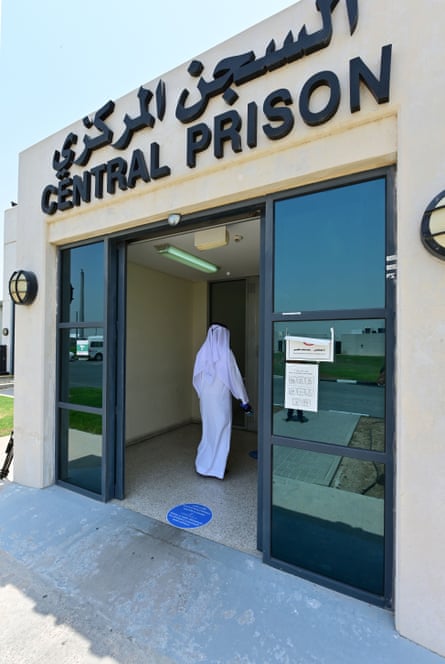
By the time Albert arrived at Al Awir, he was well versed in the endemic brutality of the system. In Al Barsha prison, he had witnessed an inmate in the cell opposite being raped by guards. Suicides were common. During his detention, Albert was subjected to further periods of sleep deprivation and interrogation, and pressed to sign confession papers in Arabic – a language he did not speak. Many inmates were facing death sentences for murder and had little to lose by enacting further violence on those around them. Once, also in Al Barsha, when Albert was on the phone, he was attacked by an inmate, who wrapped the cord around his neck and throttled him. Albert learned to keep his head down.
A bone in his hand was broken during one incident, and it would be a year before Albert finally received medical treatment for the shoulder that had been broken in Al Ain and which required surgery. He believes this was only due to coverage of his situation in the UK media. While Albert was in hospital awaiting the operation, he says a man entered his room with a camera crew. He was told to record a TV interview in which he would express how well he was being treated by the Dubai police. When he refused, they threatened to rescind his medical treatment, but the following morning it went ahead as planned.
In the UK, Wolfgang was lobbying hard to have his father freed. The consular assistance he expected did not come readily, and his fury at the UAE was soon matched by his outrage with the Foreign Office. When Wolfgang contacted the Foreign Office to inform them that Albert had been beaten, he claims that he was told “that wouldn’t have happened”. He says it took months before they finally accepted that his heart medication was being withheld.
Wolfgang insisted that consular officials visit his father in prison, and when they were refused access he had to protest for months before a video call was finally arranged between Albert and an embassy official. Albert says he had been threatened before the call and was flanked by guards. When he was asked if he was being treated well, he could do little more than nod. The Foreign Office, Wolfgang tells me, seemed unwilling to accept the evidence that Albert was a victim of torture, and inclined to take the word of the UAE authorities regarding his father’s treatment. Over his years in prison, Albert was only visited by Foreign Office officials “a handful” of times. “It was an uphill battle,” he says. “These people would do anything – anything – to not have a one-on-one with the UAE.”
Instead, it fell on Wolfgang to sustain pressure and keep attention on the case. He lobbied politicians and, in 2021, the Labour peer Janet Whitaker and Andy Slaughter MP, co-chairs of the all-party parliamentary group on Gypsies, Travellers and Roma, wrote to Dominic Raab, then foreign secretary, urging him to work with the UAE to exonerate Albert. As they pointed out, leaders in many other countries – including the US, Malaysia and Canada – have taken swift action to secure the release of citizens detained in the UAE. In some cases foreign ministers have travelled to the UAE to do so. Yet Albert is not the only British citizen to have found himself dismayed at the UK’s aversion to asserting diplomatic pressure on their behalf.
In 2018, Matthew Hedges, a British academic, was arrested in Dubai while on a research trip, charged with espionage and sentenced to 25 years in jail. He was released after six months, largely due to vociferous campaigning by his wife, Daniela Tejada. Hedges tells me that when the Foreign Office learned she had gone to the press about his case it contacted editors to try to suppress the story. In 2023, the parliamentary ombudsman found that the Foreign Office had failed in its duty to protect Hedges and “missed signs of potential torture”. And, similar to Albert’s experience, when consular officers visited Hedges in prison, they seemed to take his condition at face value – despite the presence of guards “who had told him what to say”, Hedges says. The approach, he adds, is “all about keeping things placid, not wanting to rock the boat”.
This may explain why Cornelius and Ridley have remained in detention for nearly two decades – nearly seven years after completing their original sentence. In recent years, the case has been taken up by Sir Bill Browder, a British-American businessman who was the largest foreign investor in Russia before being declared a threat to national security after exposing state corruption. Browder believes the UK should be leveraging targeted Magnitsky sanctions (on assets or travel, for example) against individuals in the UAE to have Cornelius and Ridley released – yet it refuses to do so. “The case is one of the most shocking I’ve ever seen,” he told me, adding that two men who have “effectively committed no crime, have been taken hostage by a corrupt regime for 18 years and will die in prison if something is not done”. In Browder’s view, the British government is still only paying lip service to the case. He doesn’t mince his words, saying, “It’s remarkable that if you’re British and you get into a scrape with a country that has, you know, money, you’re shit out of luck.”
It’s notable that Gulf money flows into the UK, too. As a previous Guardian investigation revealed, Sheikh Mohammed is one of Britain’s biggest landowners with a 40,000-hectare (100,000 acres) portfolio that includes the £75m Longcross estate in Surrey and a substantial proportion of Newmarket, the Suffolk horse-racing town.
Boris Johnson once joked that Britain is the “eighth emirate”.
In November 2023, 10 days before his two‑year sentence was due to complete, Albert received a pardon from Sheikh Mohammed. This, Wolfgang tells me, was the result of a sustained “pressure campaign” led by himself and Radha Stirling, from Detained in Dubai. Yet still Albert remained inside. Civil cases were outstanding, he was told, yet neither the family nor the Foreign Office were given details, or any understanding of how much longer he would be held.
Wolfgang submitted Albert’s case to UN refugee agency the UNHCR’s working group on arbitrary detention, and on 25 April 2025 it put the claims to the Dubai authorities. It received no response, but one month later, without warning, prison guards took Albert from his cell, handed him his things in a plastic bowl, and released him. Albert emerged from the prison compound stunned. It was night and he was alone in the middle of the desert. He had no phone and only a little cash. It took him two hours to find a taxi, and he managed to get himself to a friend’s house.
Even at this point he was not completely free. He no longer had any official ID and was not able to leave Dubai. Over the ensuing months, Albert tells me, he depended on the charity of friends in the city. “You’re outside and very pleased to be outside,” says Albert, “but you’re a prisoner in the country.” Albert spent that period constantly looking over his shoulder, wondering if the police would pick him up and take him back to prison.
In October 2025, the UNHCR working group published its opinion on the case. It declared Albert’s detention arbitrary and that his human rights had been violated on numerous counts. It raised concerns about the denial of due process, his right to a fair trial and allegations of torture. It demanded his freedom and urged the government of the UAE to investigate, stating that the “appropriate remedy would be to accord Mr Douglas an enforceable right to compensation”. There was no response. Then, in December 2025, Albert was put on a plane, and deported to the UK.
In March, I meet Albert and Wolfgang at the Bailey’s hotel in Kensington. I find them in a corner of the bar, drinking tea. Albert is dressed in a simple grey suit with purple lining, Wolfgang in a Prada T-shirt and black baseball cap. We had been speaking for a few weeks by now, and Wolfgang, who is unwavering in his pursuit of accountability for the injustice faced by his father, is as fired up as ever. Social media is teeming with schadenfreude about the plight of Dubai influencers, and Wolfgang is thrilled to see the critical discourse go mainstream. “We’re watching the paint being stripped from a falsehood,” he says, gleefully.
That Albert was released at all makes him a “one in a million” case, says Wolfgang. He believes it was due to media pressure – “the only language they understand” – and, ultimately, the influence of the UN. However, the UAE’s internal politics matter, too. The continued detention of Cornelius, Ridley and Shahin (whom the UN has also called to be released) is associated with the influence of Al Shaibani. Clearly, there is a cost-benefit calculation as to whether keeping someone in prison is worth the reputational damage. Like everything else in the UAE, the process by which such a calculation is made remains a black box.
Now Wolfgang is determined to achieve some semblance of accountability. His father’s case, he tells me, shows “the reality of Dubai”, and he wants it known. Although Albert was released, the UAE has not acknowledged his innocence, or returned the tens of millions of pounds in assets and property it seized from the family. They are pursuing a number of compensation claims against the UAE. They are also seeking compensation from the Foreign Office and fighting for it to release the correspondence it has on Albert. Wolfgang wants the travel advice to be appropriately updated. In the coming months, the UN special rapporteur on torture will release a further opinion on the evidence of Albert’s case.
Albert, who listens patiently as his son speaks, takes up far less space both physically, and in conversation. When he does contribute, he is clear, engaged and articulate, but it is evident that the experience has worn on him. He raises a hand with a crooked finger – one mark of what he went through. There are scars on his left shoulder. Other scars are less visible. The ordeal has taken a toll on his marriage and his family. He has blackouts – he can’t be left on his own in case he falls. “I’ve been told I have post-traumatic stress disorder,” says Albert. He suffers from nightmares; the same flashback on repeat. “Someone is chasing me and beating me and then you wake up and you’re sweating and you’re wide awake.”
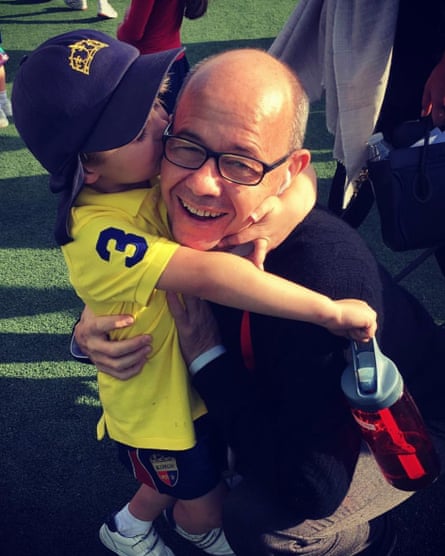
When Albert arrived at Heathrow airport, he kissed the floor. Since then, he has spent all his time reconnecting with his five grandchildren. He lights up when he talks about them. One of them was playing with dolls when he last saw her. Now she is talking about discos, preparing to do her driving theory exam. He says he is gradually rebuilding his strength. “You get used to eating what you want, when you want,” he says. “Chocolate tea cakes, crumpets, HP Sauce!”
At one point, he thought he would never see his family again. “I thought they’d never let me out because of what it would expose,” says Albert. “Once you’re out, you can speak freely.” Though soft-spoken, he is determined to use his voice, and as we stand to leave he approaches me. “You will mention Ryan [Cornelius], won’t you?” he says. He feels almost guilty to be out, he admits, and those he shared a cell with – like Cornelius – weigh on his mind. “I think of them all the time,” he says. “There’s so many people, you know. Sometimes I’ve been locked up 24 hours a day for seven days a week … so you’re with them. And you know they shouldn’t be there.”